


Key Findings
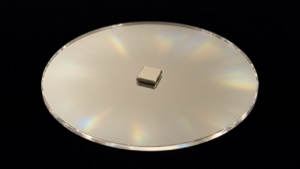
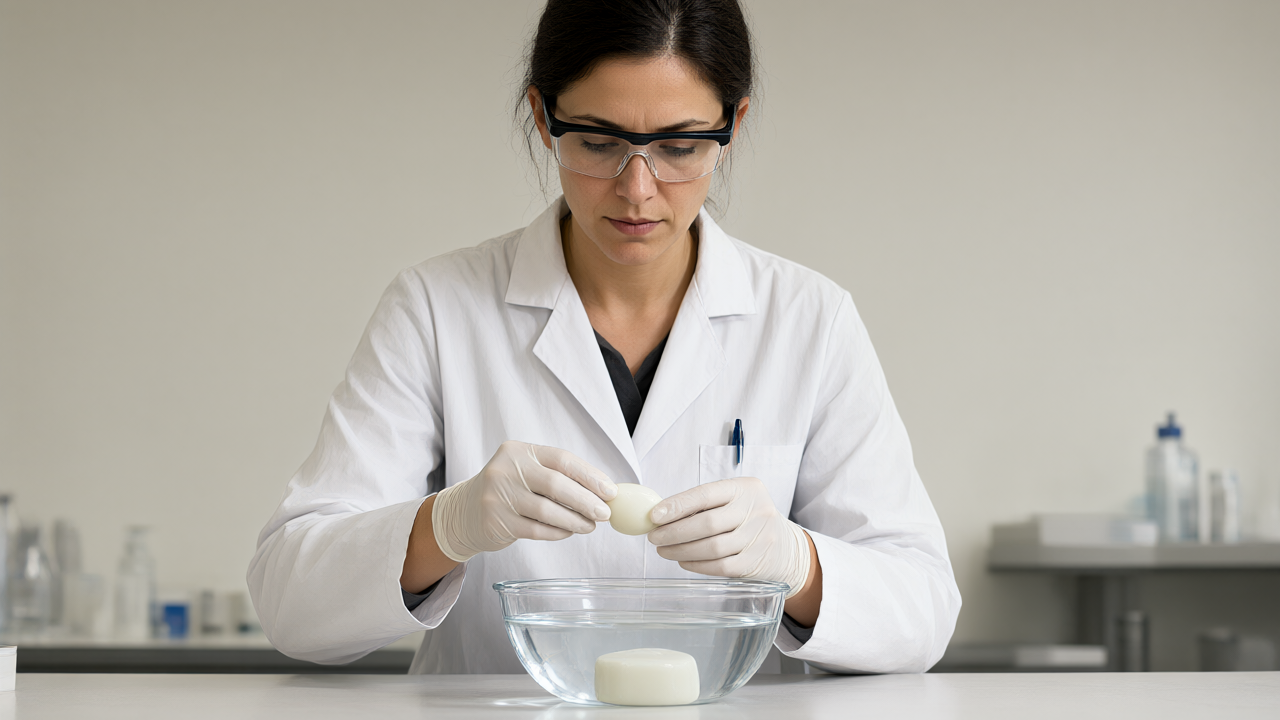
Institute of Science Tokyo researchers have developed a silatrane-based hydraulic polymer, poly(silatranylmethyl methacrylate) (PSMMA), capable of spontaneous hardening in wet environments. The material functions similarly to cement; when PSMMA powder is mixed with water, it transforms into a soft, sticky putty, then a gel, and finally a rigid, water-resistant solid. In practical demonstrations, the polymer successfully bonded fragments of a broken glass vial with no leakage and achieved tensile shear strengths between 0.7-1.6 MPa when joining different substrates underwater.
Technical Details
The material’s hydraulicity is derived from silatrane groups, which possess an internal interaction between silicon and nitrogen that increases hydrophilicity. The hardening process occurs in two primary stages:
- Hydrolysis: Water triggers the breaking of chemical bonds within the silatrane groups.
- Condensation: The resulting groups link to form a three-dimensional, crosslinked silsesquioxane network.
Analysis indicates that approximately 95% of the silatrane groups react within 24 hours of curing. The reaction is further accelerated by triethanolamine, which is released during the process and acts as a catalyst. As the silsesquioxane network forms, the material’s character shifts from hydrophilic to water-resistant.
Background and Context
While cement naturally exhibits hydraulicity, reproducing this in organic polymers has been difficult due to the challenge of combining bulk curing with water resistance. This research, led by Assistant Professor Akira Takahashi, graduate student Rei Tokumitsu, and Professor Hideyuki Otsuka from the Department of Chemical Science and Engineering, was published in Angewandte Chemie International Edition on September 10, 2026.
Significance and Outlook
PSMMA provides a method for shaping and curing organic materials in wet environments, as demonstrated by the creation of cubic and spiral forms using molds underwater. While the current material is noted to be brittle, the researchers intend to explore copolymerization to improve mechanical properties and investigate the relationship between the extent of curing and adhesive strength.
Source: https://www.miragenews.com/water-curing-polymer-enables-underwater-bonding-1776851/
Get our weekly technology intelligence — free
Receive an infographic that lets you judge at a glance whether each field’s analysis report is worth reading.
Subscribe Free — Weekly Tech Intelligence
By subscribing, you’ll receive Troy-Technical’s weekly technology intelligence newsletter.
- Your email and selected fields are used only to deliver the newsletter.
- We never share your information with third parties.
- You can unsubscribe anytime via the link in each email.
See our Privacy Policy for details.
Takes about a minute · Unsubscribe anytime