

Key Findings
The LIDE mission has successfully demonstrated the first in-orbit 5G communication link via a Low Earth Orbit (LEO) nanosatellite. Launched in July 2025, the mission validated that 5G connectivity is a tangible reality for space-to-ground communications, utilizing 3GPP standards to ensure interoperability between different vendors’ hardware and software.
Technical Details
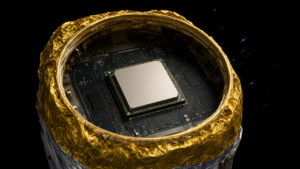
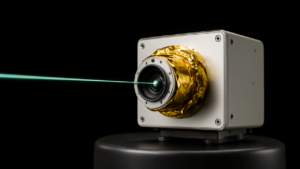
The mission utilized a 12U CubeSat developed by Tyvak International and an Italian consortium, featuring an advanced payload from Picosats. Technical achievements include:
- Connectivity: Established a bidirectional link with terminals at the ESTEC 5G/6G Lab in Noordwijk, Netherlands.
- Performance: Maintained signal stability at extremely low elevation angles, allowing for the precise measurement of signal-to-noise ratio (SNR) and throughput.
- Interoperability: Celeste Technologies used the satellite’s transparent payload to establish an end-to-end link compliant with 3GPP Release 17 between a SmartgNB and a third-party ground terminal.
Background & Context
LIDE was funded by the European Space Agency (ESA) under the “Space for 5G/6G & Sustainable Connectivity” program (specifically the Advanced Research in Telecommunications Systems, or ARTES) and supported by the Italian Space Agency (ASI). The project aimed to create an in-orbit experimental platform for the industrial ecosystem to verify 5G NTN links using compact ground terminals.
Significance & Outlook
The validation of 5G standards in orbit supports strategic applications in telemedicine, civil protection during natural disasters, and defense. By leveraging open standards, ASI and ESA aim to integrate satellite connectivity seamlessly with terrestrial networks while fostering industrial competition.
Following the success of LIDE, ESA has commissioned Tyvak International to lead a new consortium—including Picosats and Celeste Technologies—to develop the TIDE mission. The definition phase for TIDE is scheduled for completion by the end of 2026, with implementation expected to begin in 2027.
Get our weekly technology intelligence — free
Receive an infographic that lets you judge at a glance whether each field’s analysis report is worth reading.
Subscribe Free — Weekly Tech Intelligence
By subscribing, you’ll receive Troy-Technical’s weekly technology intelligence newsletter.
- Your email and selected fields are used only to deliver the newsletter.
- We never share your information with third parties.
- You can unsubscribe anytime via the link in each email.
See our Privacy Policy for details.
Takes about a minute · Unsubscribe anytime