

Key Findings
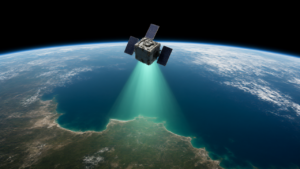
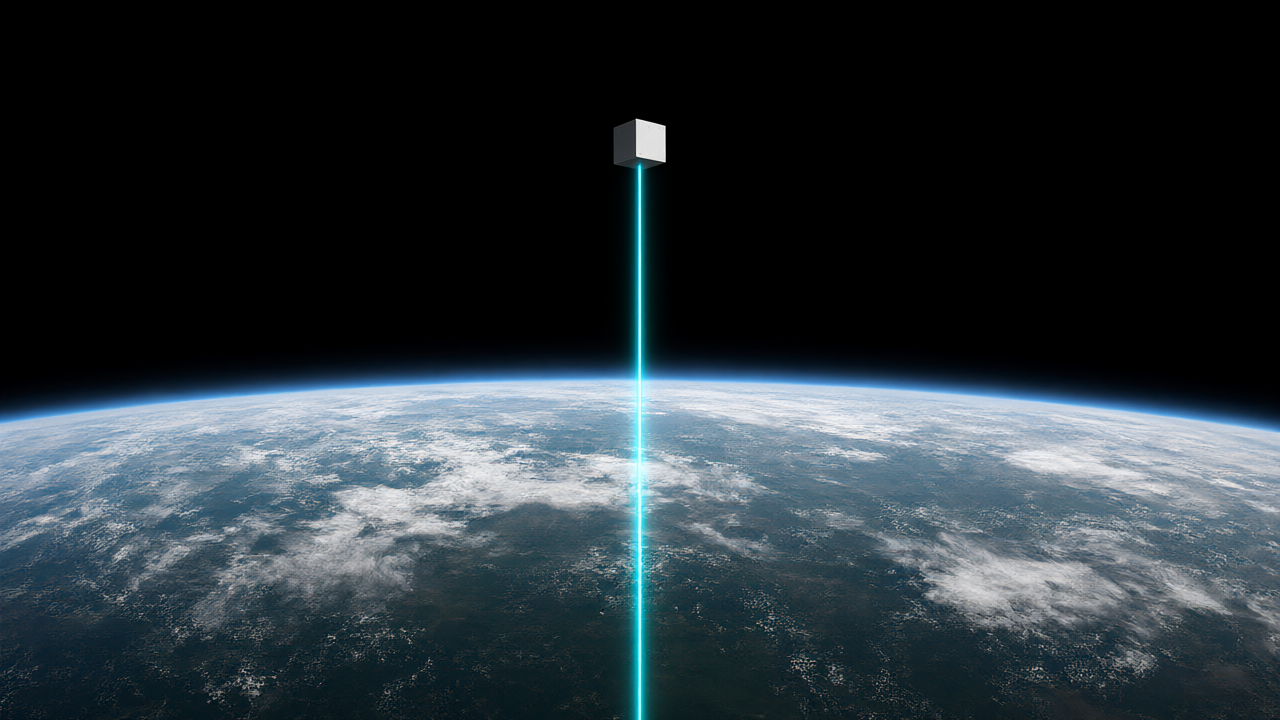
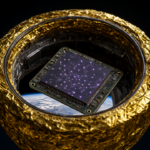
The TeraByte InfraRed Delivery (TBIRD) payload has established a new record for space-to-ground laser communication, reaching a link speed of 200 gigabits per second on April 28. This follows an earlier milestone reached roughly a month after its May 2022 launch, where it delivered data at 100 gigabits per second. In a single five-minute pass over a ground station, the system transmitted nearly five terabytes of data.
Technical Details
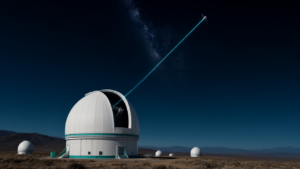
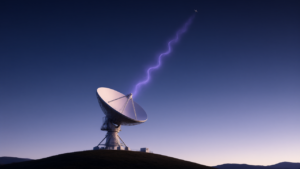
Unlike traditional laser communication systems that utilize powered swivel mounts or gimbals to point narrow beams, TBIRD employs a design with zero steerable parts. The system relies on a laboratory-developed error signaling concept to achieve precision pointing. This requires the entire CubeSat bus to physically rotate, swivel, and tilt to keep the infrared beam locked on a telescope located on a mountainside in California.
- Pointing Mechanism: Entire spacecraft body acts as the aiming mechanism.
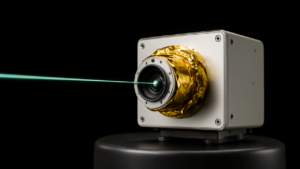
- Hardware Profile: Compact payload size, described as being similar to a tissue box or lunchbox.
- Operational Environment: Orbiting 300 miles above Earth’s surface.
- Stability: The body must remain rock steady to overcome atmospheric drag and orbital speeds exceeding 17,000 miles per hour without real-time gimbal correction.
Background and Context
Developed through a government and industry partnership involving MIT Lincoln Laboratory, NASA, and other institutions, TBIRD was originally intended for a six-month demonstration window. However, the mission extended to over two years. Recent tests with a low-cost ground terminal confirmed that a three-minute connection could return over five terabytes of science data, equivalent to approximately 2,500 hours of high-definition video.
Significance and Outlook
The removal of the gimbal reduces weight, volume, and potential failure points, allowing for significantly smaller payloads. While the approach proves high-speed viability, limitations remain; the narrow beam requires near-perfect alignment and is susceptible to degradation from clouds and atmospheric turbulence, unlike broader radio signals.
Source: https://gcn.com/200-gigabit-laser-link-beamed-tissue/23223/
Get our weekly technology intelligence — free
Receive an infographic that lets you judge at a glance whether each field’s analysis report is worth reading.
Subscribe Free — Weekly Tech Intelligence
By subscribing, you’ll receive Troy-Technical’s weekly technology intelligence newsletter.
- Your email and selected fields are used only to deliver the newsletter.
- We never share your information with third parties.
- You can unsubscribe anytime via the link in each email.
See our Privacy Policy for details.
Takes about a minute · Unsubscribe anytime