

Key Findings
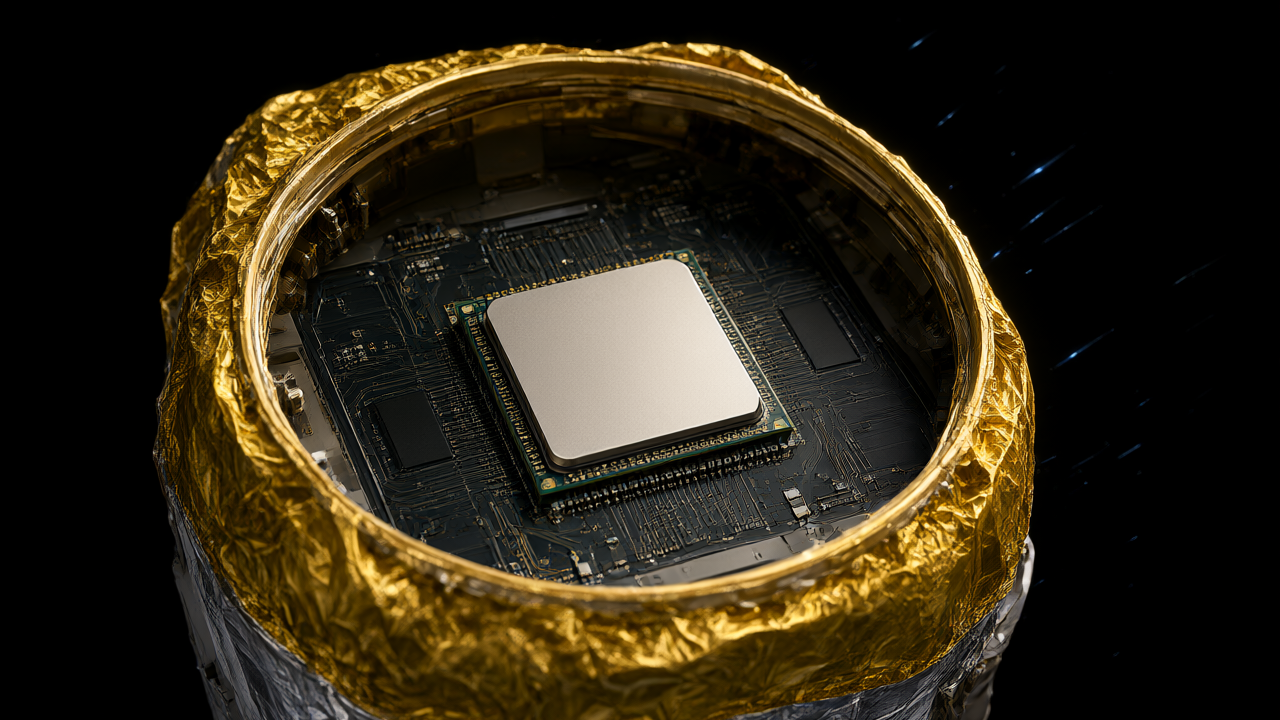
Microchip Technology has reached several critical milestones for the PIC64-HPSC High-Performance Spaceflight Computing Series. Early radiation characterization of the PIC64-HPSC1000-RH radiation-hardened variant demonstrated Total Ionizing Dose (TID) performance up to 200 krad(Si) and successful Single Event Latch-up (SEL) testing to 78.2 MeV·cm²/mg under specified operating conditions. Additionally, Single Event Effects (SEE) characterization showed robust system-controller operation with no external resets or uncorrected errors required during testing to date.
Technical Details
The PIC64-HPSC is a 64-bit multicore RISC-V computing platform. Initial silicon performance measurements align with program objectives, supporting compute-intensive workloads including:
- Onboard autonomy and spacecraft control
- High-performance payload processing
- Earth observation and intelligence
- Secure communications and edge AI
- Scientific exploration
The architecture is designed for scalability, supporting software-defined spacecraft, distributed processing, and heterogeneous computing. Through the Early Access Program, customers are currently evaluating silicon and development kits using supporting software and tools. Furthermore, board partners are developing VPX and VNX+ computing platforms based on the PIC64-HPSC.
Background and Context
The PIC64-HPSC originated from a NASA and JPL assessment of future spaceflight computing requirements, leading to a contract awarded to Microchip in 2022. This program served as the foundation for Microchip’s broader 64-bit computing portfolio, which now includes a range of PIC64 MPUs for various markets.
Significance and Outlook
Increased onboard processing capability reduces dependence on communications bandwidth and lowers decision-making latency for spacecraft. The necessity of this technology is highlighted by NASA’s FY26 Civil Space Shortfall Prioritization, which ranked advanced onboard computing for space operations as the third-highest civil space technology shortfall. The PIC64-HPSC aims to support the next generation of civil, commercial, scientific, and defense systems operating in demanding space environments.
Source: https://www.electronicsmedia.info/2026/10/28/microchip-pic64-hpsc-spaceflight-computing/
Get our weekly technology intelligence — free
Receive an infographic that lets you judge at a glance whether each field’s analysis report is worth reading.
Subscribe Free — Weekly Tech Intelligence
By subscribing, you’ll receive Troy-Technical’s weekly technology intelligence newsletter.
- Your email and selected fields are used only to deliver the newsletter.
- We never share your information with third parties.
- You can unsubscribe anytime via the link in each email.
See our Privacy Policy for details.
Takes about a minute · Unsubscribe anytime