


Key Findings
Intellia Therapeutics has submitted lonvoguran ziclumeran (lonvo-z) for US Food and Drug Administration (FDA) approval, with a decision expected by 10 March. If approved, lonvo-z will be the first CRISPR-based medicine delivered in vivo (inside the body). Clinical data released by the developer indicates that the therapy continues to be effective four years after treatment.
Technical Details
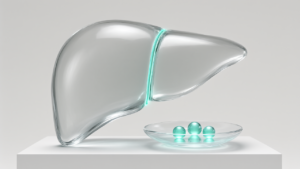
Lonvo-z is designed to treat a form of hereditary angioedema characterized by painful swelling in the throat and other body parts. The therapy utilizes the CRISPR–Cas9 system to disable the gene responsible for producing prekallikrein, a protein produced in the liver that promotes blood-vessel leakage. The delivery mechanism consists of fatty particles encasing mRNA encoding the CRISPR–Cas9 components. These particles are infused into the blood and taken up by the liver; the entire procedure takes one day.
Background & Context
Current FDA-approved CRISPR therapy, such as Casgevy for sickle-cell disease and β-thalassaemia, is performed ex vivo. This process requires removing blood stem cells, editing them externally, and re-infusing them after the patient undergoes harsh chemotherapy to make room for the edited cells. In contrast, in vivo editing sidesteps these complexities of cost and time.
However, in vivo approaches introduce specific safety risks, including the inability to screen out unwanted edits at other genomic locations and potential harmful immune responses. Last year, the FDA placed a clinical hold on two other Intellia in vivo trials after a participant with additional health conditions died from liver damage. The hold was lifted this year following the implementation of extra safety measures.
Significance & Outlook
For patients with hereditary angioedema, this gene-editing approach could replace the lifelong management of medications used to prevent and treat swelling attacks. The four-year efficacy data is described by trial investigator Jonathan Bernstein as “very reassuring” and consistent with expected outcomes.
Source: https://www.nature.com/articles/d41586-026-03705-9
Get our weekly technology intelligence — free
Receive an infographic that lets you judge at a glance whether each field’s analysis report is worth reading.
Subscribe Free — Weekly Tech Intelligence
By subscribing, you’ll receive Troy-Technical’s weekly technology intelligence newsletter.
- Your email and selected fields are used only to deliver the newsletter.
- We never share your information with third parties.
- You can unsubscribe anytime via the link in each email.
See our Privacy Policy for details.
Takes about a minute · Unsubscribe anytime