

Key Findings
The Ministry of Industry and Information Technology (MIIT) issued Announcement No. 30 of 2026 on November 16, officially implementing five standards for humanoid robots. Managed by the Humanoid Robot and Embodied Intelligence Standardization Technical Committee (TC8), these standards address three primary domains: intelligence capability evaluation, critical components, and robot training.
Technical Details
The released standards are categorized as follows:
- Intelligence Capability: The “Humanoid Robot Intelligence Capability Grading” establishes a framework from L0 to L5. This grading is based on four dimensions: perception and cognition, decision-making and learning, execution performance, and collaborative interaction.
- Critical Components:
- The “Humanoid Robot Electric Drive Integrated Joint Technical Specification” defines interfaces, performance indicators, and testing methods for core joints in the torso and legs.
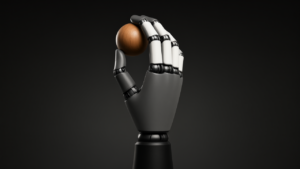
- The “Humanoid Robot and Embodied Intelligence Dexterous Hand Technical Specification” covers design, testing, evaluation, and delivery to resolve issues regarding non-unified interfaces and low integration efficiency.
- Training and Data:
- The “Humanoid Robot Training Ground Construction Technical Specification” specifies functional zoning, spatial layout, equipment, data collection, communication networks, and safety protection to link simulation and real-machine verification.
- The “Humanoid Robot Training Data Management Requirements” defines the full lifecycle of data, including collection, preprocessing, labeling, quality evaluation, storage, circulation, use, and destruction.
Background and Context
The standards were announced via the TC8 committee secretariat on November 17. The data management framework specifically aims to unify data formats, labeling rules, and quality evaluation methods while enhancing privacy protection, data security, and process traceability.
Significance and Outlook
These frameworks provide a verifiable basis for product R&D, testing, and scenario adaptation. Moving forward, the TC8 committee intends to promote the application of these standards by integrating them with detection certifications, training platforms, data ecosystems, and typical application scenarios.
Source: https://www.thepaper.cn/newsDetail_forward_34492647
Get our weekly technology intelligence — free
Receive an infographic that lets you judge at a glance whether each field’s analysis report is worth reading.
Subscribe Free — Weekly Tech Intelligence
By subscribing, you’ll receive Troy-Technical’s weekly technology intelligence newsletter.
- Your email and selected fields are used only to deliver the newsletter.
- We never share your information with third parties.
- You can unsubscribe anytime via the link in each email.
See our Privacy Policy for details.
Takes about a minute · Unsubscribe anytime