


Key Findings
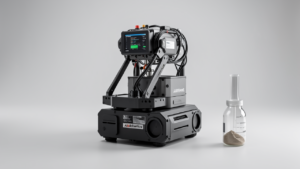
Mitsubishi Electric is developing a long-range LiDAR (Light Detection and Ranging) sensor specifically for railway vehicles, targeting a product launch in fiscal 2027. The sensor can detect the presence of people or fallen objects approximately 20 centimeters in size at a distance of 600 meters. According to the company, this is a world-first achievement for railway-specific LiDAR.
Technical Details
The system utilizes laser light to measure the distance and shape of target objects. To enhance detection capabilities, Mitsubishi Electric is integrating the LiDAR with cameras to create a “forward monitoring system.” This system incorporates artificial intelligence (AI) for object detection, allowing the system to classify the type of obstacle—such as a person or a vehicle—which is difficult to identify using sensors alone.
Background and Context
The requirement for a 600-meter detection range is driven by the physics of railway braking; trains require significantly longer distances to come to a complete stop compared to road vehicles. For comparison, automotive LiDAR typically reaches a maximum detection distance of approximately 300 meters. The development comes amid a critical shortage of train drivers, increasing the necessity for autonomous driving technologies in the rail sector.
Significance and Outlook
The company recently demonstrated the technology at the Mitsubishi Heavy Industries railway technology test center in Mihara City, Hiroshima Prefecture, where it is currently verifying sensing performance using test vehicles. While the primary target is the railway market, Mitsubishi Electric intends to pursue opportunities in infrastructure monitoring for airports and roads. The integration of AI-driven classification and extended-range sensing is positioned as a key enabler for the automation of rail transport.
Source: https://www.nikkei.com/article/DGXZQOCC186M90Y6A111C2000000/
Get our weekly technology intelligence — free
Receive an infographic that lets you judge at a glance whether each field’s analysis report is worth reading.
Subscribe Free — Weekly Tech Intelligence
By subscribing, you’ll receive Troy-Technical’s weekly technology intelligence newsletter.
- Your email and selected fields are used only to deliver the newsletter.
- We never share your information with third parties.
- You can unsubscribe anytime via the link in each email.
See our Privacy Policy for details.
Takes about a minute · Unsubscribe anytime