Key Findings
Acibadem Hospitals Group has provided a comprehensive overview of robotic surgery, highlighting its nature as a minimally invasive procedure controlled by surgeons, which benefits patients with faster recovery and fewer complications across various interventions including prostate, gynecological, hernia, and gallbladder surgeries. The technology translates the surgeon’s movements into precise, stable actions, augmented by a magnified 3D view, pushing the boundaries of human dexterity and stability.
Technical Details
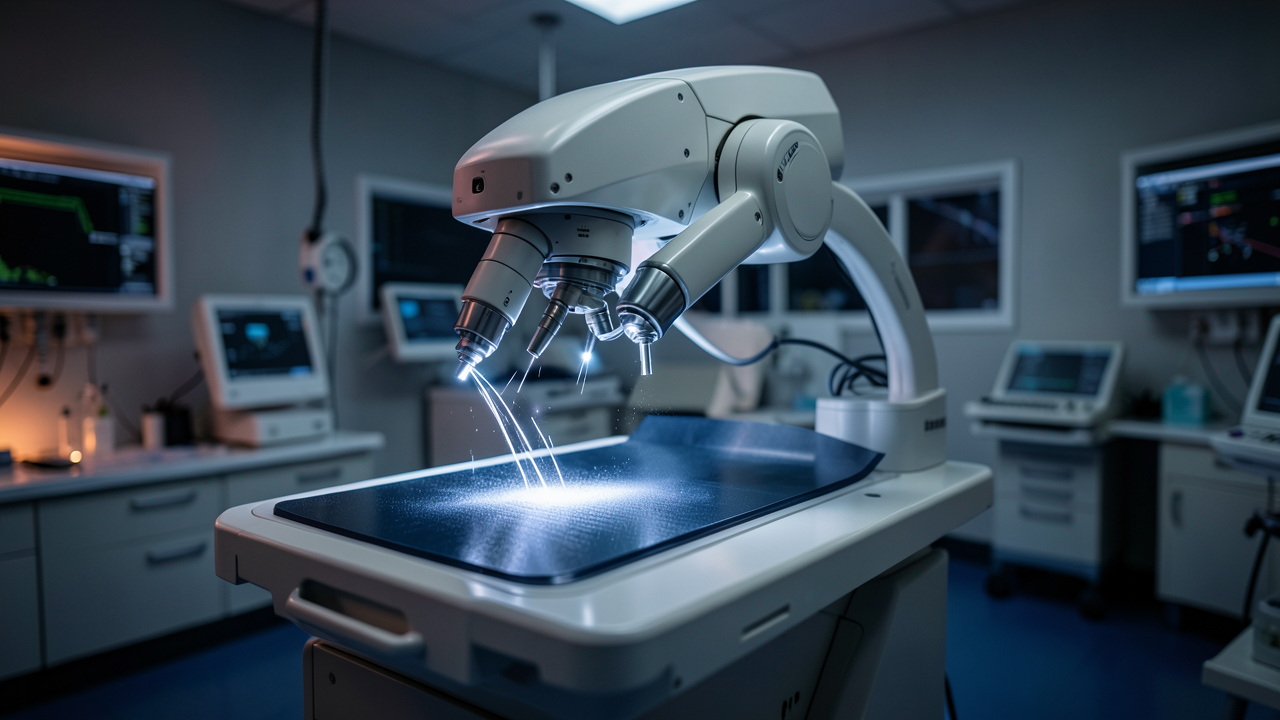
A typical robotic surgery system consists of a master console, where the surgeon operates, and a patient-side cart with robotic arms inserted into the patient’s body. From the console, the surgeon manipulates joystick-like controllers, which precisely guide the instruments attached to the robotic arms. The system enhances precision by filtering out natural hand tremors and provides a highly magnified, high-definition 3D view of the surgical field, offering superior depth perception and clarity of anatomical structures. This allows surgeons to identify and preserve delicate blood vessels and nerves that would be challenging to discern with the naked eye.
This technology has proven particularly effective in procedures such as radical prostatectomy for prostate cancer, hysterectomy, rectal resections, hernia repair, and cholecystectomy. Compared to traditional open surgery, patients experience smaller incisions, reduced blood loss, less post-operative pain, lower risk of infection, and significantly faster recovery times. These advantages allow patients to return to their daily lives more quickly, enhancing their quality of life. It’s crucial to note that the robots do not operate autonomously but are always under the direct command and control of the surgeon, ensuring continuous human oversight.
Background and Industry Context
Minimally invasive surgery has evolved significantly since its inception in the late 20th century, aiming to reduce physical trauma to patients. Robotic surgery represents the cutting edge of this evolution, overcoming limitations of conventional laparoscopy, such as restricted range of motion and lack of 3D vision, to perform complex suturing and operations in deep anatomical spaces. This has expanded the benefits of minimally invasive techniques to a broader patient population. Leading healthcare providers like Acibadem Hospitals Group are actively investing in these advanced technologies to improve the standard of patient care.
Strategic Significance and Outlook
The technology underpinning robotic surgery is expected to continue its rapid advancement, with future developments likely incorporating enhanced AI-driven intraoperative guidance, improved haptic feedback for surgeons, and the creation of smaller, more versatile robotic platforms. These innovations will broaden the applicability of robotic surgery to an even wider range of diseases and surgical procedures, while also standardizing surgical techniques and facilitating the training of new surgeons. Ultimately, robotic surgery is poised to become a standard approach for complex surgical interventions, revolutionizing patient care globally.
Get our weekly technology intelligence — free
Receive an infographic that lets you judge at a glance whether each field’s analysis report is worth reading.
Subscribe Free — Weekly Tech Intelligence
By subscribing, you’ll receive Troy-Technical’s weekly technology intelligence newsletter.
- Your email and selected fields are used only to deliver the newsletter.
- We never share your information with third parties.
- You can unsubscribe anytime via the link in each email.
See our Privacy Policy for details.
Takes about a minute · Unsubscribe anytime









Comments