


Key Findings
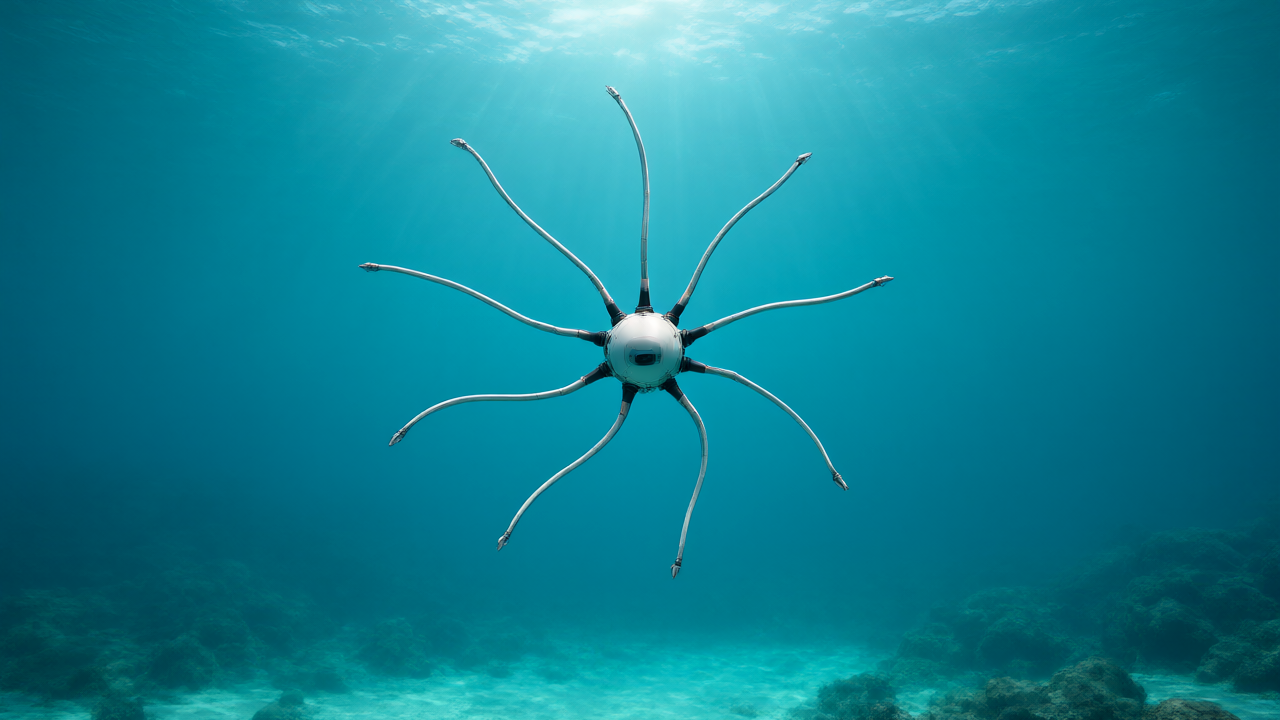
A research group at North Carolina State University has created a subaquatic robot capable of three-dimensional maneuverability using a minimal hardware configuration. While such range of motion typically requires at least six actuators, this robot achieves it with only two actuators and a few elastic limbs. This efficiency is attributed to “mechanical intelligence,” where the physical structure of the robot performs part of the control work, reducing the need for complex electronic systems.
Technical Details
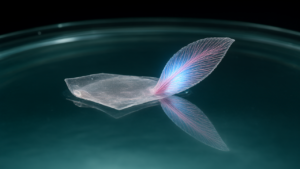
The robot utilizes monostable, feather-like wings that naturally return to their original shape after bending. By manipulating the two actuators, the robot operates in three distinct modes:
- Jellyfish mode: Both actuators activate to snap the wings downward, propelling the robot upward. As the wings recover, the robot descends. Adjusting the speed of this cycle allows the robot to either swim or hover in place.
- Fish mode: A single actuator is activated to create asymmetric movement, propelling the robot forward or backward.
- Rotor mode: The robot alternates inputs between the two actuators to rotate around its own axis and change orientation.
Background & Context
The project follows a previous effort by the same team to design a manta ray-inspired aquatic robot. Although the manta ray robot achieved impressive forward speed, it lacked the ability to move up and down, rotate in place, or change direction effectively. To solve this three-dimensional maneuverability challenge, the researchers turned to the feather star, a marine creature with flexible limbs that move in multiple directions with minimal apparent effort.
Significance & Outlook
This design demonstrates that increasing machine capability can be achieved through smarter structural engineering rather than adding more electronics or actuators. The researchers anticipate that this robot could expand possibilities for underwater exploration, with potential applications including lifting objects, carrying cameras, and collaborating with other aquatic robots.
Source: https://newatlas.com/robotics/feather-star-underwater-robot/
Get our weekly technology intelligence — free
Receive an infographic that lets you judge at a glance whether each field’s analysis report is worth reading.
Subscribe Free — Weekly Tech Intelligence
By subscribing, you’ll receive Troy-Technical’s weekly technology intelligence newsletter.
- Your email and selected fields are used only to deliver the newsletter.
- We never share your information with third parties.
- You can unsubscribe anytime via the link in each email.
See our Privacy Policy for details.
Takes about a minute · Unsubscribe anytime