
Key Findings
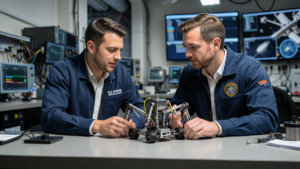
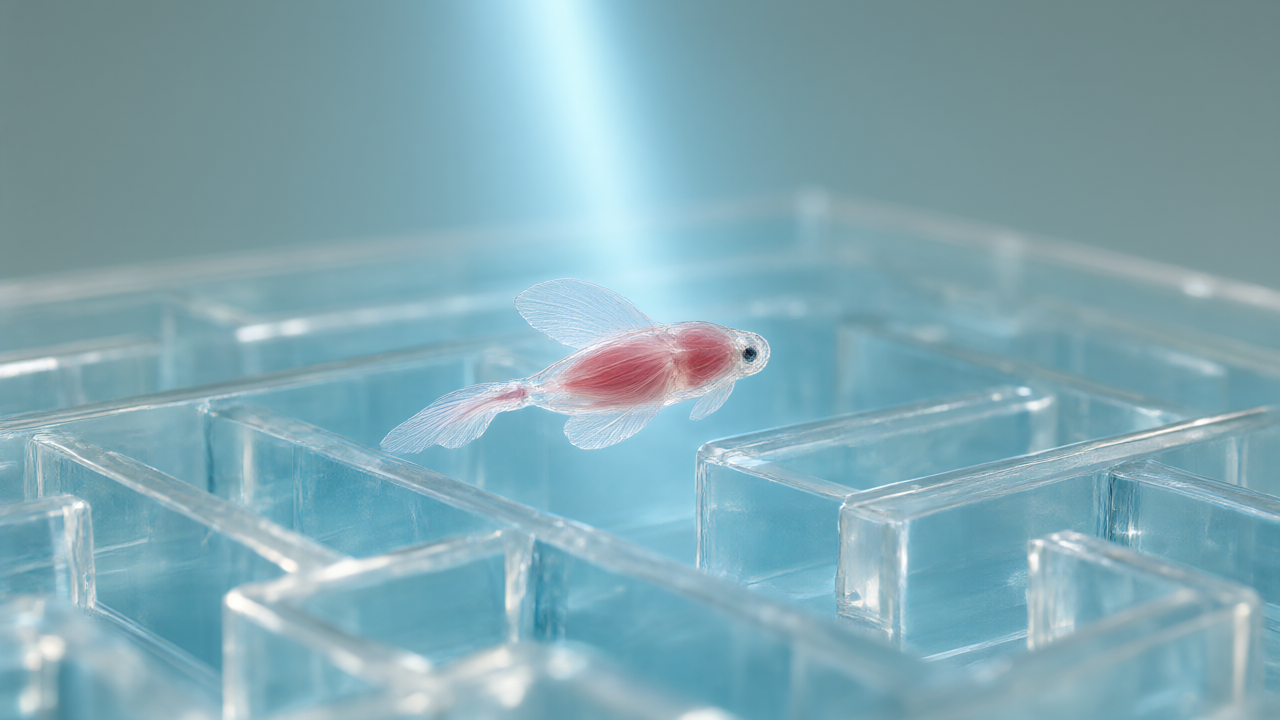
A research team at the Massachusetts Institute of Technology (MIT) has successfully developed a biohybrid swimming robot that utilizes live muscle cells for propulsion. The robot is capable of navigating through a watery maze by responding to light stimuli, which trigger the contraction of muscle cells to move its fins. The results of this research were published in the journal Advanced Functional Materials on September 29, 2026.
Technical Details
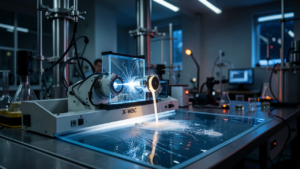
The robot’s architecture consists of a “skeleton” made from a gelatin-based gel that possesses properties between a liquid and a solid. The device features two fins, each measuring 15mm in length, 7mm in width, and 0.5mm in thickness. These fins are covered in a layer of mouse-derived muscle cells that have been genetically engineered to contract when exposed to light.
- Control Mechanism: By applying light to the fins at various intervals, researchers can control the robot’s speed and direction.
- Structural Optimization: The team transitioned from a soft fibrin gel to a firmer gelatin-based gel to prevent the skeleton from shrinking during muscle contraction.
- Cell Alignment: The researchers discovered that square-shaped grooves on the gel surface, rather than rounded ones, allow cells to align and fuse into stronger, more coordinated muscle tissues.
- Training: Muscle cells subjected to 15 minutes of light-pulse training per day exhibited a fin oscillation amplitude four times greater than non-trained cells.
Background & Context
Unlike previous biohybrid robots that required millions of cells to create thick, three-dimensional muscle structures, this paper-thin design uses significantly fewer cells. This reduction in biological material potentially lowers manufacturing costs and increases efficiency. The muscle cells used in this project are derived from mouse cells that have been cultured in laboratories since 1977.
Significance & Outlook
The robot operates without motors or batteries, relying entirely on biological contraction. While its speed is compared to that of a sleeper shark, its flexibility and self-healing capabilities make it suitable for monitoring fragile or unpredictable underwater environments where traditional machinery may be unsuitable. Future development will focus on optimizing the body design to increase swimming speed.
Source: https://karapaia.com/archives/631943.html
Get our weekly technology intelligence — free
Receive an infographic that lets you judge at a glance whether each field’s analysis report is worth reading.
Subscribe Free — Weekly Tech Intelligence
By subscribing, you’ll receive Troy-Technical’s weekly technology intelligence newsletter.
- Your email and selected fields are used only to deliver the newsletter.
- We never share your information with third parties.
- You can unsubscribe anytime via the link in each email.
See our Privacy Policy for details.
Takes about a minute · Unsubscribe anytime