Key Findings
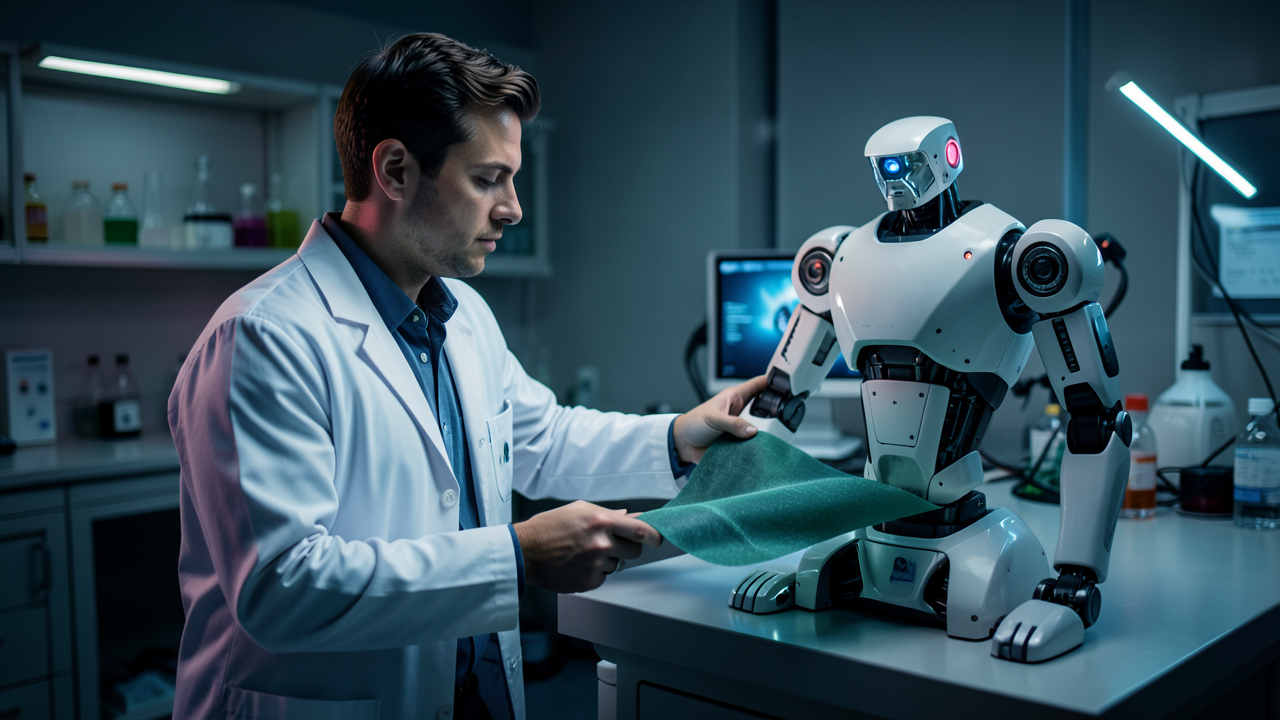
Skild AI has announced its groundbreaking “S1 Robot Foundation Model,” which integrates NVIDIA’s Physical AI to enable robots to learn complex new tasks from a single video demonstration. This innovative model demonstrated a remarkable improvement, achieving over a 7x increase in success rates for novel multi-stage tasks compared to traditional AI systems, and showcased the ability to transition from a real-world demonstration to autonomous execution in just 11 minutes.
Technical / Clinical Details
- S1 Robot Foundation Model: Developed by Skild AI, this model is built upon NVIDIA’s Physical AI technology and is specifically designed to empower robots to learn complex, multi-stage tasks from a single video input.
- In-Context Learning: The core of this technology is “in-context learning,” where the model directly interprets the demonstrated task from the input video and generates an execution plan. Unlike conventional machine learning approaches, it does not require iterative weight updates or task-specific fine-tuning, streamlining the learning process significantly.
- Performance Enhancement: The model has been reported to achieve more than a 7x improvement in success rates for new, multi-stage tasks when compared to previous AI systems. This enhancement indicates a greater capability for robots to adapt quickly to unfamiliar environments and diverse task requirements.
- Rapid Deployment: Skild AI’s team successfully demonstrated that a robot could move from a live video demonstration to autonomously performing the task in as little as 11 minutes. This rapid deployment capability addresses a major bottleneck in the practical application and scaling of robotic systems.
Background & Context
Historically, teaching robots new tasks has been a laborious process, demanding extensive data collection, time-consuming training, and often specialized programming. This overhead has been a significant barrier to deploying robots in environments that require flexibility, such as manufacturing, logistics, and service industries, where tasks are diverse and frequently change. Physical AI, particularly through techniques like in-context learning, offers a solution by enabling robots to learn and adapt more human-like, from minimal information. This advancement is crucial for bridging the gap between AI research and practical, scalable industrial deployment, especially for complex manipulation tasks in manufacturing.
Strategic Significance & Outlook
The Skild AI S1 model is poised to redefine standards in the physical AI domain by dramatically enhancing robot versatility and ease of deployment. This technology will allow businesses to substantially reduce the time and cost associated with reprogramming robots, enabling faster implementation of new automation solutions. In the future, it is expected to accelerate the adoption of “learning robots” across various applications, from consumer robotics to industrial automation, where robots can learn and adapt complex behaviors from single visual inputs. This represents a critical step towards increasing the flexibility and efficiency of human-robot collaboration and unlocking new possibilities for intelligent autonomous systems.
Source: https://blogs.nvidia.com/blog/skild-ai-s1-physical-ai/
Get our weekly technology intelligence — free
Receive an infographic that lets you judge at a glance whether each field’s analysis report is worth reading.
Subscribe Free — Weekly Tech Intelligence
By subscribing, you’ll receive Troy-Technical’s weekly technology intelligence newsletter.
- Your email and selected fields are used only to deliver the newsletter.
- We never share your information with third parties.
- You can unsubscribe anytime via the link in each email.
See our Privacy Policy for details.
Takes about a minute · Unsubscribe anytime







Comments