


Key Findings
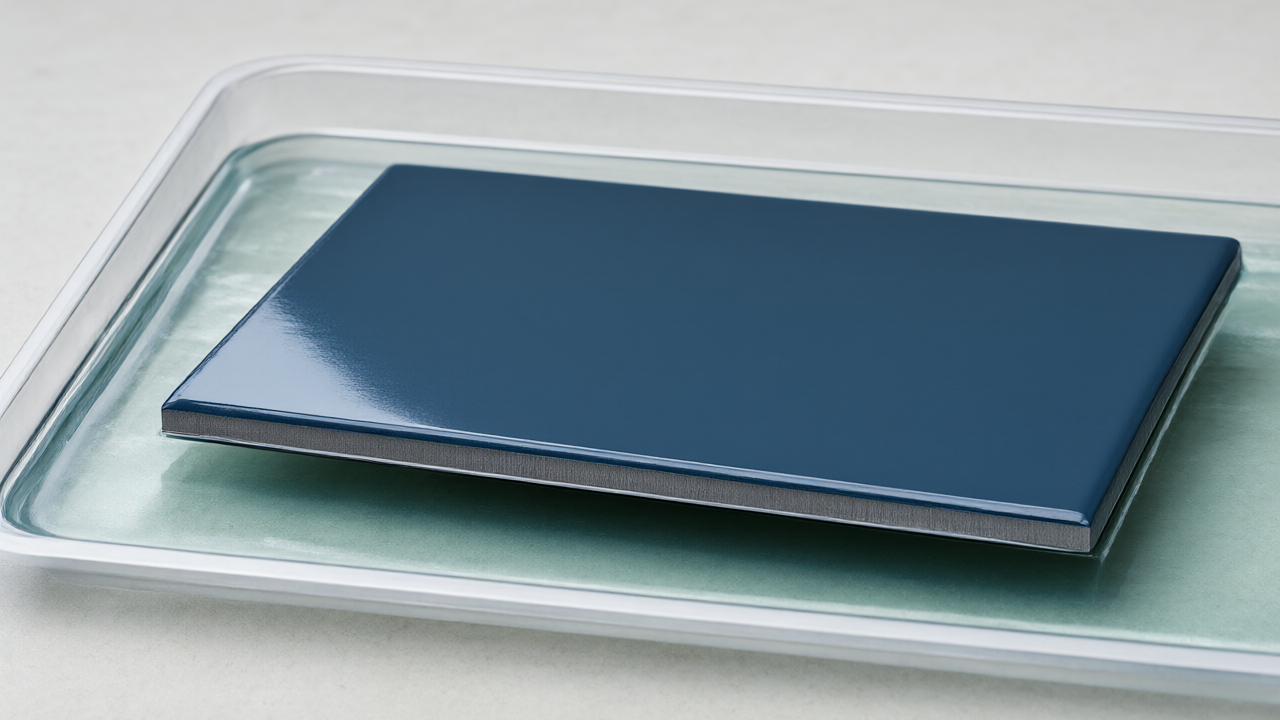
The hybrid coating containing 1 wt.% SiO₂ and 1 wt.% Al₂O₃ (1S1A) demonstrated a dramatic increase in corrosion resistance compared to neat epoxy and single-filler systems. Potentiodynamic polarisation measurements showed a reduction in corrosion current density (Icorr) from 0.1425 to 0.0005 µA/cm². Furthermore, the 1S1A coating limited water uptake to 5.09% after 40 days of immersion in a 3.5 wt.% NaCl solution, while maintaining a high low-frequency impedance modulus throughout the period.
Technical Details
To prevent nanoparticle agglomeration and improve polymer compatibility, researchers chemically modified the oxide nanoparticles with 3-glycidoxypropyltrimethoxysilane (GPMS). This covalent grafting was verified using thermogravimetric analysis (TGA) and Fourier-transform infrared spectroscopy (FTIR). The resulting epoxide-functional silane layer ensured better dispersion and allowed the fillers to integrate covalently into the epoxy network during the curing process.
Regarding wet adhesion, the 1S1A coating retained a pull-off strength of 9.3 MPa after 40 days of immersion, representing a loss of only 24.39% ± 0.68%. In contrast, neat epoxy coatings lost 54.55% ± 1.13% of their pull-off adhesion strength under the same conditions.
Background & Context
Standard neat epoxy coatings are prone to curing-induced micropores. These defects allow the diffusion of chloride ions, oxygen, and water toward the substrate interface, which typically results in cathodic delamination, hydrolytic degradation, and under-film corrosion. This study targeted St-37 carbon steel to address these vulnerabilities.
Significance & Outlook
The performance boost is attributed to a synergistic effect where SiO₂ provides pore-filling capabilities while Al₂O₃ provides covalent interfacial anchoring. This combination creates a dense, defect-free network that effectively suppresses electrolyte ingress and prevents delamination, offering a more durable solution for long-term metal protection in saline environments.
Get our weekly technology intelligence — free
Receive an infographic that lets you judge at a glance whether each field’s analysis report is worth reading.
Subscribe Free — Weekly Tech Intelligence
By subscribing, you’ll receive Troy-Technical’s weekly technology intelligence newsletter.
- Your email and selected fields are used only to deliver the newsletter.
- We never share your information with third parties.
- You can unsubscribe anytime via the link in each email.
See our Privacy Policy for details.
Takes about a minute · Unsubscribe anytime