Key Findings
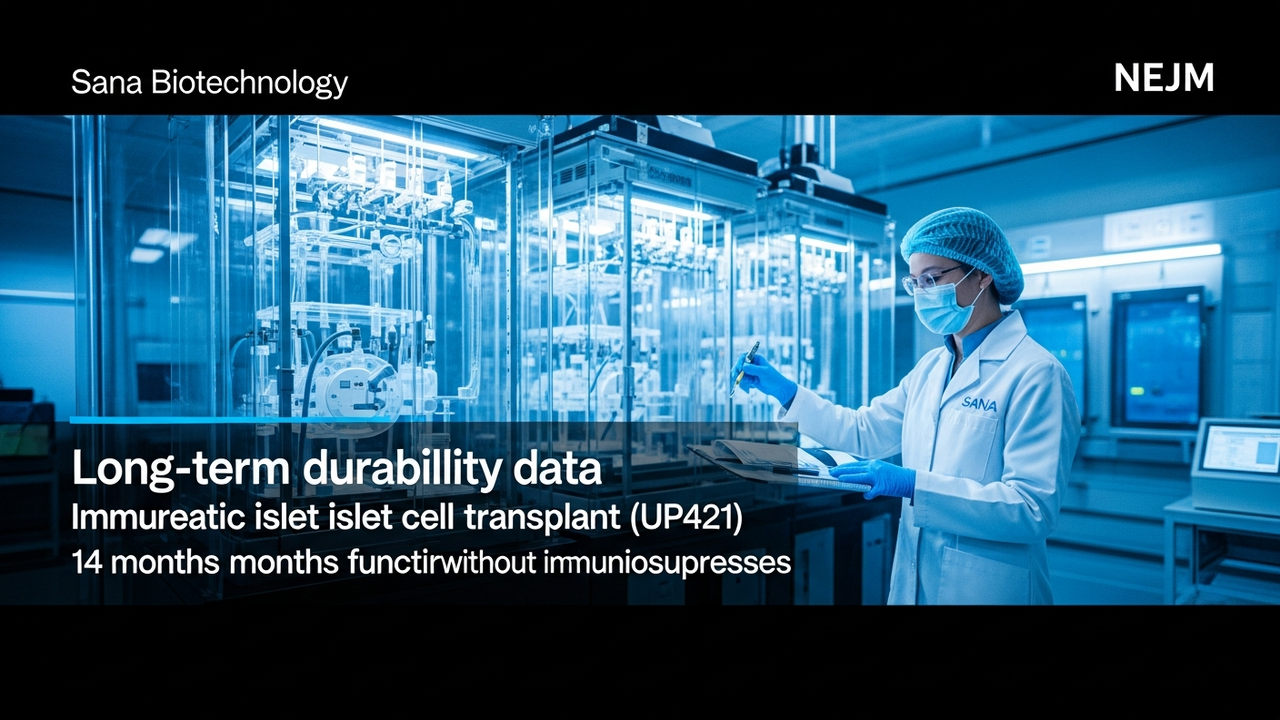
On July 13, 2026, Sana Biotechnology announced in a follow-on publication in the prestigious medical journal, The New England Journal of Medicine (NEJM), groundbreaking long-term data demonstrating the durability of its hypoimmune-modified islet cell transplant, UP421, in patients with Type 1 Diabetes (T1D). The data unequivocally showed that cells genetically modified with the company’s Hypoimmune Platform (HIP) technology continued to function for 14 months within patients without the use of any immunosuppressive drugs, marking a critical milestone towards a functional cure for T1D.
Technical / Clinical Details
UP421 is an islet cell transplant product derived from human induced pluripotent stem cells (iPSCs), developed using Sana Biotechnology’s Hypoimmune Platform (HIP) technology. The HIP technology is engineered to enable transplanted cells to evade attack from the recipient’s immune system (including T cells, B cells, NK cells, and macrophages) by knocking out the expression of Major Histocompatibility Complex (MHC) Class I and II genes and enhancing ‘Do not eat me’ signals like CD47. The NEJM paper detailed data from T1D patients who received UP421 in a clinical trial, confirming sustained insulin production and contribution to glycemic control for 14 months without immunosuppression. This could significantly reduce patients’ need for exogenous insulin and lower the risk of diabetes complications. The safety profile was also favorable, with no increased risks observed due to the absence of immunosuppression.
Background & Context
Type 1 Diabetes is a severe autoimmune disease characterized by the destruction of insulin-producing pancreatic cells, with current treatment primarily focusing on symptomatic insulin injections. While conventional islet transplantation can achieve insulin independence, it necessitates lifelong, potent immunosuppressants to prevent graft rejection, with associated significant side effects (e.g., infections, renal dysfunction, increased malignancy risk). Sana’s HIP technology fundamentally overcomes this limitation by eliminating the need for immunosuppression. This breakthrough addresses one of the biggest barriers to the widespread adoption of allogeneic cell therapies (off-the-shelf cell therapies), potentially accelerating regenerative medicine’s broad application.
Strategic Significance & Outlook
The publication of long-term durability data in NEJM substantially elevates the clinical and commercial potential of UP421. This achievement suggests the possibility for T1D patients to regain insulin-producing function without immunosuppression, moving closer to a practical cure. Sana Biotechnology is expected to apply this platform technology to other iPSC-derived cell products beyond islet cells, accelerating the development of immune-evasive cell therapies for various diseases. The progress of future large-scale clinical trials and the path towards eventual market approval are highly anticipated to significantly transform the future of diabetes treatment.
Source: #
Get our weekly technology intelligence — free
Receive an infographic that lets you judge at a glance whether each field’s analysis report is worth reading.
Subscribe Free — Weekly Tech Intelligence
By subscribing, you’ll receive Troy-Technical’s weekly technology intelligence newsletter.
- Your email and selected fields are used only to deliver the newsletter.
- We never share your information with third parties.
- You can unsubscribe anytime via the link in each email.
See our Privacy Policy for details.
Takes about a minute · Unsubscribe anytime

Comments