
Key Findings
This paper highlights how machine-learning interatomic potentials (MLIPs), including Equivariant Graph Neural Networks (EGNNs), have revolutionized the field of atomic modeling by learning potential energy surfaces directly from quantum mechanical (QM) data. Notably, new methodological advances related to coarse-graining, such as the E(3)-equivariant message-passing neural network architecture for molecular coarse-graining, are introduced.
Technical / Clinical Details
MLIPs bridge the gap in large-scale simulations in materials science and chemistry by describing interatomic interactions with accuracy comparable to first-principles calculations (DFT) but with significantly higher computational efficiency. EGNNs explicitly incorporate the symmetries of physical systems (rotation, translation, inversion) into the learning process, dramatically enhancing the predictive accuracy and generalization performance of potential energy surfaces. This enables more reliable predictions even in out-of-distribution (OOD) chemical environments, beyond the scope of the training dataset. In addition to MLIP advancements, the paper discusses AI applications in ‘coarse-graining’ (CG) methods to boost the simulation efficiency of large molecular systems. Specifically, the E(3)-equivariant message-passing neural network architecture allows learning interactions between coarse-grained particles while preserving the original atomic-level physical symmetries. This improves the accuracy and physical validity of CG models, enabling simulations of biomolecular complexes and soft matter, which were previously too computationally expensive, at more realistic time scales.
Background & Context
Atomic-level simulations are crucial for discovering new materials, elucidating catalytic reaction mechanisms, and understanding biomolecular functions. However, they have faced the challenge of explosively increasing computational costs as system size grows. MLIPs and AI-driven coarse-graining have emerged as powerful tools to overcome this computational bottleneck, enabling the study of more complex and realistic materials and biological systems. EGNNs are a successful example of the fusion of physics and AI, and their symmetry-aware capabilities are critical for enhancing the reliability and interpretability of AI in scientific modeling.
Strategic Significance & Outlook
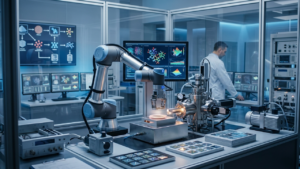
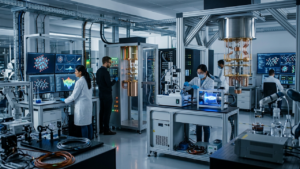
The evolution of MLIPs, including EGNNs, and advancements in coarse-graining methods like the E(3)-equivariant message-passing neural network, will further push the frontiers of computational materials science, chemistry, and biophysics. This will deepen our understanding of various multi-scale phenomena, such as complex phase transitions, polymer dynamics, and drug cellular permeation. In the future, these AI-driven modeling methods are expected to integrate with experimental data and become core technologies in self-driving materials discovery laboratories, dramatically accelerating the pace and efficiency of scientific discovery. This holds the potential to significantly shorten the development of new functional materials and therapeutic approaches.
Source: https://arxiv.org/abs/2607.05030
Get our weekly technology intelligence — free
Receive an infographic that lets you judge at a glance whether each field’s analysis report is worth reading.
Subscribe Free — Weekly Tech Intelligence
By subscribing, you’ll receive Troy-Technical’s weekly technology intelligence newsletter.
- Your email and selected fields are used only to deliver the newsletter.
- We never share your information with third parties.
- You can unsubscribe anytime via the link in each email.
See our Privacy Policy for details.
Takes about a minute · Unsubscribe anytime





Comments