
Key Findings
High Bandwidth Memory (HBM), a core component in Artificial Intelligence (AI) technology, is facing severe supply bottlenecks not only in DRAM wafer production but also in subsequent advanced packaging and testing capabilities. This dual constraint is the primary factor preventing the industry from meeting the surging HBM demand in the AI era.
Technical and Clinical Details
HBM employs 3D stacking technology, where multiple DRAM dies are vertically stacked and interconnected through Through-Silicon Vias (TSVs). This architecture enables significantly wider data bus widths and shorter signal paths, delivering dramatically higher bandwidth and superior energy efficiency compared to conventional DRAM solutions. The process necessitates wafer thinning, TSV formation, microbump bonding, and advanced packaging techniques like CoWoS (Chip-on-Wafer-on-Substrate). Each of these steps is highly complex and demands extreme precision, making yield assurance challenging and production costs high. Samsung is actively developing HBM4, the next generation of HBM, and anticipates a substantial increase in HBM-related sales in 2026. The company is focused on accelerating customer qualification and improving yield recovery, engaging in fierce competition with key rivals like SK Hynix and Micron for leadership in the AI memory market.
Background and Industry Context
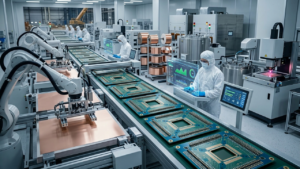
The increasing scale of AI models and the explosive growth in data processing volumes demand unprecedented bandwidth and capacity from the memory integrated into AI chips, requirements that conventional Double Data Rate (DDR) memory cannot satisfy. HBM was developed to meet these demands and is widely adopted in NVIDIA’s GPUs and AMD’s AI accelerators. However, HBM manufacturing processes are far more complex than traditional memory production. Specifically, advanced packaging steps such as TSV formation and microbump bonding require specialized expertise, dedicated equipment, and long lead times. Consequently, while DRAM manufacturers continue to invest heavily to boost HBM production, packaging capacity constraints remain a primary factor limiting overall supply.
Strategic Significance and Outlook
The HBM supply bottleneck will continue to significantly impact the pace of AI chip market entry and AI infrastructure expansion for several years. Major HBM suppliers—Samsung, SK Hynix, and Micron—must accelerate technological innovation and capacity expansion to overcome these constraints. Particularly, rapid customer qualification and stable yield are decisive factors for gaining market share. AI chip manufacturers must forge robust partnerships with HBM suppliers to ensure a stable supply. The evolution of HBM technology and the expansion of its supply capacity will be a critical key to driving the performance improvement and widespread adoption of next-generation AI computing.
Source: https://www.biyapay.com/en/blogdetail/4403-what-are-hbm-concept-stocks-samsung-sk-hynix-micro
Get our weekly technology intelligence — free
Receive an infographic that lets you judge at a glance whether each field’s analysis report is worth reading.
Subscribe Free — Weekly Tech Intelligence
By subscribing, you’ll receive Troy-Technical’s weekly technology intelligence newsletter.
- Your email and selected fields are used only to deliver the newsletter.
- We never share your information with third parties.
- You can unsubscribe anytime via the link in each email.
See our Privacy Policy for details.
Takes about a minute · Unsubscribe anytime





Comments