Key Findings
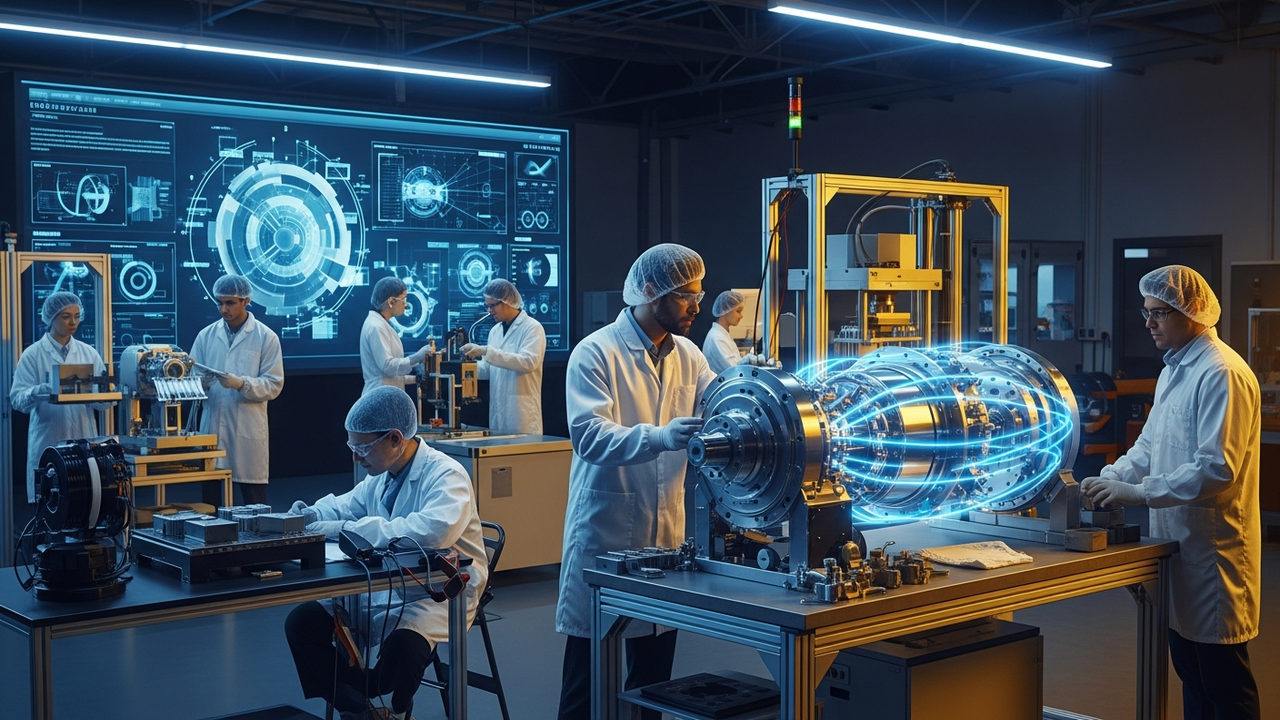
The U.S. Department of Energy (DOE) has announced the selection of CorePower Magnetics’ project under the FOA 3105 program focusing on critical material innovation, efficiency, and alternatives. This project aims to develop and prototype high-performance rare-earth-element-free axial flux electric motors, combining nanocrystalline soft magnets with a proprietary flux-switching design to achieve high torque, efficiency, and power density. This initiative is critically important for reducing dependence on rare-earth elements in electric vehicles (EVs) and other industrial sectors, thereby enhancing supply chain resilience.
Technical / Clinical Details
CorePower Magnetics’ rare-earth-element-free axial flux electric motor aims to resolve the supply risk and cost issues associated with rare-earth resources that plague conventional permanent magnet motors. Central to this motor design are advanced nanocrystalline soft magnetic materials and an innovative flux-switching mechanism. Nanocrystalline soft magnets exhibit significantly lower core losses and higher permeability compared to existing electrical steels, contributing to higher motor efficiency and miniaturization. The flux-switching design dynamically alters flux paths by controlling coil excitation, enabling the generation of strong torque without rare-earth magnets. This is expected to allow the motor to achieve power densities (e.g., over 15 kW/kg) comparable to or exceeding conventional rare-earth magnet motors at peak output, while maintaining over 95% high efficiency across a wide speed range. With DOE’s support, CorePower Magnetics will evaluate the production readiness of various rare-earth-element-free permanent magnet technologies to identify and demonstrate the most promising solutions.
Background & Context
Rare-earth elements are essential for many strategic technologies, including electric vehicles, wind turbines, and defense systems, but their supply is concentrated in a few countries, posing high geopolitical risks. The U.S. has prioritized reducing its dependence on these critical materials and strengthening domestic supply chains as a national security imperative. DOE’s FOA 3105 program is a key component of this objective, supporting the development of innovative materials and technologies to build sustainable and stable domestic production capabilities. CorePower Magnetics’ project is expected to play a central role in this broader strategy, driving the adoption of rare-earth-free solutions in the EV and energy sectors.
Strategic Significance & Outlook
The development of CorePower Magnetics’ rare-earth-element-free axial flux electric motor holds the potential to revolutionize the EV industry. If commercialized, this technology will not only reduce EV manufacturing costs and improve supply chain resilience but also accelerate the adoption of more sustainable motor technologies. Future steps include rigorous testing of prototype motor performance and durability, scaling up to mass production processes, and close collaboration with automotive manufacturers for integration and validation. Furthermore, this technology is expected to find applications beyond EVs, in a wide range of sectors requiring high-efficiency motors, such as industrial motors, robotics, aerospace, and even marine propulsion systems, thereby significantly impacting global power conversion technologies.
Get our weekly technology intelligence — free
Receive an infographic that lets you judge at a glance whether each field’s analysis report is worth reading.
Subscribe Free — Weekly Tech Intelligence
By subscribing, you’ll receive Troy-Technical’s weekly technology intelligence newsletter.
- Your email and selected fields are used only to deliver the newsletter.
- We never share your information with third parties.
- You can unsubscribe anytime via the link in each email.
See our Privacy Policy for details.
Takes about a minute · Unsubscribe anytime






Comments