
Key Findings
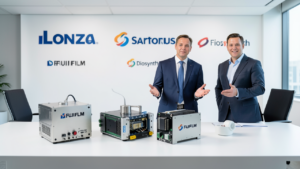
In the cell and gene therapy sector, FUJIFILM Cellular Dynamics inaugurated a new induced pluripotent stem cell (iPSC) development and manufacturing facility in Madison, USA, in May 2026, significantly expanding its production capacity. This was followed in June 2026 by Made Scientific and Pluristyx forming an integrated iPSC development and manufacturing partnership, covering everything from iPSC development to GMP manufacturing, enhancing the supply of clinical-grade iPSCs to the industry. Additionally, Lonza extended its existing agreement with Genetix, further solidifying its leading position in the long-term commercial supply of autologous and allogeneic cell therapies and viral vectors.
Technical and Clinical Details
FUJIFILM Cellular Dynamics’ new facility incorporates cutting-edge technologies to achieve highly efficient and large-scale production of induced pluripotent stem cells (iPSCs). This includes automated cell culture systems and stringent quality control processes, enabling the stable supply of high-quality iPSC lines for clinical trials and commercial use. The partnership between Made Scientific and Pluristyx provides comprehensive services from iPSC establishment, quality assessment, gene editing, to final GMP-compliant manufacturing, supporting customers in their seamless transition from research and development to clinical application. The supply of clinical-grade iPSC lines, in particular, addresses a crucial bottleneck in regenerative medicine product development. Lonza’s contract extension reflects its robust foundation as a cell and gene therapy CDMO and its broad service portfolio, including viral vector manufacturing. This move will further accelerate the commercialization of therapies delivered to patients.
Background and Industry Context
iPSC technology holds revolutionary potential in regenerative medicine and cell therapy, serving as a fundamental platform for developing new treatments for a wide range of diseases. iPSC-derived cell therapy products are expected to find clinical applications across diverse disease areas, including autoimmune diseases, neurodegenerative disorders, and cancer. However, the commercialization of these products necessitates the establishment of scalable, cost-effective, and regulatory-compliant manufacturing processes. Such significant investments and strategic alliances by leading companies are crucial for bridging the gap in manufacturing infrastructure and expertise, accelerating the growth of the entire iPSC-based cell therapy industry as it moves from research to market introduction.
Strategic Significance and Outlook
The expansion of iPSC manufacturing capacity and strengthening of strategic partnerships will directly contribute to the broadening of the cell therapy product pipeline and the acceleration of clinical trials. In the future, the introduction of more advanced automation, AI-driven process optimization, and in situ quality control technologies is expected to further reduce the cost and complexity of iPSC manufacturing. This will enable more patients to access high-quality and safe iPSC-derived cell therapies, leading to a world that benefits from transformative medical treatments. International regulatory authorities are also moving towards streamlining the approval process for iPSC-based products, which could further shorten time-to-market.
Source: https://www.openpr.com/news/4574244/cell-and-gene-therapy-manufacturing-services-market-to-reach-us
Get our weekly technology intelligence — free
Receive an infographic that lets you judge at a glance whether each field’s analysis report is worth reading.
Subscribe Free — Weekly Tech Intelligence
By subscribing, you’ll receive Troy-Technical’s weekly technology intelligence newsletter.
- Your email and selected fields are used only to deliver the newsletter.
- We never share your information with third parties.
- You can unsubscribe anytime via the link in each email.
See our Privacy Policy for details.
Takes about a minute · Unsubscribe anytime





Comments