Key Findings
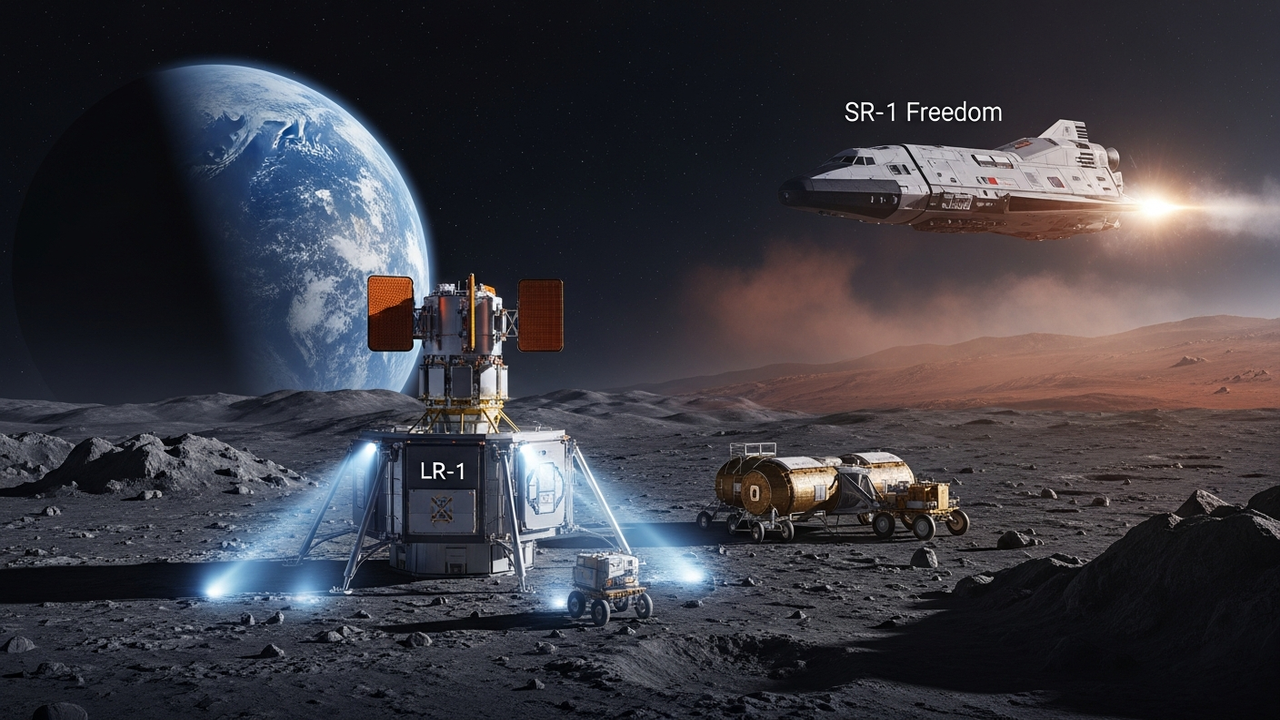
NASA and the U.S. Department of Energy (DOE) are jointly pushing forward with the development and deployment of critical space nuclear power systems, essential for both deep space exploration and the long-term sustenance of lunar bases. The agencies have formalized their commitment through a Memorandum of Understanding to develop and deploy the Lunar Reactor-1 (LR-1) by 2030, alongside announcing accelerated development plans for the Space Reactor-1 (SR-1) Freedom, a nuclear electric propulsion demonstrator slated for a Mars mission launch in 2028.
Technical & Program Details
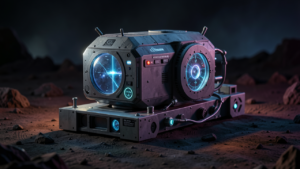
- Lunar Reactor-1 (LR-1): NASA and DOE are actively seeking partnerships with U.S. industry to demonstrate a fission surface power system on the Moon by the late 2020s. This system is designed to provide a reliable, high-power energy source crucial for sustained human presence and scientific activities on the lunar surface. Initial demonstrations aim to generate up to 40 kilowatts of electricity and operate continuously for a minimum of one year. This technology will be a game-changer for lunar outpost longevity and scientific endeavors, circumventing the limitations of solar power during lunar nights and in shaded regions.
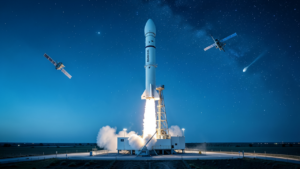
- Mars Mission SR-1 Freedom: An accelerated development timeline was announced in March 2026 for the SR-1 Freedom nuclear electric propulsion demonstrator, targeting a late 2028 launch to Mars. NASA is committing over $2 billion to this mission, which is anticipated to be the first interplanetary spacecraft powered by fission propulsion. The SR-1 Freedom will also carry NASA’s next-generation Mars helicopter mission, ‘SkyFall,’ to scout potential landing sites for future crewed missions. Nuclear electric propulsion offers significant advantages over traditional chemical propulsion, including substantially faster transit times to Mars, which reduces astronaut exposure to cosmic radiation and allows for larger payload capacities.
Background & Context
As plans for human exploration and permanent habitation on the Moon and Mars intensify, reliable high-power generation and rapid space transportation have become paramount. While solar power faces challenges from lunar nights and dust accumulation, and its efficiency diminishes with distance in deep space, nuclear power offers a robust, continuous energy solution regardless of illumination conditions. Nuclear electric propulsion drastically improves the efficiency and speed of long-duration missions, making human deep space endeavors more feasible.
Strategic Significance & Outlook
The successful deployment of lunar reactors will accelerate the realization of In-Situ Resource Utilization (ISRU), such as generating oxygen and fuel from lunar regolith, thereby enhancing the self-sufficiency of lunar bases. The SR-1 Freedom mission will pave the way for crewed Mars expeditions and further deep space missions, dramatically expanding humanity’s reach in the cosmos. These technologies are strategically vital for unlocking the next frontier of space exploration, establishing sustained human presence beyond Earth orbit, and enabling ambitious scientific discoveries.
Get our weekly technology intelligence — free
Receive an infographic that lets you judge at a glance whether each field’s analysis report is worth reading.
Subscribe Free — Weekly Tech Intelligence
By subscribing, you’ll receive Troy-Technical’s weekly technology intelligence newsletter.
- Your email and selected fields are used only to deliver the newsletter.
- We never share your information with third parties.
- You can unsubscribe anytime via the link in each email.
See our Privacy Policy for details.
Takes about a minute · Unsubscribe anytime


Comments