Key Findings
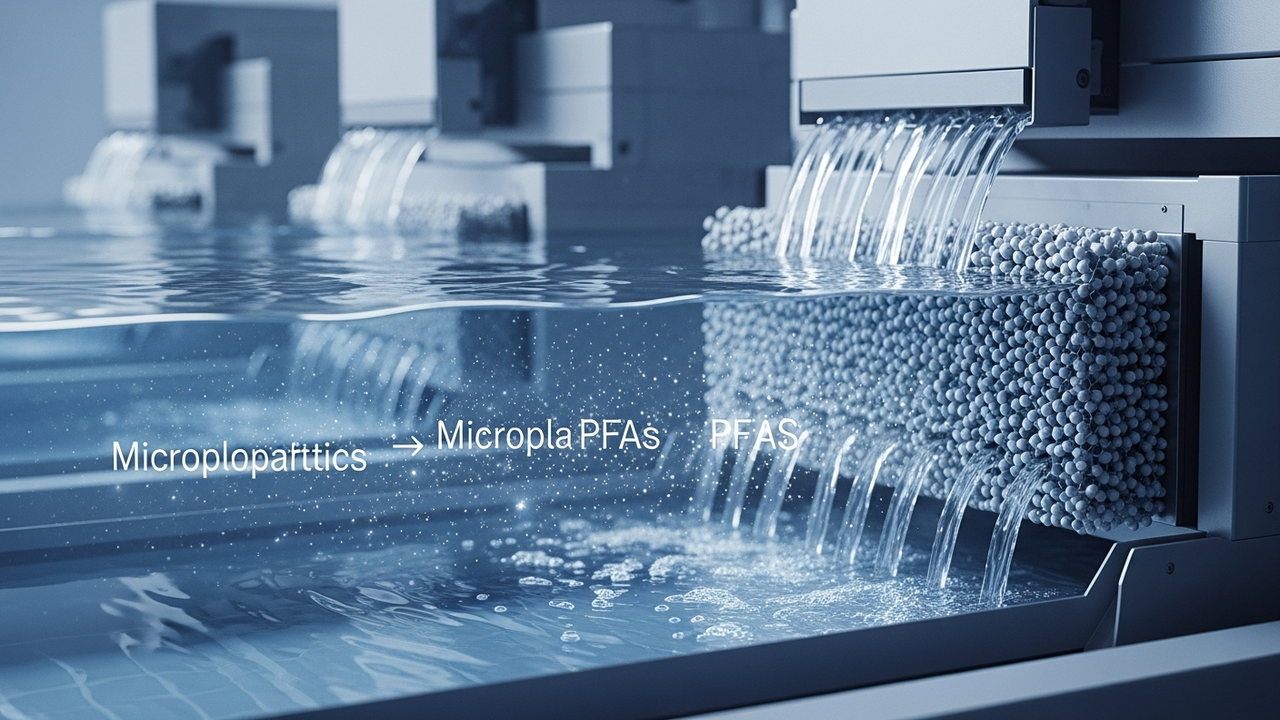
Researchers at RMIT University in Australia have developed a groundbreaking water treatment material capable of highly efficient and rapid removal of difficult-to-eliminate pollutants, including invisible microplastics and certain per- and polyfluoroalkyl substances (PFAS). This innovation offers a potent solution to the escalating global water pollution crisis.
Technical / Clinical Details
The newly developed water treatment material leverages its unique composition and surface properties to selectively adsorb and potentially degrade nanometer-sized microplastic particles and specific, highly concerning PFAS variants. A key advantage is its effectiveness against minute pollutants that conventional methods, such as activated carbon filters or membrane separation, struggle to remove. The material is designed for swift interaction with water, rapidly adsorbing contaminants and, under specific conditions, facilitating their breakdown into harmless substances. While exact removal efficiencies and processing times remain undisclosed, the research team emphasizes ‘rapid removal’ and ‘significant efficiency improvements,’ suggesting performance superior to existing technologies. This process is expected to operate with low energy consumption while delivering high purification capabilities.
Background & Context
Water contamination by microplastics and PFAS is a recognized global environmental issue, raising significant concerns for ecosystems and human health. PFAS, often dubbed ‘forever chemicals,’ are persistent in the environment due to their resistance to degradation, making their removal an urgent challenge. Current water treatment technologies are often inadequate for complete removal of these microscopic contaminants, necessitating the development of more advanced and efficient materials. RMIT’s achievement represents a potential game-changer for the water treatment industry, laying a crucial foundation for delivering safer drinking water and supporting sustainable industrial practices worldwide.
Strategic Significance & Outlook
This novel water treatment material is poised for broad application in municipal water treatment plants, industrial wastewater facilities, and even household water purifiers. Its implementation would be particularly impactful in regions with severe PFAS contamination or high microplastic environmental loads, significantly contributing to public health and ecosystem protection. The research team is actively optimizing the material for scalability and cost-efficiency, aiming for early commercialization. In the long term, this technology has the potential to elevate international water quality standards and become an essential tool for ensuring access to safe water globally, marking a substantial stride towards a sustainable future.
Source: https://www.azom.com/materials-news-index.aspx
Get our weekly technology intelligence — free
Receive an infographic that lets you judge at a glance whether each field’s analysis report is worth reading.
Subscribe Free — Weekly Tech Intelligence
By subscribing, you’ll receive Troy-Technical’s weekly technology intelligence newsletter.
- Your email and selected fields are used only to deliver the newsletter.
- We never share your information with third parties.
- You can unsubscribe anytime via the link in each email.
See our Privacy Policy for details.
Takes about a minute · Unsubscribe anytime









Comments