Key Findings
As AI workloads rapidly escalate, data center cluster networks are reaching the physical limitations of traditional copper interconnects, prompting a shift towards optical circuit switching. This technology, particularly vital for large-scale AI clusters exceeding 576 GPUs, offers a fundamental solution to challenges in bandwidth density, reach, and power consumption through software-controlled, reconfigurable topologies.
Technical Details and Applications
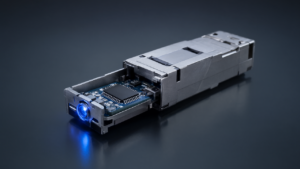
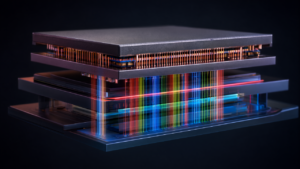
- Optical Circuit Switching (OCS): OCS overcomes the distance and bandwidth limitations of copper cabling in large-scale AI cluster interconnects. Its ability to dynamically reconfigure optical paths via software allows for network topology optimization based on specific AI workloads, achieving high bandwidth density and low latency. This significantly improves communication efficiency between GPUs, potentially reducing AI model training times.
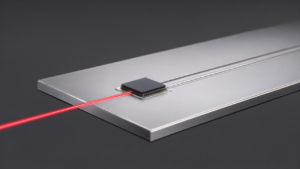
- Frequency Combs and Ultrastable Lasers: These technologies play a crucial role in optical communications, precision measurement, and quantum technologies. Frequency combs enable the precise control of different laser frequencies, allowing for simultaneous transmission of multiple data channels and highly accurate time synchronization. Ultrastable lasers enhance the stability of frequency combs, leading to more reliable optical communication and sensing applications.
- Microwave and Millimeter-Wave Photonics: These technologies bridge wireless and optical communications, facilitating high-frequency data transmission. They are essential for efficiently processing high-speed, high-capacity data in 5G and next-generation wireless communication systems.
Background and Industry Context
The evolution of AI has revolutionized data center design and operations. The emergence of Transformer models and Large Language Models (LLMs) has led to an unprecedented expansion of AI workloads, making the immense data transfer between GPU clusters a significant bottleneck. Copper-based interconnects struggle with signal attenuation, power consumption, and physical cabling constraints, making further scaling difficult. In this context, optical technologies, especially optical circuit switching, are emerging as indispensable components for improving AI infrastructure scalability and efficiency, with the industry rapidly accelerating their adoption.
Strategic Significance and Outlook
Advances in technologies such as optical circuit switching, frequency combs, ultrastable lasers, and microwave/millimeter-wave photonics hold the potential to fundamentally transform AI data center architectures. These technologies are not only crucial for maximizing AI computational capabilities but are also expected to find applications across a wide range of fields, including precision measurement, quantum technologies, and next-generation wireless communication. Software-controlled reconfigurable optical networks, in particular, will flexibly adapt to the dynamic characteristics of AI workloads, laying the groundwork for future AI infrastructure. This will enable the development and deployment of more complex and high-performance AI models, accelerating a new wave of innovation.
Source: https://www.photonics.com/Articles/Photonics-Spectra-Preview-for-October-2026/a72447
Get our weekly technology intelligence — free
Receive an infographic that lets you judge at a glance whether each field’s analysis report is worth reading.
Subscribe Free — Weekly Tech Intelligence
By subscribing, you’ll receive Troy-Technical’s weekly technology intelligence newsletter.
- Your email and selected fields are used only to deliver the newsletter.
- We never share your information with third parties.
- You can unsubscribe anytime via the link in each email.
See our Privacy Policy for details.
Takes about a minute · Unsubscribe anytime