Key Findings
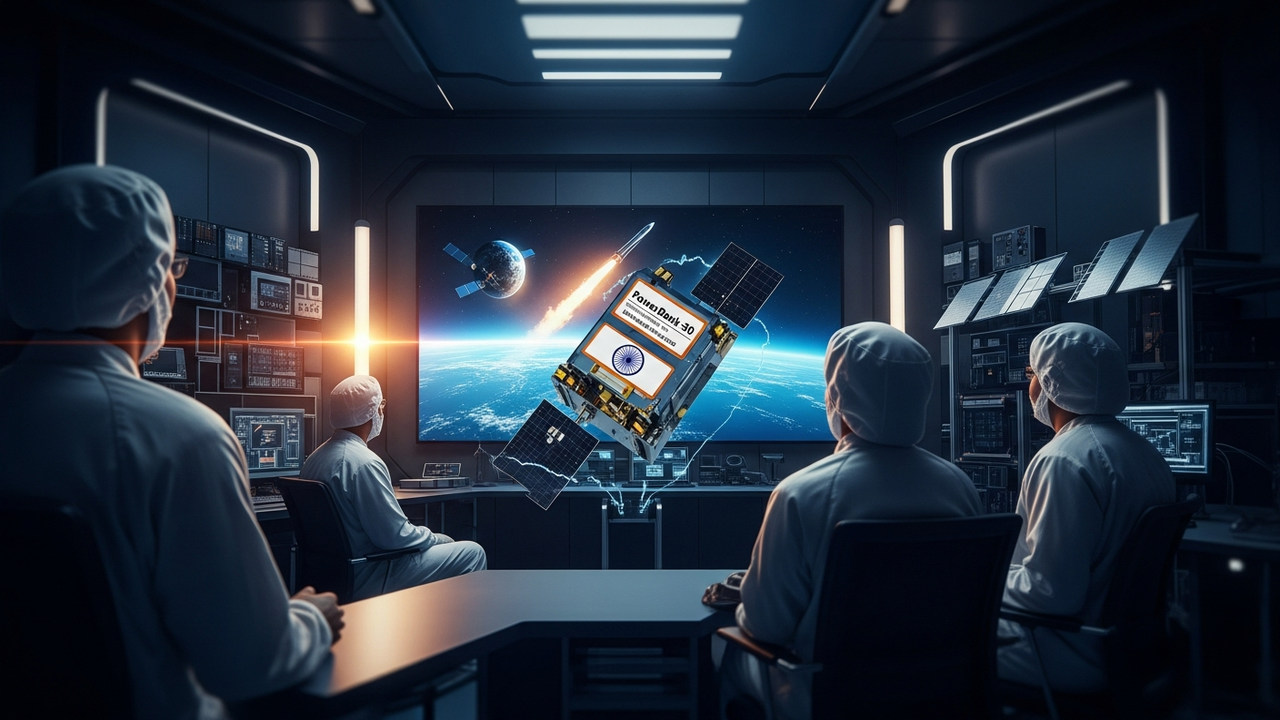
TakeMe2Space, an Indian startup based in Hyderabad, announced that its indigenously developed “PowerBank-50” satellite battery pack successfully completed its maiden space flight aboard Skyroot Aerospace’s Vikram-1 mission. This accomplishment validated the battery’s on-orbit performance, marking a significant milestone for India’s space industry and bolstering its domestic space component supply chain.
Technical Details
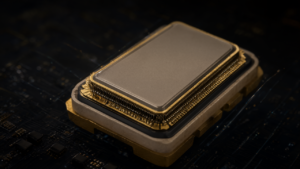
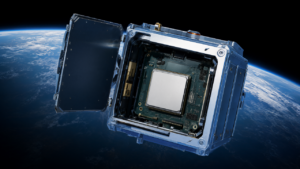
The “PowerBank-50” is an advanced lithium-ion battery pack engineered for a mission life of up to five years in Low Earth Orbit (LEO). Its core components include high-energy-density lithium-ion cells, a precise Battery Management System (BMS) offering protection against overcharge, over-discharge, overcurrent, and overheating, a heater to manage extreme temperature variations in space, and a robust aluminum enclosure. The BMS continuously monitors individual cell voltage, current, and temperature, ensuring optimal charge/discharge cycles to guarantee the battery pack’s safety, efficiency, and longevity. On-orbit performance data from the Vikram-1 mission clearly demonstrated the PowerBank-50’s capability to deliver stable power in the harsh space environment.
Background & Context
Historically, Indian satellite manufacturers and space agencies have predominantly relied on imported high-performance, space-grade battery systems. This dependency presented challenges related to supply chain vulnerabilities, cost, lead times, and technology transfer restrictions. The success of PowerBank-50 provides a domestic solution to these issues, aligning with India’s ‘Atmanirbhar Bharat’ (Self-Reliant India) initiative for its space development program. Achieving ‘flight heritage’—a proven track record of successful operation in space—is critically important for new space component manufacturers to demonstrate reliability and will be a significant advantage in securing future domestic and international contracts.
Strategic Significance & Outlook
The successful mission of PowerBank-50 lays the groundwork for TakeMe2Space to generate new business opportunities within both the Indian domestic market and the international space arena. The availability of indigenous battery systems will enable India to reduce satellite manufacturing costs and shorten development cycles. Future developments may include battery packs designed for higher power, longer lifespans, or specialized mission requirements. This technological evolution is expected to support the autonomy and expansion of diverse Indian space missions, including Earth observation, communication satellites, and scientific probes, further elevating India’s presence in the global space industry.
Source: https://www.electronicsforu.com/news/satellite-battery-completes-first-space-mission
Get our weekly technology intelligence — free
Receive an infographic that lets you judge at a glance whether each field’s analysis report is worth reading.
Subscribe Free — Weekly Tech Intelligence
By subscribing, you’ll receive Troy-Technical’s weekly technology intelligence newsletter.
- Your email and selected fields are used only to deliver the newsletter.
- We never share your information with third parties.
- You can unsubscribe anytime via the link in each email.
See our Privacy Policy for details.
Takes about a minute · Unsubscribe anytime