Key Findings
To meet the demands of the artificial intelligence (AI) era, China is deploying a new space-based computing network named “Xingshu” (Starhub). This initiative aims to transform satellites into advanced computing platforms, drastically improving on-orbit data processing capabilities and delivering real-time intelligent services to various industries on Earth.
Technical Details
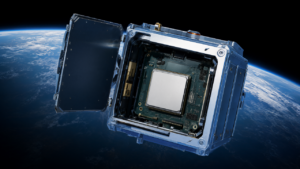
The “Xingshu” network is projected to eventually consist of approximately 1,000 Low Earth Orbit (LEO) satellites, each equipped with powerful processors and AI accelerators, functioning as edge computing nodes. This architecture enables the direct processing and analysis of vast amounts of image and sensor data acquired by Earth observation satellites, even before transmission to ground stations. For instance, real-time anomaly detection and pattern recognition can be performed for applications such as forest fire detection, marine pollution monitoring, and agricultural yield prediction, providing immediate valuable insights to users on Earth. These on-demand computing services are intended for a broad range of government agencies, researchers, and enterprises across sectors including energy, shipping, finance, and disaster management. High-speed transmission of processed data will also be facilitated through integration with communication satellites. This technology fundamentally transforms the role of satellites from mere data collection devices to “intelligent satellites” with advanced AI inference and decision-making capabilities.
Background & Context
In traditional satellite systems, raw data collected in space was transmitted to ground-based data centers for processing and analysis. However, this approach faces challenges such as increasing data volumes, limitations in communication bandwidth, and significant communication latency between Earth and satellites (especially for deep space missions). The proliferation of IoT devices and 5G/6G communication networks, in particular, has driven a growing demand for real-time data processing in space. China, as part of its national strategy, is pushing for self-reliance and advancement in space technology, recognizing that strengthening space-based computing capabilities is crucial in its competition with other space powers like the United States.
Strategic Significance & Outlook
The deployment of the “Xingshu” network is expected to have a profound impact on China’s space economy and digital economy. Once fully operational, this infrastructure will enable faster and more intelligent utilization of data from space, creating new business opportunities and efficiencies across numerous Earth-based industries. In the future, this network also holds the potential to serve as a foundational support for activities such as autonomous in-space manufacturing, resource exploration, and space tourism. China views space-based AI computing as a strategic frontier and aims to establish technological superiority in this area, thereby reinforcing its leadership in the global space race. This endeavor signifies the transformative potential of evolving space technology for human society.
Get our weekly technology intelligence — free
Receive an infographic that lets you judge at a glance whether each field’s analysis report is worth reading.
Subscribe Free — Weekly Tech Intelligence
By subscribing, you’ll receive Troy-Technical’s weekly technology intelligence newsletter.
- Your email and selected fields are used only to deliver the newsletter.
- We never share your information with third parties.
- You can unsubscribe anytime via the link in each email.
See our Privacy Policy for details.
Takes about a minute · Unsubscribe anytime