Key Findings
Australian Vanadium (AVL), a prominent Australian resources company, along with its wholly-owned subsidiary VSUN Energy, has submitted a Phase 2 proposal to the Western Australian government for the Kalgoorlie Vanadium Battery Energy Storage System (VBESS). This proposal aims to construct, own, and operate a large-scale 500MWh vanadium flow battery system in the Eastern Goldfields region, representing a significant step towards decarbonizing and stabilizing Western Australia’s electricity grid.
Technical & Commercial Details
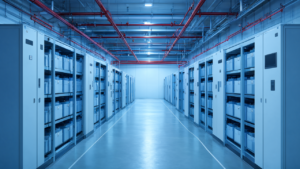
The proposed Kalgoorlie VBESS leverages vanadium flow battery (VFB) technology, which allows for independent scaling of power and energy capacity. Its 500MWh storage capacity is particularly crucial for ensuring a reliable power supply to regional mining operations and other industrial activities. The system will complement the variability of renewable energy sources, especially solar and wind, and address peak grid demands, thereby enabling a stable baseload power supply. VFBs have a significantly lower fire risk compared to lithium-ion batteries and boast a long lifespan of several thousand cycles, making them highly cost-efficient for long-term operation. The project is expected to contribute to Western Australia’s clean energy goals by facilitating renewable energy integration and reducing reliance on fossil fuels. Furthermore, by utilizing local vanadium resources, it aims to localize the supply chain and return economic benefits to the region.
Background & Industry Context
Western Australia, rich in mineral resources and vast solar and wind potential, often faces challenges in supplying power to its remote mining and industrial areas, which are typically high-cost and reliant on diesel generation. As part of its energy transition policy, the state government is accelerating renewable energy adoption and seeking sustainable and economical power solutions. Vanadium flow batteries are gaining attention as a compelling alternative to lithium-ion batteries for such long-duration energy storage applications. AVL is also involved in a vanadium mining project in Western Australia, suggesting this VBESS proposal is part of a broader strategy to integrate the entire value chain from vanadium mining to battery manufacturing and operation. This contributes to regional economic revitalization and the establishment of a domestic supply system for critical minerals.
Future Outlook
Should the Phase 2 proposal for the Kalgoorlie VBESS project be approved, it will significantly accelerate the construction of large-scale energy storage infrastructure in Western Australia. This project will not only enhance regional grid stability but also promote the decarbonization of the mining sector, potentially serving as a model for other industries to adopt sustainable energy solutions. AVL, by combining its vanadium supply sources with VSUN Energy’s storage solutions, is expected to establish a vertically integrated business model, enhancing its competitive advantage in the market. In the long term, the wider adoption of VFB technology is anticipated to strengthen Australia’s overall energy security and play a crucial role in its clean energy transition. This initiative will also contribute to the diversification of global energy storage technologies, fostering innovation and resilience.
Get our weekly technology intelligence — free
Receive an infographic that lets you judge at a glance whether each field’s analysis report is worth reading.
Subscribe Free — Weekly Tech Intelligence
By subscribing, you’ll receive Troy-Technical’s weekly technology intelligence newsletter.
- Your email and selected fields are used only to deliver the newsletter.
- We never share your information with third parties.
- You can unsubscribe anytime via the link in each email.
See our Privacy Policy for details.
Takes about a minute · Unsubscribe anytime