Key Findings
All G has unveiled its bovine-free lactoferrin in the U.S. market, produced through cutting-edge precision fermentation technology. This announcement signals the imminent launch of human-identical proteins, marking a significant step in the development of sustainable, animal-free food ingredients. All G has established multi-ton annual production capacity for lactoferrin (LFX) by partnering with a leading fermentation contract manufacturing organization (CMO) in China, and further negotiations are underway to secure a second production facility, potentially in Europe.
Technical/Clinical Details
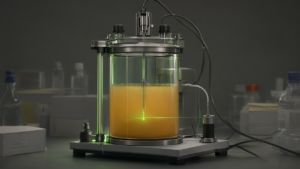
- Precision Fermentation Technology: Precision fermentation is a biotechnology that involves inserting specific DNA into microorganisms, directing them to produce target molecules through a fermentation process. This enables All G to generate lactoferrin, utilized as a nutritional supplement and food ingredient, without requiring bovine sources. The technology offers advantages in improving product consistency and reducing the environmental footprint compared to animal-derived counterparts.
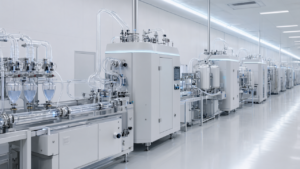
- Scale of Lactoferrin Production: Through its partnership with a Chinese CMO, All G already possesses the capacity to produce LFX at a commercially significant scale of several tons annually. This is a crucial indicator that precision fermentation technology has moved beyond laboratory scale to large-scale industrial application. The addition of production capacity in Europe is a strategic move to further strengthen its global supply chain and meet market demand.
- Comparison with Similar Technologies: Similarly, Vivici is also advancing the scalable production of high-purity lactoferrin through precision fermentation technology. Vivici’s efforts also aim to enable access to high-purity lactoferrin without relying on animals, enhancing batch-to-batch consistency, and providing formulation flexibility at meaningful inclusion levels. These developments illustrate the rapid establishment of precision fermentation as a sustainable alternative production method for functional proteins.
Background & Context
Shifting consumer preferences, growing concerns over animal welfare, and demands for supply chain sustainability are driving significant changes in the food ingredient industry. There is an increasing demand for high-quality, non-animal-derived proteins, particularly as alternatives to dairy and animal-based products. Precision fermentation has emerged as a groundbreaking technology to meet this demand, offering the ability to efficiently and sustainably produce specific nutrients and functional ingredients. Companies like All G are leveraging this technology to reshape the future of the food system.
Strategic Significance & Outlook
All G’s launch of bovine-free lactoferrin in the U.S. market, followed by the upcoming release of human-identical proteins, clearly demonstrates the commercial viability of precision fermentation technology. Securing large-scale production capacity and establishing a global supply chain are critical steps for these innovative ingredients to reach more food manufacturers and consumers. As precision fermentation becomes a standard technology in the food industry, it is expected that a wider array of functional proteins and ingredients will be produced without animal involvement, contributing to a more sustainable and healthy food supply.
Get our weekly technology intelligence — free
Receive an infographic that lets you judge at a glance whether each field’s analysis report is worth reading.
Subscribe Free — Weekly Tech Intelligence
By subscribing, you’ll receive Troy-Technical’s weekly technology intelligence newsletter.
- Your email and selected fields are used only to deliver the newsletter.
- We never share your information with third parties.
- You can unsubscribe anytime via the link in each email.
See our Privacy Policy for details.
Takes about a minute · Unsubscribe anytime