Key Findings
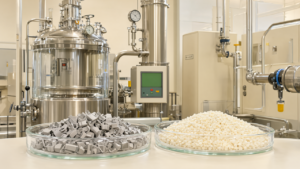
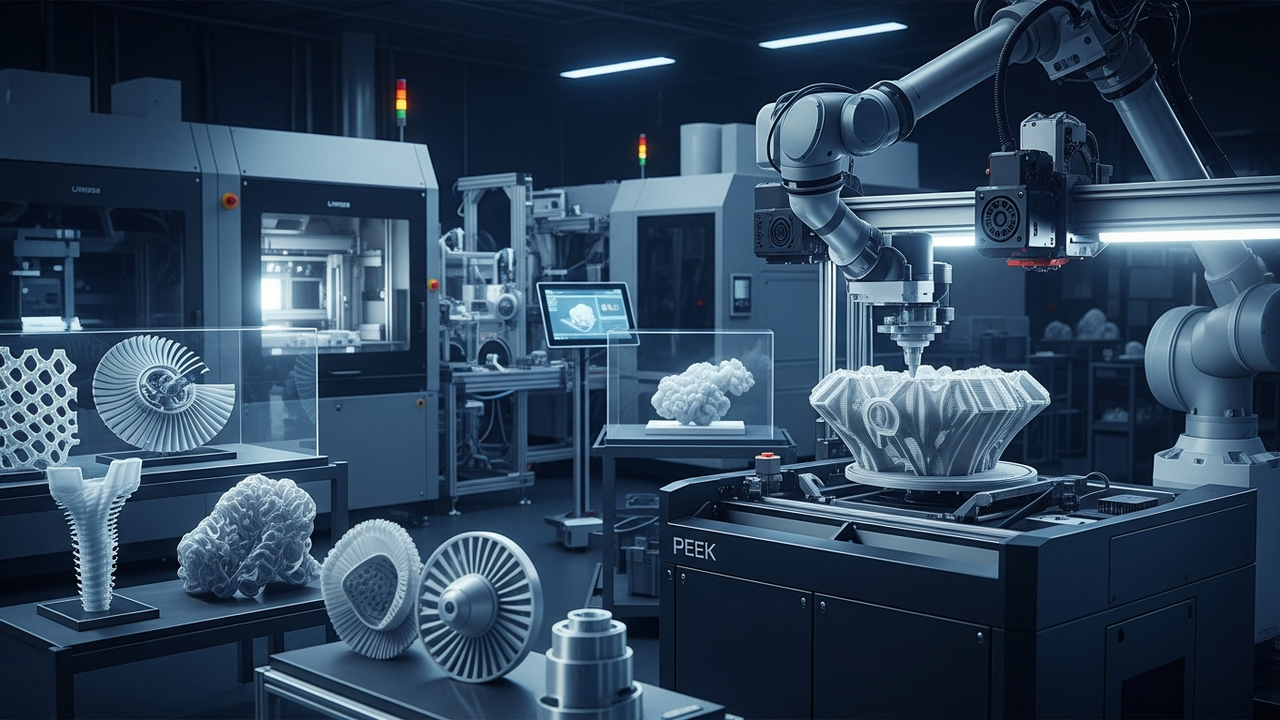
3DSPRO offers advanced high-temperature 3D printing plastics, including Polyether Ether Ketone (PEEK), Polyetherimide (PEI, Ultem), and Polyphenylene Sulfide (PPS). These materials are specifically designed to enable the creation of functional parts capable of withstanding extreme environments, catering to the demanding requirements of the aerospace, medical, and semiconductor industries. This capability facilitates rapid production of high-performance components previously challenging with traditional manufacturing methods.
Technical / Clinical Details
High-temperature 3D printing plastics are engineered to maintain their performance under conditions of intense heat, corrosive chemicals, and high stress, which typically degrade commodity plastics. PEEK is often referred to as the ‘ultimate high-performance polymer’ due to its exceptional thermal stability (continuous use temperatures exceeding 260°C), mechanical strength, chemical resistance, and dimensional stability. It is used in medical implants, aerospace engine components, and corrosion-resistant parts for the oil and gas industry, though its processing demands specialized, costly printers and high chamber temperatures. PEI (Ultem) offers a more affordable balance of thermal performance (glass transition temperature of 217°C) and mechanical properties, making it suitable for aircraft interior components and electrical connectors. PPS is notable for its excellent heat resistance (continuous use temperatures above 200°C) and chemical resistance, along with inherent flame retardancy, making it ideal for automotive sensor housings and electrical/electronic components. These materials are primarily processed using Fused Deposition Modeling (FDM) or Fused Filament Fabrication (FFF) 3D printing.
Background & Context
The aerospace industry requires high-performance polymers to replace metal components, driven by demands for fuel efficiency and lightweighting. The medical sector sees increasing needs for customized medical devices and implants with biocompatibility and sterilization resistance. In the semiconductor industry, miniaturization and performance enhancements necessitate high-purity, heat-resistant, and chemically stable components. 3D printing technology serves as a critical tool to meet these industries’ requirements for rapid prototyping, customization, and low-volume production.
Strategic Significance & Outlook
The market for high-temperature 3D printing plastics is projected to grow significantly, fueled by the escalating technical demands across industries and advancements in additive manufacturing. Key drivers for market expansion will include improvements in processability, cost reduction, and the development of a broader material portfolio. This will accelerate the on-demand manufacturing of more complex and functional components, further shortening innovation cycles across various industrial sectors.
Source: https://3dspro.com/resources/blog/3d-printing-plastics-for-high-temperature-applications
Get our weekly technology intelligence — free
Receive an infographic that lets you judge at a glance whether each field’s analysis report is worth reading.
Subscribe Free — Weekly Tech Intelligence
By subscribing, you’ll receive Troy-Technical’s weekly technology intelligence newsletter.
- Your email and selected fields are used only to deliver the newsletter.
- We never share your information with third parties.
- You can unsubscribe anytime via the link in each email.
See our Privacy Policy for details.
Takes about a minute · Unsubscribe anytime