Key Findings
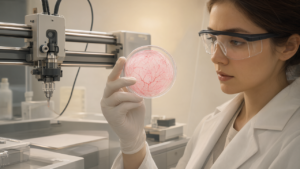
3D bioprinting technology has made remarkable strides in the construction of organoids. This innovative approach overcomes the challenges inherent in traditional organoid culture methods, particularly issues of time consumption and low cell yield, by enabling precise control over cell placement and material composition. The result is the creation of organoids that are more physiologically relevant and closely mimic native tissue architecture.
Technical and Clinical Details
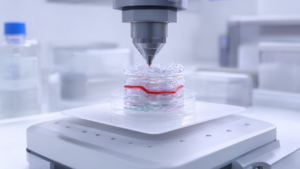
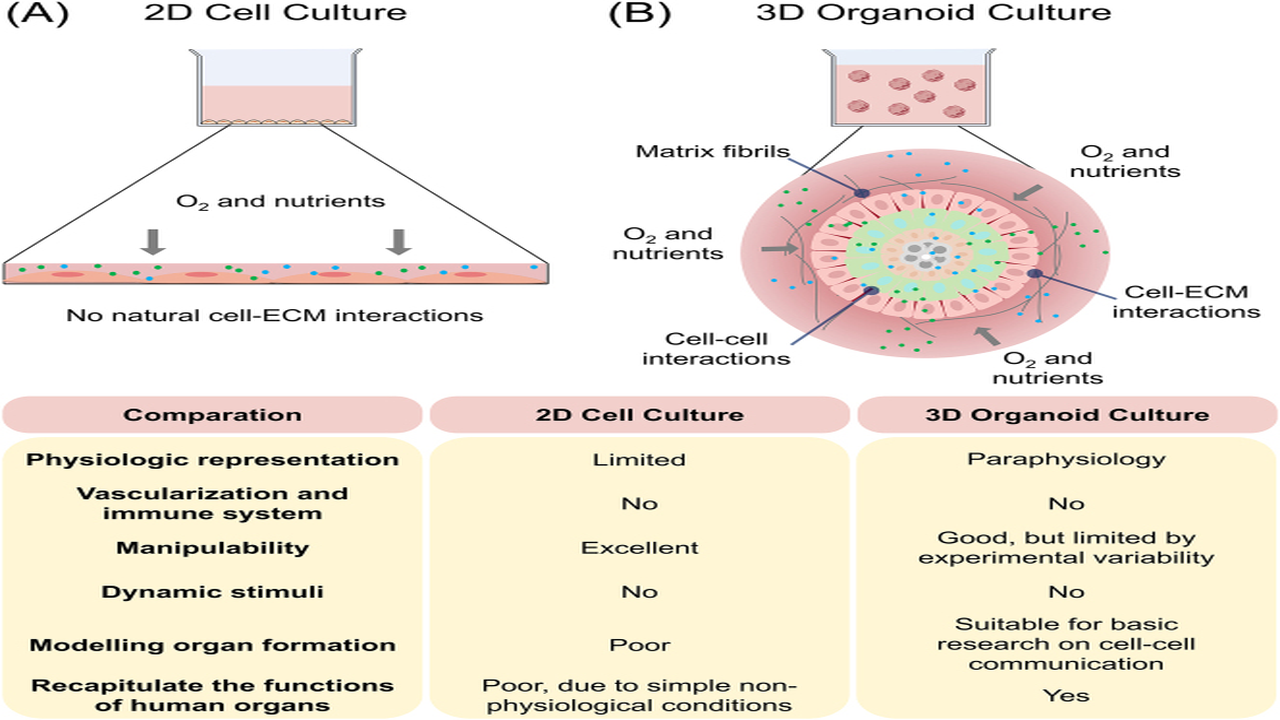
Organoids are three-dimensional (3D) in vitro tissue models derived from stem cells, holding immense promise for applications in tissue engineering, drug screening, and regenerative medicine. 3D bioprinting combines cell suspensions with appropriate scaffold materials, termed ‘bioinks,’ to faithfully reproduce the complex structures found in living tissues. The core strength of this technology lies in its ability to precisely manipulate cell types, densities, and the surrounding microenvironment. This capability facilitates the generation of organoids that more accurately simulate in vivo conditions, making them ideal for specific disease modeling (e.g., cancer) and for evaluating drug toxicity and efficacy. Bioink design is crucial for supporting cell viability, proliferation, and differentiation, and is optimized through the combination of various biomaterials and growth factors.
Background and Industry Context
Conventional 2D cell cultures and early organoid generation methods often resulted in simple layered structures or relied on spontaneous self-organization, making it difficult to fully replicate the intricate tissue structures and functions observed in vivo. 3D bioprinting emerged to bridge this gap, allowing for precise layer-by-layer fabrication and the combination of multiple cell types and support materials. This enables the construction of organoids with more complex physiological features, such as vascular networks, neural pathways, and specific organ microenvironments. Consequently, 3D bioprinting is expected to significantly contribute to elucidating disease mechanisms, discovering new drugs, and advancing personalized medicine.
Strategic Significance and Outlook
The evolution of 3D bioprinting technology is paving the way for a future where organoids function as increasingly sophisticated biomedical research tools. Future developments are anticipated to include the creation of more complex multi-organ systems and organoid models capable of long-term observation of disease progression. Furthermore, the integration of automation and high-throughput capabilities will expand their utility in drug screening and toxicity testing, thereby streamlining research and development processes. Ultimately, these technologies hold the potential to realize artificial organ generation in regenerative medicine and to facilitate precision medicine through patient-specific disease models.
Source: https://pmc.ncbi.nlm.nih.gov/articles/PMC12362060/
Get our weekly technology intelligence — free
Receive an infographic that lets you judge at a glance whether each field’s analysis report is worth reading.
Subscribe Free — Weekly Tech Intelligence
By subscribing, you’ll receive Troy-Technical’s weekly technology intelligence newsletter.
- Your email and selected fields are used only to deliver the newsletter.
- We never share your information with third parties.
- You can unsubscribe anytime via the link in each email.
See our Privacy Policy for details.
Takes about a minute · Unsubscribe anytime