Key Findings
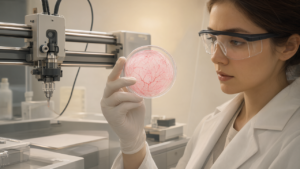
The field of regenerative medicine is being fundamentally transformed and accelerated by the integration of artificial intelligence (AI) with 3D bioprinting technology. AI is now playing a pivotal role in optimizing bioinks, converting patient scan data into precise tissue models, and enabling real-time quality control during the manufacturing of organs and tissues.
Technical / Clinical Details
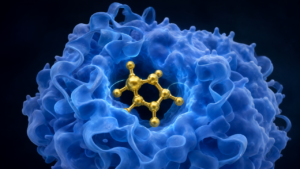
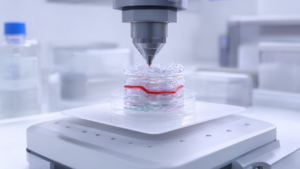
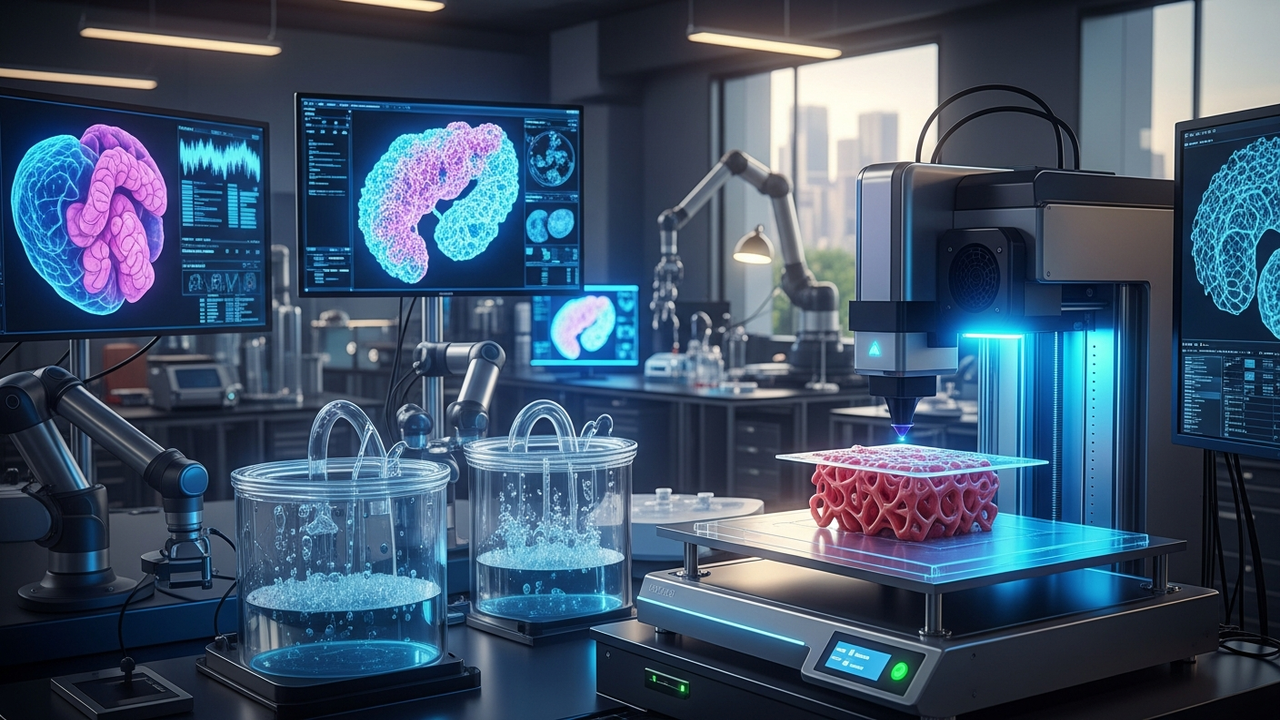
3D bioprinting involves layer-by-layer fabrication of biological tissues and organs using a combination of cells, growth factors, and biomaterials. In this intricate process, AI contributes critically in several ways. Firstly, AI algorithms are used to optimize bioink formulations, maximizing printing precision, cell viability, and the ultimate functionality of the engineered tissues. Secondly, AI analyzes patient-specific imaging data (such as CT and MRI scans) to translate complex anatomical structures into detailed, printable models. This capability allows for the creation of personalized tissues and organs that are a perfect match for the individual patient.
Furthermore, AI facilitates real-time quality control throughout the bioprinting process. It continuously monitors parameters like cell placement, layer thickness, and bioink deposition rates, making immediate adjustments if deviations occur, thereby ensuring the consistency and quality of the fabricated tissues. Leading companies like Aspect Biosystems, Rokit Healthcare, and BioLattice are already leveraging AI to enhance cell programming, optimize bioink compositions, and automate tissue fabrication processes. The ability to print tissues using differentiated cells from pluripotent stem cells (PSCs) is considered a major leap towards creating transplantable organs and tissues.
Background & Context
The global demand for organ transplants vastly outstrips supply, with donor shortages being a critical issue. Regenerative medicine offers a promising solution to this challenge, and 3D bioprinting, in particular, holds the potential to revolutionize traditional transplantation medicine by enabling the creation of customized, functional biological tissues and organs in the laboratory. However, the technological complexity, high costs, and regulatory hurdles have historically impeded widespread practical application. The integration of AI is proving to be a game-changer, significantly enhancing the efficiency, precision, and reproducibility of bioprinting processes, thereby accelerating the path to clinical viability for regenerative therapies.
Strategic Significance & Outlook
The convergence of AI and 3D bioprinting is paving the way for a future where ‘plug and play’ human body parts—functional, replaceable artificial organs and tissues—become a reality. Future research and development will focus on replicating more complex organ structures, integrating vascularization, and reducing immunogenicity. This advancement could not only solve the donor shortage but also dramatically lower the risk of post-transplant rejection, as tissues could be manufactured from a patient’s own cells. The continued progress in this technology promises to have immeasurable impacts on drug discovery, the advancement of personalized medicine, and ultimately, the extension of human healthspan and longevity.
Get our weekly technology intelligence — free
Receive an infographic that lets you judge at a glance whether each field’s analysis report is worth reading.
Subscribe Free — Weekly Tech Intelligence
By subscribing, you’ll receive Troy-Technical’s weekly technology intelligence newsletter.
- Your email and selected fields are used only to deliver the newsletter.
- We never share your information with third parties.
- You can unsubscribe anytime via the link in each email.
See our Privacy Policy for details.
Takes about a minute · Unsubscribe anytime