Key Findings
Lightmatter is tackling the significant industry-wide challenge of balancing the pursuit of high performance with cost-effectiveness in delivering cutting-edge optical computing solutions for enterprise applications. Achieving this balance is crucial for the widespread adoption of its technology in the market.
Technical / Clinical Details
Lightmatter’s solutions primarily consist of three key components:
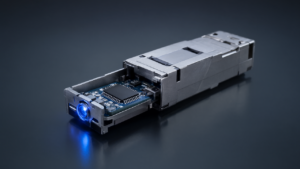
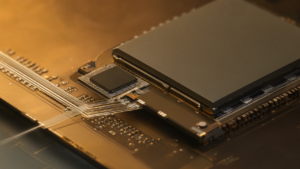
- **Optical Interconnect Technology**: Utilizes light for data transfer within data centers and between chips, addressing the bandwidth limitations, latency issues, and power consumption problems of traditional electrical interconnects.
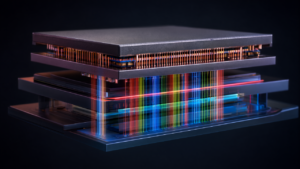
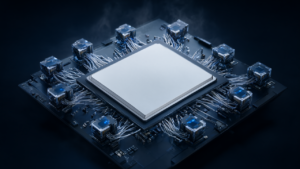
- **Photonic AI Accelerator Chips**: Performs AI workload computations using light, enabling significantly faster processing and lower power consumption compared to electronic chips like GPUs.
- **Envise AI Platform**: A software platform that integrates the above hardware components to efficiently execute AI model training and inference.
To evaluate the success of these technologies, key metrics include objective numbers for processing speed and power consumption from benchmark tests, high compatibility with major AI frameworks (e.g., TensorFlow, PyTorch), and the ability to seamlessly integrate into existing enterprise IT infrastructure. Particularly important is how the company will harmonize its proprietary software development with the broader ecosystem.
Background & Context
The evolution of AI technology demands increasingly larger datasets and more complex models, leading to exponentially growing requirements for computing resources. However, traditional electronic computing faces the limits of Moore’s Law and the ‘power wall,’ making it challenging to achieve both high performance and cost efficiency. Optical computing is a promising candidate to overcome this challenge, but as a nascent technology, manufacturing costs, yields, and the complexity of integration with existing systems pose barriers to commercialization. Lightmatter is strategizing to industrialize this cutting-edge technology at the enterprise level, drawing significant industry attention.
Strategic Significance & Outlook
For Lightmatter to succeed in the enterprise market, it must not only deliver high-performance and cost-effective solutions but also strengthen engagement with the developer community and expand its ecosystem. By enhancing compatibility with AI frameworks and efficiently advancing proprietary software development, customers can more easily harness the benefits of optical computing. Future focus will be on demonstrating product reliability and scalability, and accumulating successful case studies with early adopters. This will enable optical computing to become a mainstream AI infrastructure, accelerating enterprise digital transformation.
Source: https://nextsprints.com/how-balance-lightmatter-optical-computing-cost-performance
Get our weekly technology intelligence — free
Receive an infographic that lets you judge at a glance whether each field’s analysis report is worth reading.
Subscribe Free — Weekly Tech Intelligence
By subscribing, you’ll receive Troy-Technical’s weekly technology intelligence newsletter.
- Your email and selected fields are used only to deliver the newsletter.
- We never share your information with third parties.
- You can unsubscribe anytime via the link in each email.
See our Privacy Policy for details.
Takes about a minute · Unsubscribe anytime