Key Findings
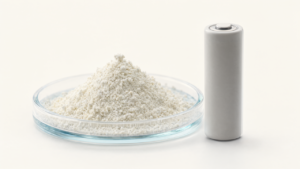
A comprehensive review article by researchers from the University of Puerto Rico, published in Nano-Micro Letters, reveals that halide-based solid electrolytes hold immense promise for overcoming critical hurdles in all-solid-state batteries. These materials combine high ionic conductivity, excellent electrochemical stability, and—crucially—improved air tolerance compared to conventional electrolytes, potentially paving the way for the practical implementation of next-generation high-voltage all-solid-state batteries. The review meticulously analyzes the potential of halide solid electrolytes from the perspective of interface and performance design.
Technical and Research Details
- Superior Electrochemical Properties: Halide-based solid electrolytes demonstrate high ionic conductivities, typically ranging from approximately 10⁻⁴ to 10⁻³ S cm⁻¹ at room temperature. This performance surpasses many existing solid electrolytes and is vital for achieving rapid charge and discharge capabilities in batteries. Furthermore, their wide electrochemical stability window enables compatibility with high-voltage cathode materials, contributing to higher energy density batteries.
- Enhanced Air Tolerance: While sulfide-based solid electrolytes offer high ionic conductivity, their practical application has been hampered by sensitivity to moisture in the air, complicating manufacturing and handling. Halide electrolytes exhibit superior air tolerance, which simplifies processing and broadens their potential applications.
- Bilayer and Dual-Electrolyte Designs: The review emphasizes concepts such as bilayer structures and dual-electrolyte designs, where halide electrolytes are used as catholytes in conjunction with sulfide electrolytes at the anode interface. This approach aims to maximize the advantages of each electrolyte, optimizing the overall performance and stability of the all-solid-state battery. The review also highlights promising results from fluoride-doped halide compositions for compatibility with lithium metal anodes, suggesting potential for dendrite suppression.
- Compatibility with High-Voltage Cathodes: Achieving high energy density necessitates cathode materials capable of operating at high voltages. The wide electrochemical stability of halide electrolytes makes them particularly suitable for integration with such high-voltage cathodes, enhancing the design flexibility for high-performance all-solid-state batteries.
Background and Industry Context
The development of all-solid-state batteries is considered indispensable for accelerating the adoption of electric vehicles. Improving safety and energy density are urgent priorities, and the selection and design of solid electrolytes are key to unlocking these advancements. Halide-based solid electrolytes have garnered significant attention recently because they combine the high ionic conductivity of sulfide electrolytes with the stability of oxide electrolytes. This review provides crucial guidance for researchers and engineers in selecting optimal solid electrolyte materials and advancing battery design.
Future Outlook
This review on halide solid electrolytes sets a clear direction for future research and development in materials science and battery engineering. For the practical development of all-solid-state batteries, further improvements in ionic conductivity, reduction of interfacial resistance, and the establishment of cost-effective synthesis processes are critical. Approaches such as bilayer and dual-electrolyte designs, along with enhanced lithium metal anode compatibility through fluoride doping, represent promising avenues for overcoming these challenges, and future research outcomes are highly anticipated. The insights presented in this review will form a fundamental basis for accelerating the commercialization of all-solid-state batteries.
Get our weekly technology intelligence — free
Receive an infographic that lets you judge at a glance whether each field’s analysis report is worth reading.
Subscribe Free — Weekly Tech Intelligence
By subscribing, you’ll receive Troy-Technical’s weekly technology intelligence newsletter.
- Your email and selected fields are used only to deliver the newsletter.
- We never share your information with third parties.
- You can unsubscribe anytime via the link in each email.
See our Privacy Policy for details.
Takes about a minute · Unsubscribe anytime