Key Findings
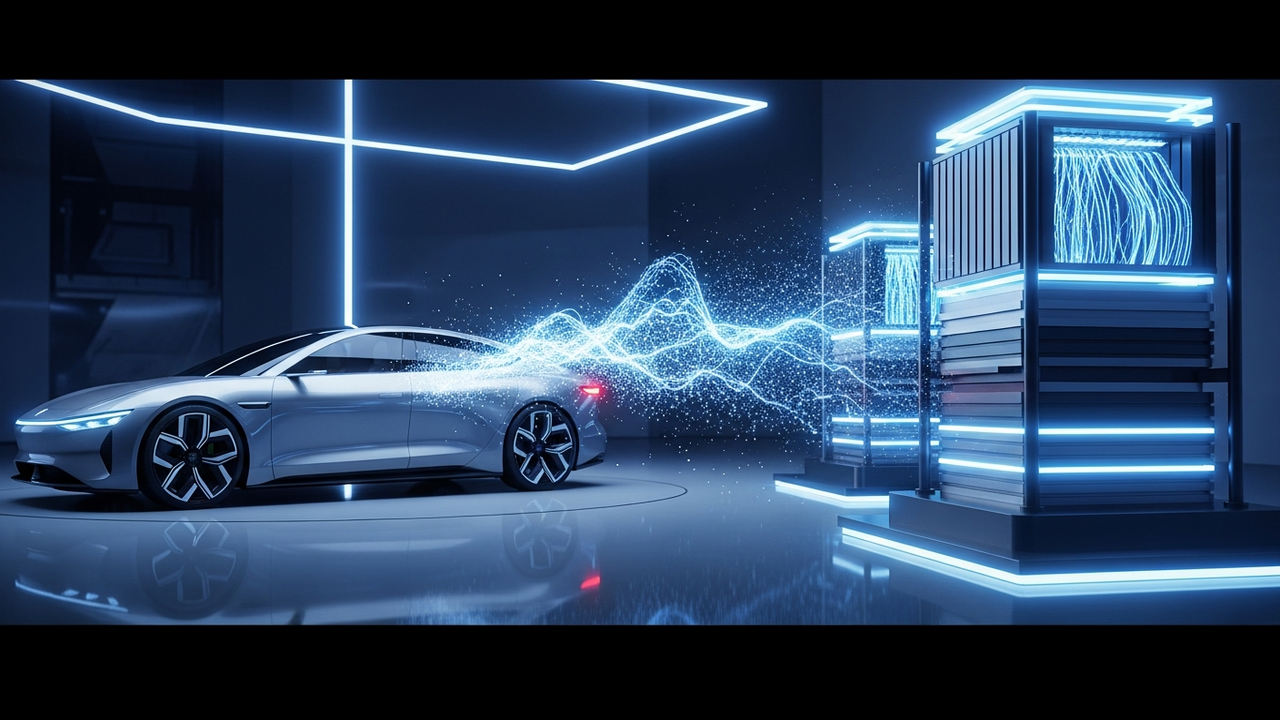
All-solid-state batteries (ASSBs) are projected to demonstrate significant advantages over current lithium-ion batteries in both energy density and durability. Specifically, they aim for a commercial energy density of 400–500 Wh/kg, with laboratory prototypes exceeding 600 Wh/kg. This dramatically surpasses the approximately 250–300 Wh/kg typically achieved by contemporary lithium-ion cells. This substantial increase in energy density has the potential to extend electric vehicle (EV) driving ranges to over 1,000–1,200 km, representing a dramatic leap forward.
Technical Details
In terms of energy density, ASSBs achieve higher gravimetric (Wh/kg) and volumetric (Wh/L) efficiencies by replacing liquid electrolytes with solid counterparts, which allows for denser packing of active materials within the cell and contributes to overall lighter and more compact battery packs. An EV range exceeding 1,000–1,200 km would effectively eliminate ‘range anxiety,’ a major barrier to EV adoption, by offering performance comparable to or even superior to gasoline-powered vehicles for long-distance travel.
ASSBs also exhibit superior durability. While conventional lithium-ion batteries typically begin to show performance degradation after 500–1,000 cycles, ASSBs are reported to maintain 90–95% of their capacity after 1,000–1,500 cycles. This enhanced longevity is attributed to the solid electrolyte’s ability to suppress lithium dendrite growth and minimize undesirable side reactions at the electrode-electrolyte interface. Extended lifespan is crucial for reducing the frequency of battery replacements and lowering the total cost of ownership (TCO) for EVs.
Background & Context
As the electric vehicle market expands, improving battery performance remains the paramount challenge for the entire industry. ASSBs, often referred to as the ‘holy grail’ of battery technology, are capable of meeting high standards across safety, energy density, charging speed, and durability. Consequently, automakers and battery suppliers worldwide are making massive investments in their development. Current lithium-ion batteries face limitations in safety (thermal runaway risk), energy density, and charging speed, for which ASSBs are anticipated to provide a fundamental solution.
Strategic Significance & Outlook
The successful mass production and commercialization of ASSBs at the targeted performance levels will undoubtedly revolutionize the EV market. The dramatic increase in driving range and superior durability will significantly enhance the appeal of EVs, accelerating consumer transition away from internal combustion engine vehicles. Furthermore, the inherent safety of ASSBs will enable broader applications in aerospace, robotics, and stationary energy storage, holding the potential to redefine the future of energy storage across multiple critical sectors.
Source: https://www.intelligentliving.co/solid-state-battery-vs-lithium-ion/
Get our weekly technology intelligence — free
Receive an infographic that lets you judge at a glance whether each field’s analysis report is worth reading.
Subscribe Free — Weekly Tech Intelligence
By subscribing, you’ll receive Troy-Technical’s weekly technology intelligence newsletter.
- Your email and selected fields are used only to deliver the newsletter.
- We never share your information with third parties.
- You can unsubscribe anytime via the link in each email.
See our Privacy Policy for details.
Takes about a minute · Unsubscribe anytime