Key Findings
A cutting-edge research published in PMC (part of MDPI) introduces a novel framework for de novo molecular design: a scaffold-aware transformer equipped with multi-scale attention mechanisms. This innovative approach integrates a transformer-based generative model with a graph attention network-based predictive model. By explicitly incorporating scaffold information, the system efficiently generates molecules with predefined structural characteristics and iteratively refines the generative process to yield high-affinity candidates featuring novel chemical variations. This framework is set to accelerate drug discovery by intelligently exploring vast chemical spaces and predicting molecular properties with enhanced precision.
Technical / Clinical Details
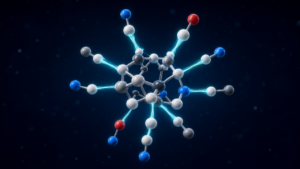
The proposed framework first utilizes a transformer-based generative model to design molecules conditioned on specific scaffold information. A key enhancement is the inclusion of multi-scale attention mechanisms, which allow the model to capture interactions at different levels of molecular granularity, from atomic bonds to larger structural motifs. This enables the generation of more complex and biologically relevant molecular structures. Subsequently, the generated molecules are evaluated by a graph attention network-based predictive model for desirable properties such as drug-likeness, binding affinity, and potential toxicity. The evaluation results are then fed back into the generative model, enabling an iterative refinement process that continuously improves the quality and specificity of the generated candidates. A significant advantage of this system is its interpretability, which provides insights into how specific structural features contribute to desired properties, thereby assisting researchers in guiding the design process. Compared to traditional trial-and-error methods, this approach offers a more intelligent way to explore chemical space, potentially shortening the drug discovery timeline.
Background & Context
The discovery of lead compounds remains a major time-consuming and costly bottleneck in drug development. Conventional approaches, primarily relying on synthesizing and screening new drug candidates based on known molecular structures, often limit the breadth of chemical space explored. The advent of generative AI, particularly in de novo molecular design, promises to address this challenge. With AI-designed molecules increasingly entering clinical trials and regulatory bodies developing guidelines for AI-driven drug discovery, there’s a growing need to balance novelty, synthetic accessibility, and desired pharmacological properties. The scaffold-aware approach is crucial here, as it allows for the introduction of new chemical diversity around specific, validated structural motifs (scaffolds), ensuring a balanced and effective molecular design.
Strategic Significance & Outlook
The scaffold-aware transformer with multi-scale attention mechanisms significantly extends the capabilities of AI in drug discovery research. Upon maturation, this technology is expected to have several impacts. Firstly, it will enable the rapid and cost-effective design of high-affinity, selective lead compounds for specific disease targets. Secondly, it facilitates the creation of novel analog compounds based on existing drug scaffolds, aiming to improve side-effect profiles or overcome drug resistance. Thirdly, the interpretable nature of this design process promotes a deeper understanding of AI suggestions, fostering an effective synergy between human expertise and AI’s computational power. This framework is anticipated to accelerate the development of new therapeutics across various disease areas and contribute to the advancement of personalized medicine, ultimately bringing innovative treatments to patients more efficiently.
Source: https://pmc.ncbi.nlm.nih.gov/articles/PMC13425956/
Get our weekly technology intelligence — free
Receive an infographic that lets you judge at a glance whether each field’s analysis report is worth reading.
Subscribe Free — Weekly Tech Intelligence
By subscribing, you’ll receive Troy-Technical’s weekly technology intelligence newsletter.
- Your email and selected fields are used only to deliver the newsletter.
- We never share your information with third parties.
- You can unsubscribe anytime via the link in each email.
See our Privacy Policy for details.
Takes about a minute · Unsubscribe anytime