Key Findings
In modern medicine, nanoparticles are garnering significant attention as an innovative and promising platform for drug and drug delivery carrier development. Particularly in the field of diabetic wound healing, cell membrane-coated nanoparticles (CMNPs) have emerged as a novel and highly effective therapeutic strategy. These nanoparticles combine inherent biocompatibility with precise drug delivery capabilities. Recent research has clearly demonstrated that CMNPs, especially those coated with macrophage membranes and mesenchymal stem cell membranes, exhibit the most significant therapeutic effects in anti-inflammation, promoting angiogenesis, and tissue repair. This holds immense potential for advancing the treatment of intractable wounds such as diabetic foot ulcers.
Technical/Clinical Details
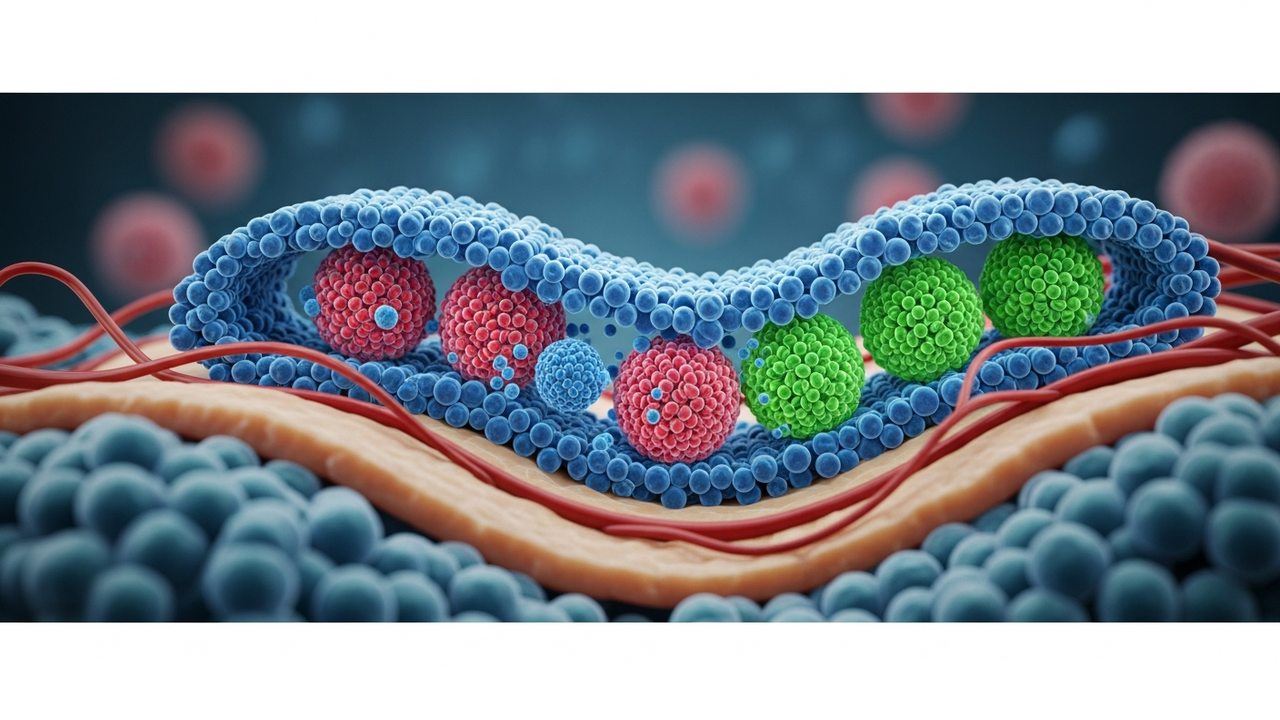
CMNPs are synthetic nanoparticles (e.g., PLGA, gold nanoparticles) whose surfaces are coated with cell-derived membranes (e.g., from macrophages, stem cells, red blood cells, platelets). This biomimetic approach allows CMNPs to retain the surface properties of the original cells (e.g., surface proteins, adhesion molecules), thereby enhancing biocompatibility, immune evasion, and homing capabilities. For diabetic wound healing, macrophage membrane-coated nanoparticles enable targeted delivery to inflammatory sites and exert anti-inflammatory effects by suppressing the release of inflammatory cytokines. Conversely, mesenchymal stem cell membrane-coated nanoparticles promote angiogenesis via growth factors and extracellular vesicles, and stimulate collagen production, thereby accelerating tissue regeneration and wound closure. By encapsulating therapeutic agents (e.g., growth factors, cytokines, antimicrobials) within these CMNPs, drug stability can be enhanced, and localized, sustained release at the injury site can be achieved, maximizing therapeutic efficacy.
Background & Context
Diabetic wounds, especially diabetic foot ulcers, affect millions worldwide annually and can lead to limb amputation in severe cases, posing a serious public health issue. These wounds are characterized by delayed healing due to hyperglycemia-induced vascular damage, neuropathy, and impaired immune function, as well as a high risk of infection. Conventional treatments focus on infection control, debridement, and wound dressings, but their efficacy is limited. Consequently, new therapeutic approaches using cell therapy and growth factors are being investigated, but their delivery efficiency and engraftment rates have been challenging. CMNPs offer a new pathway to overcome these challenges, supporting wound healing processes from multiple angles through biomimicry.
Strategic Significance & Outlook
The application of cell membrane-coated nanoparticles to diabetic wound healing is still in its early stages, but its potential is immeasurable. Future research will focus on verifying the stability, in vivo behavior, manufacturing scalability, and human safety and efficacy of CMNPs. If successful, these nanoparticles could revolutionize the treatment of not only diabetic foot ulcers but also other intractable wounds such as pressure ulcers, burns, and chronic ulcers. With the advancement of personalized medicine, a future where nanoparticles are coated with membranes derived from the patient’s own cells to provide more customized treatments is also on the horizon, expected to open new frontiers for DDS in wound healing.
Source: https://pmc.ncbi.nlm.nih.gov/articles/PMC13135139/
Get our weekly technology intelligence — free
Receive an infographic that lets you judge at a glance whether each field’s analysis report is worth reading.
Subscribe Free — Weekly Tech Intelligence
By subscribing, you’ll receive Troy-Technical’s weekly technology intelligence newsletter.
- Your email and selected fields are used only to deliver the newsletter.
- We never share your information with third parties.
- You can unsubscribe anytime via the link in each email.
See our Privacy Policy for details.
Takes about a minute · Unsubscribe anytime