Key Findings
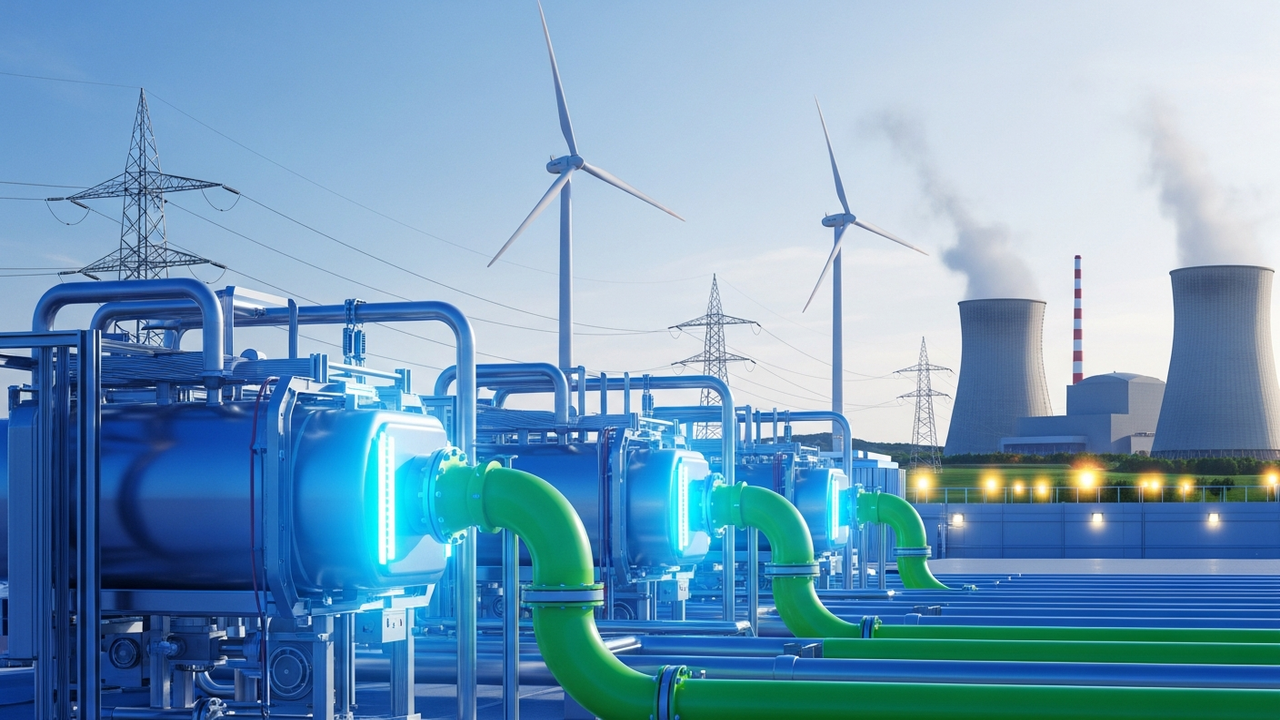
The U.S. Department of Energy (DOE) has published a detailed overview of electrolysis technology, identifying it as one of the most promising avenues for hydrogen production from renewable and nuclear energy sources. This overview clearly highlights the substantial potential for producing hydrogen with zero greenhouse gas emissions.
Technical / Clinical Details
The DOE’s explanation elaborates on the operating principles and characteristics of three primary electrolyzer technologies: Polymer Electrolyte Membrane (PEM) electrolyzers, Alkaline electrolyzers, and Solid Oxide Electrolytic Cell (SOEC) electrolyzers. PEM electrolyzers are known for their high current density and rapid response, making them suitable for integration with variable renewable energy sources. Alkaline electrolyzers are a more mature technology with lower capital costs but generally exhibit lower efficiency compared to PEM. SOEC electrolyzers operate at high temperatures, achieving high efficiencies by utilizing waste heat, though with longer startup times. All these technologies work by splitting water into hydrogen and oxygen through electrolysis, thereby generating clean hydrogen.
Background & Context
Hydrogen is globally recognized as an indispensable energy carrier for decarbonizing hard-to-electrify sectors such as heavy industry, long-haul transportation, and power storage. Hydrogen production via electrolysis, when coupled with renewable energy or nuclear power, offers a pathway to truly green hydrogen, independent of fossil fuels. However, key challenges remain in reducing hydrogen production costs and further scaling up electrolyzer technologies for broad commercial deployment.
Strategic Significance & Outlook
The DOE aims to significantly reduce the cost of clean hydrogen and promote its widespread adoption by supporting further research, development, and commercialization of these electrolysis technologies. Technical advancements, particularly in catalyst improvement, materials science innovation, and system integration optimization, are crucial for enhancing electrolyzer efficiency and durability. As these advancements materialize, hydrogen is expected to play a central role in future clean energy systems, becoming an essential component in achieving global decarbonization targets.
Source: https://www.energy.gov/eere/fuelcells/hydrogen-production-electrolysis
Get our weekly technology intelligence — free
Receive an infographic that lets you judge at a glance whether each field’s analysis report is worth reading.
Subscribe Free — Weekly Tech Intelligence
By subscribing, you’ll receive Troy-Technical’s weekly technology intelligence newsletter.
- Your email and selected fields are used only to deliver the newsletter.
- We never share your information with third parties.
- You can unsubscribe anytime via the link in each email.
See our Privacy Policy for details.
Takes about a minute · Unsubscribe anytime