Background
As gene therapies advance toward commercialization, manufacturing costs and scale-up capabilities have become pivotal factors influencing the economic viability and widespread adoption of these treatments. A recent analysis comparing adeno-associated virus (AAV) and lentiviral vector (LVV) manufacturing platforms, both central to gene therapy, has revealed significant differences in their production processes, particularly in downstream stages. These distinctions directly impact the scalability and cost-effectiveness of each vector, making them critical considerations in gene therapy development strategies. Early comprehension of these manufacturing distinctions between vector platforms is essential for designing clinical development plans, selecting appropriate manufacturing partners, and optimizing the cost-effectiveness of the final product.
Common Upstream Stages
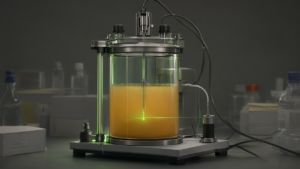
Initial manufacturing steps for both AAV and LVV are remarkably similar, typically involving transient transfection of HEK293 cells to produce the desired vectors. This upstream process efficiently introduces plasmids necessary for viral particle production into the cells, setting the stage for subsequent critical distinctions.
Key Manufacturing Distinctions
AAV Manufacturing Profile: Leveraging Stability for Scalability
- Stable Capsid: AAV vectors possess a highly stable capsid structure, offering the significant advantage of a lower risk of damage during post-production handling and purification steps.
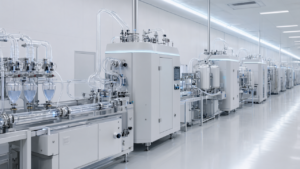
- Ease of Scale-Up: This inherent stability facilitates the straightforward scale-up of AAV production in suspension bioreactors ranging from 50 to 2,000 liters. Utilizing suspension-adapted cell lines enables large-scale and efficient manufacturing, crucial for commercial viability.
- Robust Purification Process: Due to its robust stability, AAV can withstand relatively stringent purification protocols, such as chromatography, which are often more efficient and scalable.
Lentiviral Vector Challenges: Fragility of the VSV-G Envelope
- VSV-G Envelope Fragility: Lentiviral vectors commonly employ the VSV-G envelope to confer high infectivity to host cells. However, this envelope is highly fragile, increasing the risk of damage from shear stress during manufacturing and purification.
- Scale-Up Limitations: The susceptibility of the VSV-G envelope and its potential cytotoxicity to host cells make large-scale LVV production significantly more challenging compared to AAV. High-density cultures or aggressive agitation can compromise vector integrity, leading to reduced yields.
- Gentle Purification Process: LVV purification necessitates gentler conditions and specialized techniques to minimize vector damage, often requiring more complex and potentially less scalable methods.
Future Outlook
Considering these manufacturing differences, gene therapy programs must select the optimal vector platform based on a careful balance of the target disease, the desired durability of therapeutic effect, and the overall manufacturing costs. Future developments are anticipated to focus on enhancing the efficiency and safety of both vector types, particularly through innovations that improve LVV stability and establish more efficient purification processes. Such advancements promise to expand the reach of gene therapies to a greater number of patients worldwide, making these groundbreaking treatments more accessible and affordable.
Get our weekly technology intelligence — free
Receive an infographic that lets you judge at a glance whether each field’s analysis report is worth reading.
Subscribe Free — Weekly Tech Intelligence
By subscribing, you’ll receive Troy-Technical’s weekly technology intelligence newsletter.
- Your email and selected fields are used only to deliver the newsletter.
- We never share your information with third parties.
- You can unsubscribe anytime via the link in each email.
See our Privacy Policy for details.
Takes about a minute · Unsubscribe anytime