Background
Cell therapies, particularly autologous CAR-T cell therapies, inherently involve complex and time-intensive manufacturing processes, often relying on patient-derived cells. The traditional centralized manufacturing paradigm introduces substantial logistical complexities and high costs, as patient cells must be transported to distant facilities for processing and then returned. This model leads to significant “vein-to-vein” times – the interval from cell collection to patient administration – and limits patient access to these transformative treatments. Point-of-Care (PoC) manufacturing offers a compelling solution to these challenges, promising to drastically reduce this critical timeframe and expand the reach of these therapies. Lonza’s divestment of its Cocoon system, selling it back to original developer Octane Medical Group in March 2026, is interpreted as a strategic pivot to foster accelerated innovation in PoC manufacturing through specialized technology providers. Following this, Octane Medical Group has further solidified its commitment by partnering with BioOra to collaboratively advance highly specialized cell therapy development.
Key Findings
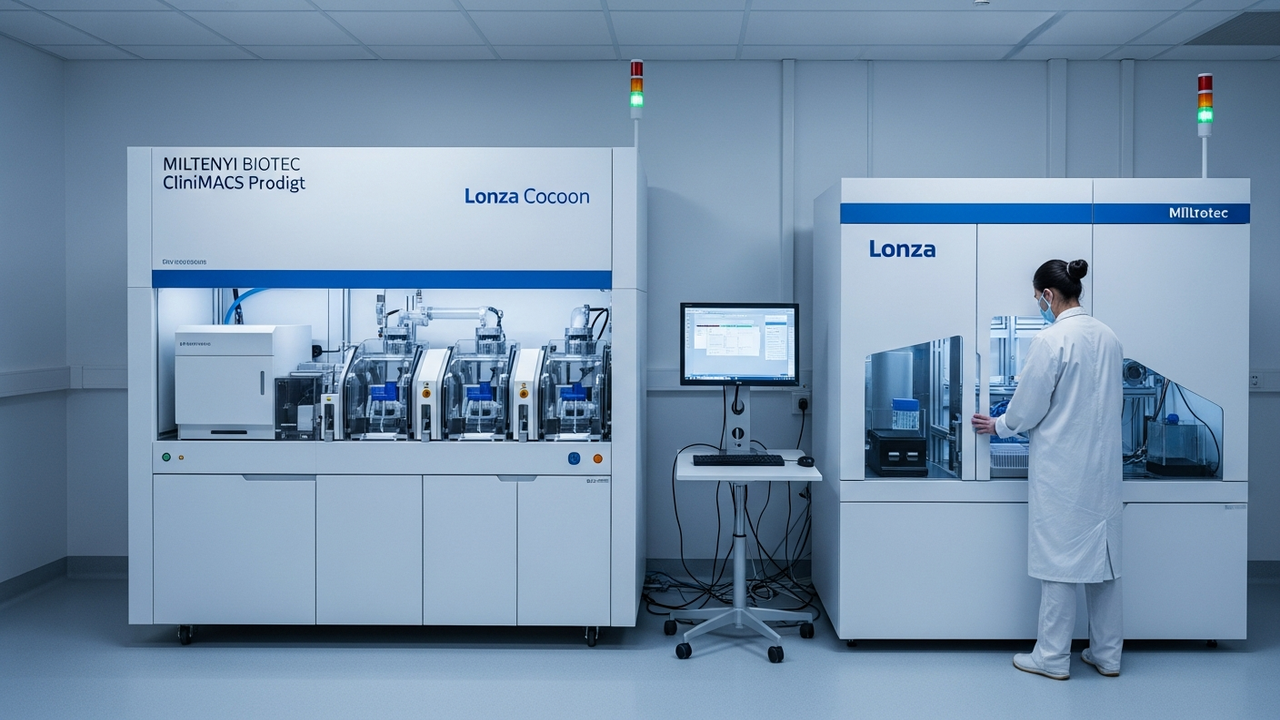
Point-of-Care (PoC) manufacturing is rapidly gaining prominence in cell therapy, driven by the imperative for quicker patient access to treatments. At the forefront of this shift are automated, closed platforms like Miltenyi Biotec’s CliniMACS Prodigy system and Octane Medical Group’s Cocoon system, both designed to streamline manufacturing processes and uphold aseptic conditions.
Pivotal Technologies:
- CliniMACS Prodigy System: Miltenyi Biotec’s CliniMACS Prodigy stands as a versatile, automated cell processing system leveraging magnetic separation technology. Operating within a GMP-compliant, closed environment, it can autonomously execute complex procedures including the separation, washing, concentration, culture, and expansion of diverse cell types (e.g., T cells, B cells, stem cells). This automation significantly mitigates the risk of manual contamination, thereby bolstering product consistency and patient safety.
- Cocoon System: The Cocoon system, originally developed by Lonza and later divested to Octane Medical Group, is engineered to facilitate cell therapy manufacturing in proximity to the patient. It incorporates integrated sensing and control functionalities, enabling real-time process monitoring and optimization. This capability is crucial for advancing personalized medicine, allowing for therapies meticulously tailored to individual patient needs.
System Advantages and Future Implications:
A core design principle for both the CliniMACS Prodigy and Cocoon systems is their modularity and completely closed architecture. By compartmentalizing each processing step within a sealed environment, they drastically reduce the dependence on costly cleanroom infrastructure and minimize the required manufacturing footprint. This design choice is paramount for enhancing installation flexibility and achieving cost efficiencies critical for widespread PoC manufacturing adoption.
The continued evolution of PoC manufacturing technology is indispensable for the widespread commercialization and adoption of cell therapies. Looking ahead, these automated closed systems are anticipated to see broader implementation within hospitals and regional satellite facilities. Their utility extends beyond autologous cell therapies, potentially encompassing the final preparation stages of allogeneic cell therapies as well. This expansion will render cell therapies more accessible, making a substantial contribution to enhancing patients’ quality of life.
Get our weekly technology intelligence — free
Receive an infographic that lets you judge at a glance whether each field’s analysis report is worth reading.
Subscribe Free — Weekly Tech Intelligence
By subscribing, you’ll receive Troy-Technical’s weekly technology intelligence newsletter.
- Your email and selected fields are used only to deliver the newsletter.
- We never share your information with third parties.
- You can unsubscribe anytime via the link in each email.
See our Privacy Policy for details.
Takes about a minute · Unsubscribe anytime