Key Findings
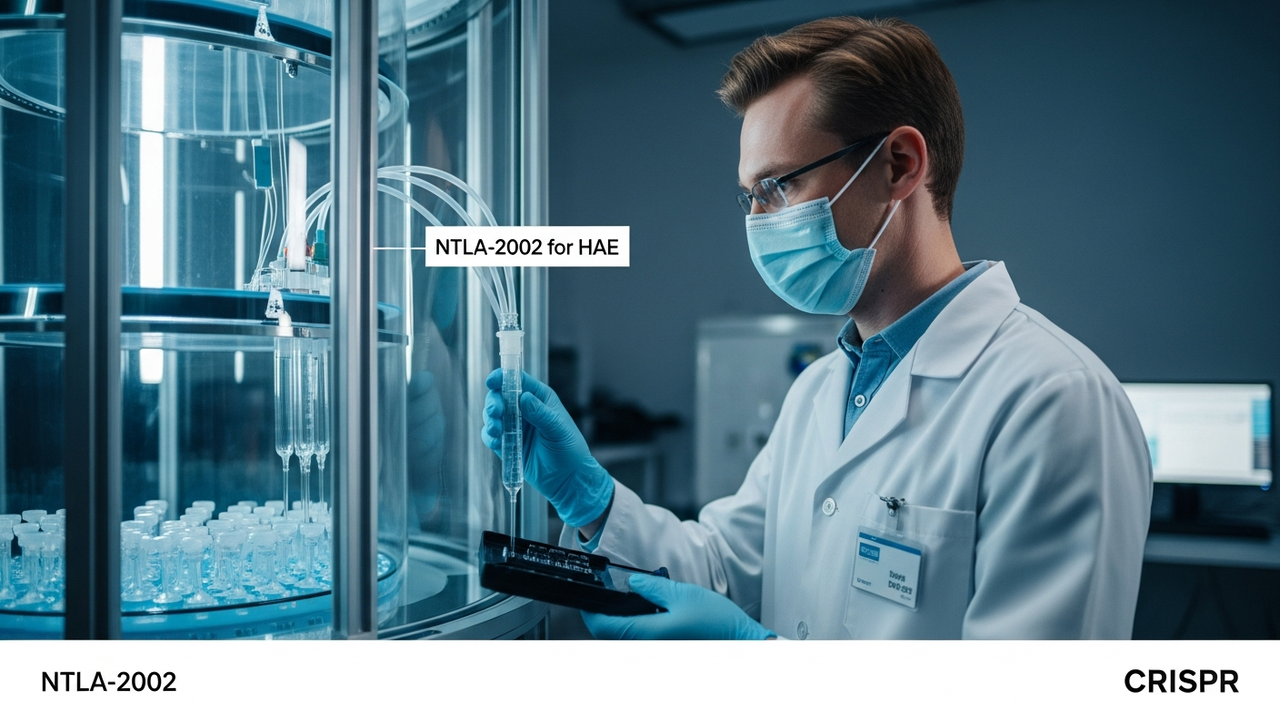
Intellia Therapeutics is a publicly traded company at the forefront of developing innovative therapies based on CRISPR/Cas9 gene editing technology. Central to its pipeline is NTLA-2002, an investigational CRISPR therapy designed to treat hereditary angioedema (HAE) by correcting the underlying genetic defect, thereby aiming to provide lasting benefits to patients. Intellia is pursuing both in vivo (in the body) and ex vivo (outside the body) gene editing approaches, extending its applications across a wide range of disease areas, including blood disorders and cancer.
Technical / Clinical Details
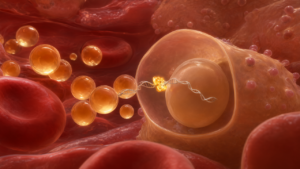
NTLA-2002 utilizes the CRISPR/Cas9 system encapsulated within lipid nanoparticles (LNPs) and delivered directly to the liver, with the objective of editing genes that inhibit the function of the serine protease inhibitor (C1-INH), which is deficient in HAE. This aims to normalize C1-INH production within the body, thereby preventing HAE attacks. This in vivo approach is groundbreaking as it holds the potential for a single-dose functional cure for the disease. For blood disorders such as sickle cell disease and beta-thalassemia, Intellia is developing ex vivo approaches where patient-derived hematopoietic stem cells are edited outside the body and then re-infused. In cancer therapy, research is focused on ex vivo editing of immune cells, like CAR-T cells, to enhance their anti-tumor activity. These technologies are engineered to maximize the precision and efficiency of genome editing.
Background & Context
CRISPR/Cas9 technology has revolutionized the field of genome editing due to its simplicity and high precision, opening new therapeutic paradigms for genetic disorders and cancer treatment. Hereditary angioedema (HAE) is a rare disease caused by a defect in the C1-INH gene, leading to recurrent, severe swelling attacks that significantly impair patients’ quality of life. Existing HAE treatments primarily focus on managing attacks, with limited curative options. Companies like Intellia are leveraging CRISPR technology to target the root cause of diseases, aiming to address these critical unmet medical needs.
Strategic Significance & Outlook
The development of CRISPR-based therapies by Intellia Therapeutics is poised to play a pivotal role in shaping the future of genetic medicine. If NTLA-2002 proves successful in HAE treatment, it could accelerate the development of in vivo gene editing therapies for many other genetic diseases. Furthermore, advancements in ex vivo approaches for blood disorders and cancer are expected to offer groundbreaking therapeutic options for patients. The company is committed to expanding the clinical application of CRISPR technology through continuous funding and strategic partnerships, solidifying its position as a pioneer in gene editing therapies. Establishing the safety and efficacy of this technology is key to unlocking its potential for broader disease applications.
Source: https://tracxn.com/d/companies/intellia-therapeutics/__fmGYOKmxnLfxD1w97Sr0hGKEjxc96obT9HQbs4yA81U
Get our weekly technology intelligence — free
Receive an infographic that lets you judge at a glance whether each field’s analysis report is worth reading.
Subscribe Free — Weekly Tech Intelligence
By subscribing, you’ll receive Troy-Technical’s weekly technology intelligence newsletter.
- Your email and selected fields are used only to deliver the newsletter.
- We never share your information with third parties.
- You can unsubscribe anytime via the link in each email.
See our Privacy Policy for details.
Takes about a minute · Unsubscribe anytime