Key Findings
As optical interconnects and silicon photonics rapidly emerge as pivotal next-generation technologies underpinning AI infrastructure, these strategic domains are increasingly likely to become a central topic at a prospective summit between the United States and China. Reports indicate that the U.S. is considering aggressive measures, potentially causing short-term market disruptions, to safeguard against a future where the optical communication layer of data centers is controlled by Chinese hardware. This development signifies a strategic shift, with the technology rivalry, previously centered on semiconductor manufacturing, now extending fiercely into the photonics sector.
Technical / Clinical Details
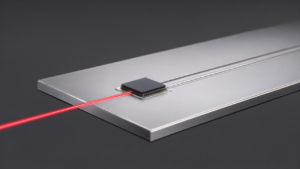
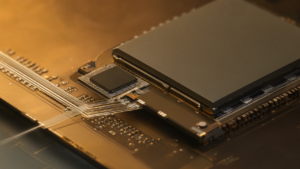
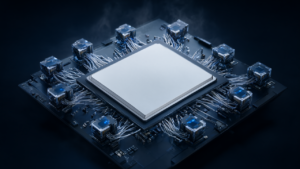
- **Strategic Importance of Optical Interconnects**: The exponential demand for AI, High-Performance Computing (HPC), and cloud computing has made data transfer speeds and efficiency within data centers paramount. Traditional electrical signaling faces inherent limitations in bandwidth, power consumption, and signal attenuation. Consequently, the adoption of optical interconnects, particularly silicon photonics technology, is becoming essential. Silicon photonics integrates optical circuits onto silicon substrates, enabling compact, high-bandwidth, low-power, and cost-effective optical communication solutions.
- **U.S. Concerns**: The U.S. government is increasingly wary of China’s expanding influence in optical communication technologies, a critical component of AI infrastructure. Concerns include potential national security risks and supply chain vulnerabilities should Chinese entities establish dominance in optical interconnect components and systems. In response, the U.S. is exploring strategies to reduce technological dependence on China, including strengthening domestic technology bases and forging deeper alliances with partner nations.
- **Potential Measures**: While the report does not specify exact measures, historical precedents in the semiconductor sector suggest potential actions such as enhanced export controls, blacklisting of specific companies, and restrictions on technology transfer. Such measures could lead to immediate disruptions in global supply chains and impact the business strategies of involved companies.
Background & Context
Following semiconductor chips, optical technology is recognized as the next strategic frontier in the AI era. A significant portion of data center power consumption is attributed to data movement, and optical interconnects are key to dramatically reducing this consumption while improving overall system performance. China’s “Made in China 2025” initiative explicitly targets self-sufficiency and global leadership in critical technology sectors, including photonics, intensifying the technological competition with the U.S. This rivalry is framed as a fundamental issue affecting national economies and security.
Strategic Significance & Outlook
The escalating tension between the U.S. and China over photonics technology is expected to have long-term implications for R&D, manufacturing, and international collaboration in this field. Companies will be compelled to re-evaluate their supply chains and investment strategies, accounting for increased geopolitical risks. This move is part of a broader U.S. strategy to maintain its technological advantage and potentially limit China’s AI infrastructure development. Consequently, the optical communication and photonics industry is anticipated to remain highly susceptible to international political dynamics, potentially accelerating innovation while simultaneously risking market fragmentation.
Get our weekly technology intelligence — free
Receive an infographic that lets you judge at a glance whether each field’s analysis report is worth reading.
Subscribe Free — Weekly Tech Intelligence
By subscribing, you’ll receive Troy-Technical’s weekly technology intelligence newsletter.
- Your email and selected fields are used only to deliver the newsletter.
- We never share your information with third parties.
- You can unsubscribe anytime via the link in each email.
See our Privacy Policy for details.
Takes about a minute · Unsubscribe anytime