Industry Context & Innovation
Molecular glue degraders (MGDs) represent one of the leading modalities in targeted protein degradation (TPD) technology and have garnered significant attention in drug discovery in recent years. Unlike conventional small molecules that inhibit target protein function, MGDs adopt a distinct approach by degrading and eliminating the protein itself. This offers the potential to develop therapies for ‘undruggable’ targets that were previously inaccessible to drug discovery. AI-driven design, exemplified by Monte Rosa’s QuEEN platform, is revolutionizing the drug discovery process by accelerating the identification and optimization of MGD candidates, significantly reducing development timelines and costs compared to traditional trial-and-error approaches. The active investment by major pharmaceutical companies like Novartis in Monte Rosa’s MGD programs and their advancement into late-stage clinical development reflects strong industry expectations regarding the clinical value and commercial potential of this technology.
Key Findings
Monte Rosa Therapeutics reported in a corporate presentation that MRT-6160, its lead molecular glue degrader (MGD) program, achieved over 90% degradation of the VAV1 protein and robust cytokine suppression in Phase 1 clinical trials. This groundbreaking achievement validates the effectiveness of the company’s AI-driven QuEEN platform and strongly highlights the potential of MGDs as a novel therapeutic approach for intractable diseases. Novartis is set to initiate multiple Phase 2 trials by 2026, which will further evaluate its clinical value.
Technical & Clinical Insights
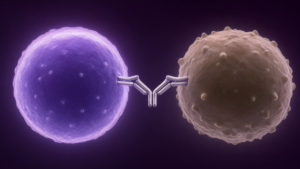
Monte Rosa Therapeutics leverages its proprietary QuEEN (Quantitative and Enriched Endogenous Degrader) platform, which utilizes AI-driven protein-protein interaction prediction and rational design, to create novel MGDs. MGDs function like a “molecular glue” by forcing the association between an intracellular E3 ubiquitin ligase and a specific target protein, leading to the target protein’s degradation. This mechanism enables the removal of many disease-related proteins from within cells that were previously difficult to target with conventional therapeutics.
MRT-6160 is an MGD specifically designed to target the VAV1 protein. In Phase 1 trials, it demonstrated a remarkable pharmacodynamic effect, achieving over 90% degradation of VAV1 levels in treated patients. VAV1 plays a critical role in T-cell activation pathways, making its degradation particularly significant for treating diseases involving excessive immune responses. The concurrent observation of potent cytokine suppression alongside VAV1 degradation suggests that MRT-6160 can deeply intervene in disease pathogenesis, exerting anti-inflammatory and immunomodulatory effects. Following these promising Phase 1 results, co-development partner Novartis plans to commence multiple Phase 2 clinical trials for MRT-6160 by 2026 to evaluate its efficacy and safety profile in a larger patient population.
Future Outlook
The progression of MRT-6160 into Phase 2 trials will be a critical milestone for Monte Rosa Therapeutics and the broader MGD field. Should these trials yield positive results, MGDs are anticipated to become powerful and highly selective new therapeutic options for a variety of inflammatory and autoimmune diseases, and potentially even cancers. Monte Rosa plans to submit additional Investigational New Drug (IND) applications over the next two years, indicating further expansion of its pipeline. The convergence of AI and protein degradation technologies will continue to attract significant attention as a key trend shaping the future of drug discovery.
Source: https://quartr.com/events/monte-rosa-therapeutic-inc-glue-corporate-presentation_FepTusNc
Get our weekly technology intelligence — free
Receive an infographic that lets you judge at a glance whether each field’s analysis report is worth reading.
Subscribe Free — Weekly Tech Intelligence
By subscribing, you’ll receive Troy-Technical’s weekly technology intelligence newsletter.
- Your email and selected fields are used only to deliver the newsletter.
- We never share your information with third parties.
- You can unsubscribe anytime via the link in each email.
See our Privacy Policy for details.
Takes about a minute · Unsubscribe anytime