Key Findings
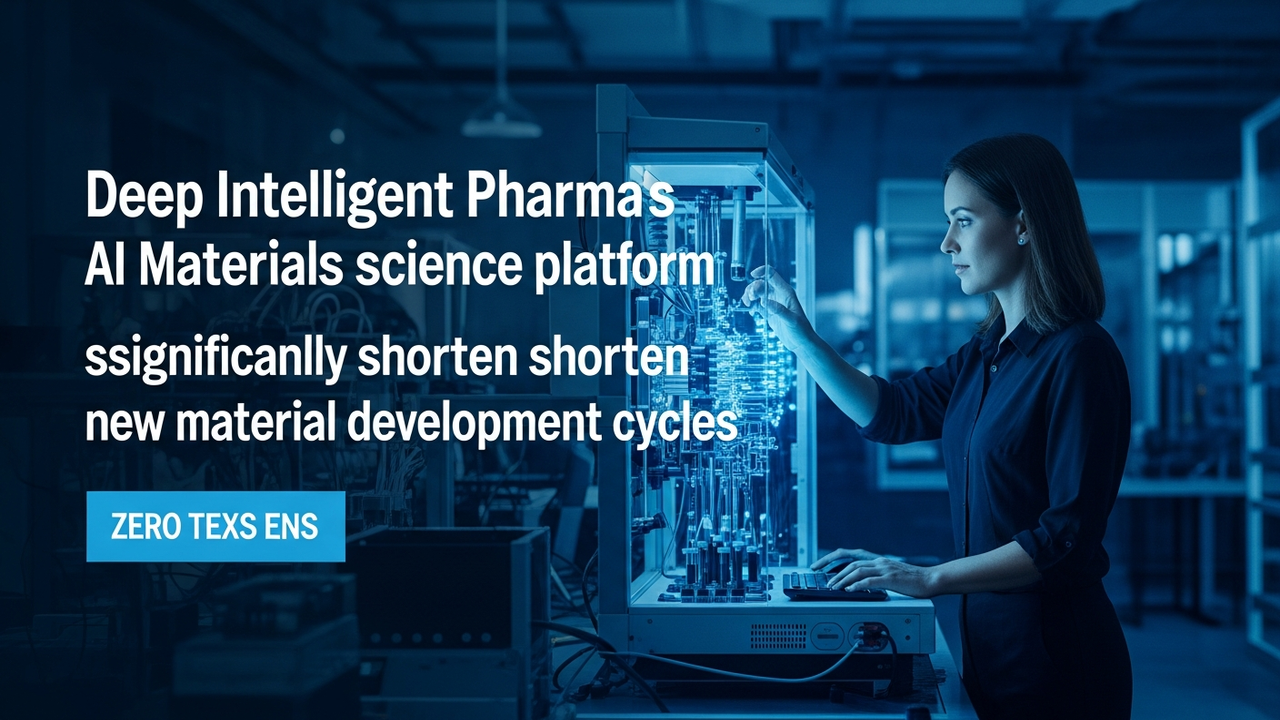
Deep Intelligent Pharma (DIP) has announced a significant expansion of its AI-for-science platform, designed to accelerate the discovery and optimization of advanced materials across a broad spectrum of industries. This includes critical sectors such as battery materials, semiconductors, agrochemicals, special alloys and coatings, polymer composites, advanced metals, and chemical catalysts. The company projects that this AI-guided approach will drastically shorten the development cycle for new materials, which traditionally spans 10-20 years.
Technical / Clinical Details
DIP’s platform is built on an integrated framework combining advanced AI models with scientific computing and materials informatics. This creates a closed-loop research ecosystem that efficiently predicts material properties, screens potential candidates, and minimizes the need for extensive physical experimentation. A key technical capability is the platform’s ability to accurately model material behavior under extreme conditions, up to 1,700°C. This is particularly valuable for developing high-performance materials like high-entropy alloys and special steels, which are crucial for demanding applications. Beyond initial discovery, the technology also supports the optimization of functional coatings and enables precise predictions of material fatigue life and creep, addressing complex engineering challenges.
Background & Context
The global demand for innovative, high-performance materials is surging, driven by advancements in electric vehicles, next-generation semiconductors, and aerospace components. However, conventional materials development relies heavily on time-consuming and costly trial-and-error methodologies. The integration of AI and materials informatics has emerged as a disruptive force, offering data-driven solutions to accelerate R&D pipelines. DIP’s strategy aligns with this paradigm shift, aiming to enhance the competitiveness of industries reliant on advanced materials by streamlining the discovery-to-deployment process. This approach is vital for overcoming the current bottlenecks in materials innovation.
Strategic Significance & Outlook
DIP’s enhanced AI platform is poised to dismantle key barriers in new materials development, facilitating the faster introduction of more sustainable and higher-performing materials to the market. This will have profound implications across diverse sectors, including energy storage, electronics, construction, and healthcare. The ability to rapidly identify and optimize materials with specific properties, such as enhanced high-temperature performance or improved fatigue resistance, translates directly into competitive advantages and accelerated technological progress. Future developments are expected to focus on further improving the accuracy of predictive models, handling even more complex material systems, and potentially contributing to the realization of fully autonomous materials laboratories.
Get our weekly technology intelligence — free
Receive an infographic that lets you judge at a glance whether each field’s analysis report is worth reading.
Subscribe Free — Weekly Tech Intelligence
By subscribing, you’ll receive Troy-Technical’s weekly technology intelligence newsletter.
- Your email and selected fields are used only to deliver the newsletter.
- We never share your information with third parties.
- You can unsubscribe anytime via the link in each email.
See our Privacy Policy for details.
Takes about a minute · Unsubscribe anytime