Key Findings
A novel computational imaging approach leverages ultra-thin “meta-lenses”—nanostructured material sheets—to ensure cameras maintain consistently sharp images across varying distances. This innovative multi-layer metamaterial design is capable of focusing multiple wavelengths and is insensitive to polarization, promising to revolutionize imaging in smartphones, drones, and satellites by significantly reducing optical form factors without compromising performance.
Technical / Clinical Details
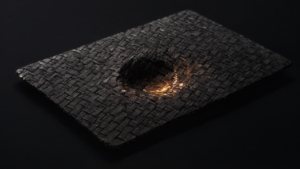
The research introduces a “defocus-resistant” cubic-metalens, which integrates a lens functionality and a wavefront-coding phase mask into a single ultrathin metasurface. This metalens overcomes the depth-of-focus limitations of traditional cameras by precisely manipulating light using nanoscale structures. While conventional cameras typically require mechanical refocusing as the distance to the subject changes, this metalens autonomously generates sharp images over a wide range of distances. Specifically, it exhibits stable performance largely independent of the incident light’s wavelength or polarization state. This represents a crucial advancement for applications demanding real-time and high-precision image acquisition, such as biomedical imaging, machine vision, and autonomous driving.
Background & Context
Modern electronic devices, particularly mobile devices and aerospace equipment, consistently demand miniaturization, weight reduction, and lower power consumption. However, the optical systems of conventional cameras, with their inherent physical thickness and multi-lens constructions, have historically posed significant barriers to meeting these requirements. Metalens technology, which controls light using sub-wavelength structures, is garnering attention as a next-generation technology that enables ultra-thin and flat optics previously impossible with traditional systems. Crucially, simplifying or eliminating the refocusing mechanism significantly enhances device robustness and reduces manufacturing costs.
Strategic Significance & Outlook
This “defocus-resistant” cubic-metalens holds the potential to profoundly transform the future of camera technology. For instance, smartphone cameras could become even thinner and more impact-resistant. Cameras mounted on drones and satellites would benefit from reduced size and weight, relaxing payload constraints and enabling a wider array of missions. In the medical field, it might contribute to the development of smaller, higher-resolution endoscopes and imaging probes. Future research will focus on expanding material choices, scaling up manufacturing processes, and optimizing performance across various environmental conditions and application scenarios. This technology is expected to provide new degrees of freedom in optical system design and accelerate the creation of innovative imaging devices.
Get our weekly technology intelligence — free
Receive an infographic that lets you judge at a glance whether each field’s analysis report is worth reading.
Subscribe Free — Weekly Tech Intelligence
By subscribing, you’ll receive Troy-Technical’s weekly technology intelligence newsletter.
- Your email and selected fields are used only to deliver the newsletter.
- We never share your information with third parties.
- You can unsubscribe anytime via the link in each email.
See our Privacy Policy for details.
Takes about a minute · Unsubscribe anytime