Key Findings
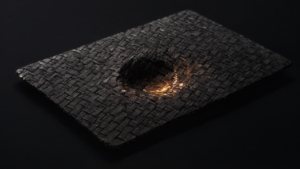
Researchers have successfully developed a novel technology that utilizes surface-wave-driven metasurfaces to generate customized vector light fields. This innovative approach enables arbitrary control over the polarization state and intensity distribution of light at the nanoscale, marking a groundbreaking advance in the miniaturization of advanced optical devices, high-functional holography, and integrated photonic systems.
Technical / Clinical Details
Metasurfaces are artificial nanostructure arrays with features smaller than the wavelength of light, allowing for arbitrary manipulation of the phase, amplitude, and polarization of incident light. This study adopted an ingenious method of exciting these metasurfaces with surface waves (e.g., surface plasmon polaritons or guided modes). As the surface waves propagate along the metasurface, their localized electromagnetic fields interact with the meta-atoms (constituent elements of the metasurface), radiating custom vector light fields with specific polarization states and intensity distributions into free space. While conventional metasurfaces typically rely on free-space light incidence, surface-wave-driven excitation enables more compact and efficient light conversion. It was demonstrated that vector light fields with linear, circular, and even complex spatial polarization patterns can be generated in the terahertz and optical frequency ranges using a single, thin device. This also enables the efficient generation of special light fields such as optical vortices and Bessel beams.
Background & Context
Vector light fields are expected to find applications in diverse fields, including high-density optical communication, super-resolution imaging, optical manipulation (optical tweezers), and quantum optics. However, generating these specialized light fields typically requires complex combinations of multiple expensive optical elements (waveplates, spatial light modulators), leading to challenges in system size and cost. The advent of surface-wave-driven metasurfaces fundamentally addresses these issues, enabling the miniaturization and integration of optical devices. This has the potential to lead to widespread technological innovations, from smartphone cameras and optical fiber communications to optical interconnects within data centers and future quantum communication systems.
Strategic Significance & Outlook
This surface-wave-driven metasurface technology is extremely promising for the field of integrated photonics. The ability to generate custom vector light fields on a chip scale will promote the multifunctionality and miniaturization of optical circuits, accelerating the realization of optical computing and on-chip quantum photonics. In the future, adaptive systems are expected to evolve, allowing dynamic changes to the characteristics of the generated vector light fields through external electrical or thermal control. This could lead to new applications previously unimaginable, such as flexible displays, wearable sensors, and even ultra-high-definition 3D holographic displays. This research is a crucial step towards the ultimate material design that can freely manipulate the properties of light.
Source: https://bioengineer.org/surface-wave-driven-metasurfaces-generate-custom-vector-light-fields/
Get our weekly technology intelligence — free
Receive an infographic that lets you judge at a glance whether each field’s analysis report is worth reading.
Subscribe Free — Weekly Tech Intelligence
By subscribing, you’ll receive Troy-Technical’s weekly technology intelligence newsletter.
- Your email and selected fields are used only to deliver the newsletter.
- We never share your information with third parties.
- You can unsubscribe anytime via the link in each email.
See our Privacy Policy for details.
Takes about a minute · Unsubscribe anytime