Key Findings
The integration of Artificial Intelligence (AI) and Machine Learning (ML) has solidified its position as a core technology dramatically improving efficiency and quality in biopharmaceutical manufacturing. Specifically, AI plays an indispensable role in optimizing the Titer, Rate, and Yield (TRY) of bioprocesses, enabling unprecedented precise control over physicochemical parameters. This advancement allows AI to significantly contribute to the development of more productive microbial strains, the optimization of fermentation processes, and the assurance of consistent final product quality.
Technical & Clinical Details
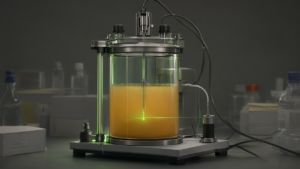
With the adoption of AI, bioprocess engineers can analyze vast amounts of experimental and sensor data in real-time, identifying bottlenecks and inefficiencies within manufacturing processes. Machine learning algorithms learn complex interactions among hundreds of physicochemical parameters, such as temperature, pH, dissolved oxygen concentration, and nutrient feed rates, to predict optimal conditions. This approach significantly reduces time and cost compared to traditional trial-and-error optimization methods. For instance, in microbial fermentation, AI can detect subtle metabolic pathway changes and propose optimal media compositions and cultivation strategies to maximize target protein production while minimizing impurity generation.
The concept of a ‘Council of Models’ is based on the understanding that no single AI model excels at every task. This approach orchestrates multiple specialized models to work collaboratively, thereby enhancing process repeatability, reliability, and overall workflow through improved data semantics and effective inter-model coordination. For example, one model might predict cell growth while another monitors product quality, working in tandem to build a more robust manufacturing system.
Background & Context
Biopharmaceutical manufacturing has always faced pressure for efficiency and optimization due to its inherent complexity, high costs, and stringent quality control requirements. Cell culture and fermentation processes, in particular, are highly sensitive to minor variations, which can significantly impact final product quality and yield, thus demanding sophisticated control technologies. Historically, reliance on empirical knowledge and statistical methods was common, but the explosion of data coupled with AI advancements now enables more predictive and scientific approaches. This promises to accelerate new drug development, reduce costs for existing medications, and improve access to therapies.
Strategic Significance & Outlook
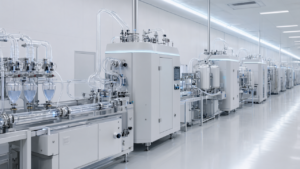
While AI application in bioprocessing is still in its early stages, its potential is immense. In the future, fully integrated, autonomous biomanufacturing platforms powered by AI could self-optimize processes and detect/correct anomalies without human intervention. This would minimize manufacturing downtime and further accelerate product market entry. Furthermore, in personalized medicine and regenerative medicine product manufacturing, AI is expected to enable customized production tailored to individual patient needs, drastically improving scalability and flexibility. Regulatory bodies are also developing guidelines for AI usage, which is anticipated to further accelerate the adoption of this technology.
Get our weekly technology intelligence — free
Receive an infographic that lets you judge at a glance whether each field’s analysis report is worth reading.
Subscribe Free — Weekly Tech Intelligence
By subscribing, you’ll receive Troy-Technical’s weekly technology intelligence newsletter.
- Your email and selected fields are used only to deliver the newsletter.
- We never share your information with third parties.
- You can unsubscribe anytime via the link in each email.
See our Privacy Policy for details.
Takes about a minute · Unsubscribe anytime