Key Findings
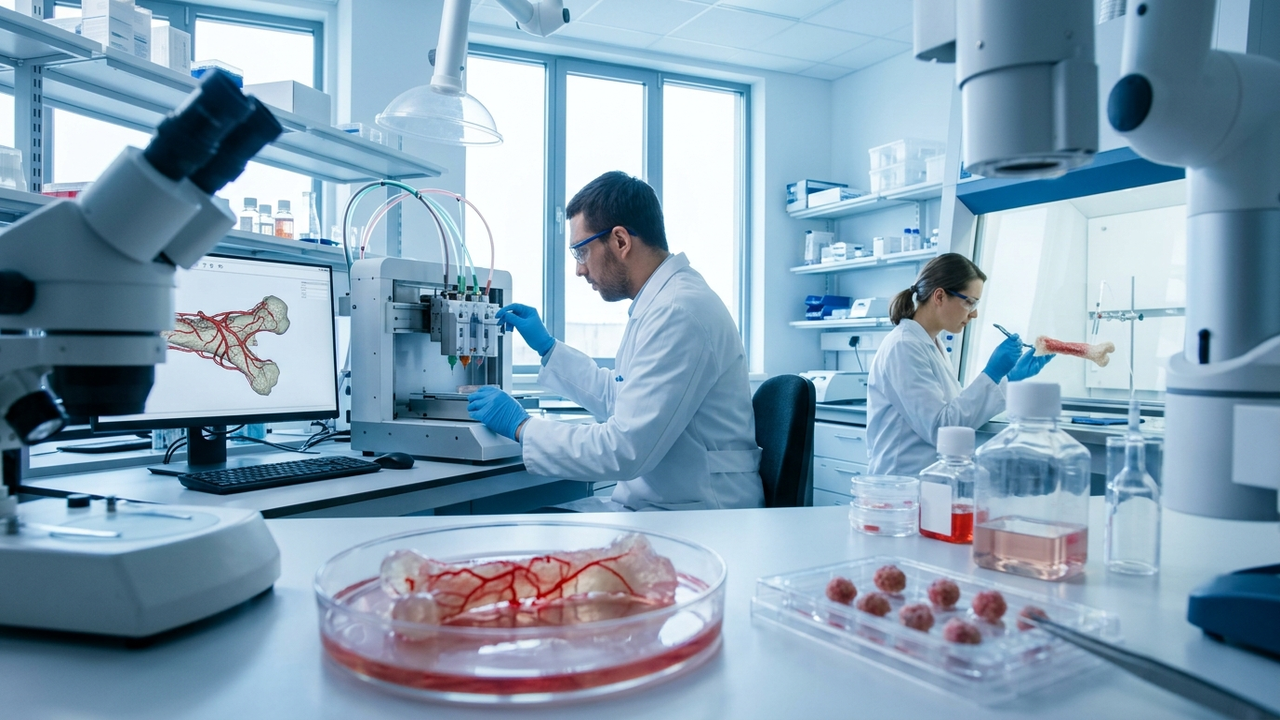
3D bioprinting technology is making significant strides in both cancer modeling and regenerative medicine, specifically through the creation of human tumor organoids and bone-regenerating spheroids. This innovation allows for the precise construction of micro-tumor units within custom-designed 3D niches, faithfully replicating the intricate tumor microenvironment. This capability dramatically improves the efficiency of high-throughput drug screening and biomarker identification for personalized cancer therapies. Simultaneously, a multidisciplinary team at Penn State has demonstrated the foundational work for 3D printing spheroids, small living cell clusters, engineered from undifferentiated stem cells to promote both bone tissue healing and new blood vessel formation, offering a new approach for severe bone trauma and infection.
Technical / Clinical Details
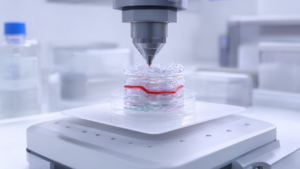
In the realm of oncology, 3D bioprinting facilitates the layered deposition of cells, biomaterials, and bioactive molecules to create tumor organoids that mirror in vivo conditions more closely than traditional 2D cultures. This allows for detailed analysis of cell-cell interactions and drug responses crucial for personalized medicine. For bone regeneration, the Penn State researchers showed that by introducing different genetic information into undifferentiated stem cells, they could create optimized cell clusters. These bioprinted spheroids not only support bone tissue healing but also actively promote angiogenesis within the generated tissue. The development of next-generation bioinks, essential components for these processes, focuses on creating microenvironments that support cell adhesion, proliferation, differentiation, and maturation into functional tissues, highlighting advances, challenges, and emerging opportunities in the field.
Background & Context
The ability to accurately model diseases and regenerate tissues remains a critical challenge in biomedicine. In oncology, conventional drug development often fails due to a lack of predictive preclinical models, a gap that tumor organoids aim to bridge by offering patient-specific, ex vivo platforms. For bone injuries, particularly those resulting from severe trauma or infection, existing treatments often fall short, necessitating novel approaches that can stimulate robust, functional tissue regrowth. The integration of 3D bioprinting with stem cell technology represents a paradigm shift, moving towards more biologically relevant models and therapies that can address these unmet clinical needs, driven by the increasing sophistication of bioinks and bioprinting hardware.
Strategic Significance & Outlook
The progress in 3D bioprinting for tumor organoids and bone spheroids holds immense strategic significance. For pharmaceutical companies, it promises to accelerate drug discovery, reduce clinical trial failures, and enable true precision oncology by identifying effective treatments tailored to individual patients. For regenerative medicine, it offers a scalable and reproducible method to produce therapeutic constructs for complex tissue repair, potentially transforming orthopedic and reconstructive surgery. The next-generation bioinks are crucial for expanding these applications to more complex tissues and organs, pushing towards the ultimate goal of functional organ bioprinting. Future efforts will focus on scaling these technologies for clinical translation, standardizing manufacturing processes, and navigating regulatory pathways to bring these innovative therapies to patients.
Source: https://pmc.ncbi.nlm.nih.gov/articles/PMC13427517/
Get our weekly technology intelligence — free
Receive an infographic that lets you judge at a glance whether each field’s analysis report is worth reading.
Subscribe Free — Weekly Tech Intelligence
By subscribing, you’ll receive Troy-Technical’s weekly technology intelligence newsletter.
- Your email and selected fields are used only to deliver the newsletter.
- We never share your information with third parties.
- You can unsubscribe anytime via the link in each email.
See our Privacy Policy for details.
Takes about a minute · Unsubscribe anytime