Key Findings
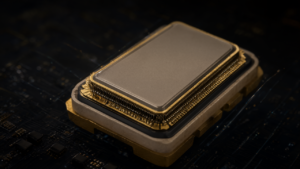
EPC Space LLC has unveiled three new, innovative radiation-hardened eGaN power transistors (15V, 25V, and 40V) specifically optimized for next-generation space computing systems. These devices achieve over 1 Mrad total ionizing dose (TID) tolerance and 85 MeV cm²/mg single-event effect (SEE) LET immunity, dramatically enhancing reliability and performance in the most extreme space radiation environments.
Technical and Clinical Details
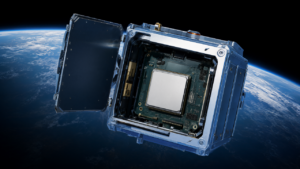
The new products integrate ultra-low on-resistance, high current capability, and fast switching performance into a compact PQFN package, maximizing power conversion efficiency while contributing to system miniaturization and weight reduction. These eGaN FETs are designed to address a wide range of power management needs in space missions, including high-efficiency DC-DC converters, motor drives, Lidar applications, and communication systems. Their TID tolerance exceeding 1 Mrad ensures minimal degradation and sustained operation even in long-duration deep-space missions or those traversing radiation belts. Furthermore, their high immunity to single-event effects (SEE) is critical for preventing spurious malfunctions and enhancing mission safety, directly impacting the longevity and success of complex space assets.
Background and Industry Context
As space missions become more complex and demand higher performance, spacecraft electronics require greater power efficiency, reduced size, and, most importantly, enhanced resilience to harsh radiation. Traditional silicon-based devices have been vulnerable to radiation, often necessitating heavy shielding that adds mass to spacecraft. GaN (Gallium Nitride) technology, with its superior electrical characteristics and inherent radiation hardness, has emerged as an ideal alternative for space-grade applications. EPC Space, a leader in this domain, has been actively developing GaN devices for space, and this new product line provides space system designers with new options, raising industry standards in both performance and reliability.
Future Outlook
The introduction of these radiation-hardened eGaN FETs will significantly impact space computing and power system design. They will accelerate the development of smaller, more efficient satellites, deep-space probes, and lunar and Martian exploration vehicles, enabling new mission concepts previously unfeasible. For instance, they are expected to play a crucial role in building next-generation space infrastructure, such as orbital data centers equipped with AI processing capabilities and power-intensive interplanetary communication arrays. This technological advancement by EPC Space is poised to further expand the boundaries of space commercialization and exploration, establishing new benchmarks for power management in long-term space missions.
Source: https://www.semiconductor-today.com/news_items/2026/aug/epc-190826.shtml
Get our weekly technology intelligence — free
Receive an infographic that lets you judge at a glance whether each field’s analysis report is worth reading.
Subscribe Free — Weekly Tech Intelligence
By subscribing, you’ll receive Troy-Technical’s weekly technology intelligence newsletter.
- Your email and selected fields are used only to deliver the newsletter.
- We never share your information with third parties.
- You can unsubscribe anytime via the link in each email.
See our Privacy Policy for details.
Takes about a minute · Unsubscribe anytime