Key Findings
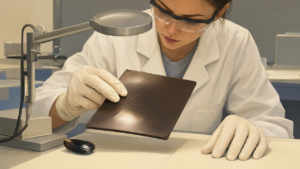
New research has been published detailing the low-temperature performance and migration behavior of polymers plasticized with citrate esters bearing vinyl and epoxy groups, suggesting these materials could exhibit superior flexibility and stability even in cryogenic environments. This achievement contributes significantly to the development of bio-based and sustainable high-performance polymer materials.
Technical / Clinical Details
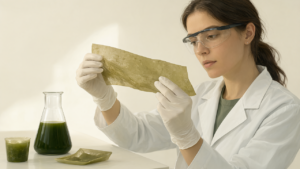
This study focuses on polymer systems utilizing citrate esters as plasticizers. Citrate esters are garnering attention as alternatives to phthalate plasticizers due to their biocompatibility and environmental friendliness. Specifically, citrate esters containing both vinyl and epoxy groups within their molecular structure are expected to enhance interaction with the polymer matrix, thereby improving the material’s low-temperature flexibility while also inhibiting plasticizer migration (bleed-out). The paper also touches upon the development of water-resistant, bio-based vitrimer films utilizing citrate-mediated borate ester networks. Vitrimers are materials that combine the characteristics of traditional thermosets with the processability of thermoplastics, and their potential for self-healing and recyclability makes them highly interesting for sustainable material applications. Furthermore, the synthesis of hybrid plasticizers with asymmetric molecular structures derived from citric acid is reported, with in-depth discussion on how these affect the mechanical properties and long-term stability of polymers.
Background & Context
Polymer materials, especially plasticized polymers, are widely used in diverse industries such as packaging, medical devices, cables, and automotive components. However, challenges have included brittleness at low temperatures, degradation of material performance due to long-term plasticizer migration, and compliance with environmental regulations. As phthalate plasticizers face increasing regulation due to health and environmental concerns, the development of bio-based, safe, and high-performance plasticizers has become an urgent priority. Research efforts like this one provide crucial technological foundations for resolving these issues and realizing more performant and environmentally friendly polymer products.
Strategic Significance & Outlook
Polymers utilizing citrate esters with vinyl and epoxy groups as plasticizers are expected to find applications in automotive components requiring high reliability in low-temperature environments, durable outdoor products, and medical devices. The advancements in water-resistant, bio-based vitrimer films and hybrid plasticizers will accelerate the development of next-generation polymer materials with high-value functions such as self-healing, recyclability, and biodegradability. This trajectory is expected to enable the polymer industry to achieve both sustainability and high performance, opening new avenues to meet future material needs.
Get our weekly technology intelligence — free
Receive an infographic that lets you judge at a glance whether each field’s analysis report is worth reading.
Subscribe Free — Weekly Tech Intelligence
By subscribing, you’ll receive Troy-Technical’s weekly technology intelligence newsletter.
- Your email and selected fields are used only to deliver the newsletter.
- We never share your information with third parties.
- You can unsubscribe anytime via the link in each email.
See our Privacy Policy for details.
Takes about a minute · Unsubscribe anytime