Key Findings
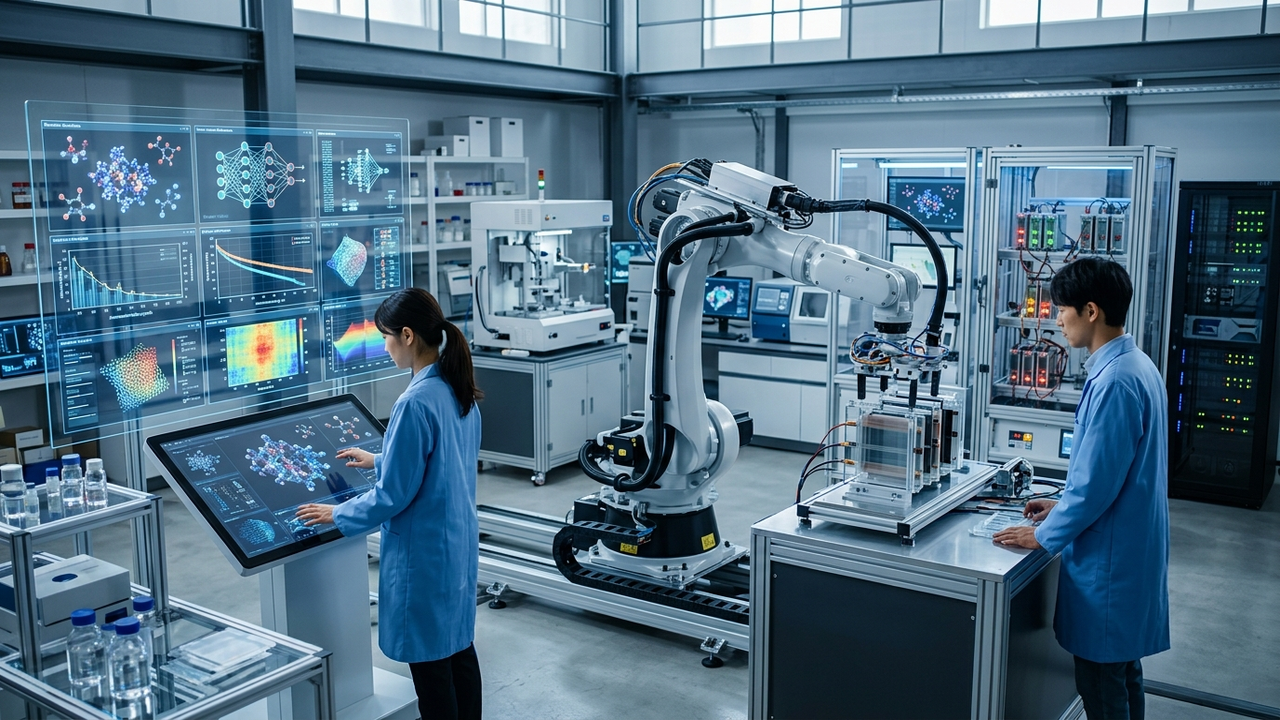
Researchers have introduced the Generative Electrochemical Intelligence (GenE) framework, a pioneering approach designed to dramatically accelerate the discovery and development of electrochemical energy technologies, including next-generation batteries, fuel cells, and green hydrogen systems. This framework integrates generative artificial intelligence with automated robotic laboratories to create a continuous closed-loop cycle of ideation, testing, and learning from feedback, potentially reducing material discovery timelines from decades to mere weeks.
Technical / Clinical Details
GenE operates by leveraging the synergistic capabilities of generative AI for proposing novel material structures and compositions, physics-based modeling for predicting their properties, and advanced automated robotic systems for rapid synthesis and characterization. Experimental data obtained from these automated labs are then fed back into the AI models, allowing for iterative refinement and optimization. This data-driven, autonomous cycle minimizes human intervention, enabling extensive exploration and optimization of the vast materials design space. The framework’s core strength lies in its ability to systematically learn from failures and successes, leading to more targeted and efficient discovery pathways.
Background & Context
The development of electrochemical energy technologies is critical for achieving a decarbonized society, yet traditional material discovery processes remain prohibitively time-consuming and expensive. Conventional trial-and-error and empirical approaches have inherent limitations when exploring complex material systems. The integration of AI and robotics, as exemplified by GenE, is poised to overcome these challenges, accelerating breakthroughs in energy storage, conversion, and production. This is particularly vital in the context of global efforts to combat climate change and build sustainable infrastructure.
Strategic Significance & Outlook
The implementation of the GenE framework is expected to revolutionize R&D efficiency, accelerating the market introduction of high-performance, safer, and more cost-effective next-generation electrochemical materials. Globally, this could significantly enhance competitive advantages for nations and corporations investing in such technologies. Looking ahead, this closed-loop discovery paradigm has the potential for broader application across various fields of materials science, including drug discovery, catalysts, and semiconductors, fostering innovation across multiple industrial sectors and creating new market opportunities.
Source: https://www.eurekalert.org/news-releases/1141373
Get our weekly technology intelligence — free
Receive an infographic that lets you judge at a glance whether each field’s analysis report is worth reading.
Subscribe Free — Weekly Tech Intelligence
By subscribing, you’ll receive Troy-Technical’s weekly technology intelligence newsletter.
- Your email and selected fields are used only to deliver the newsletter.
- We never share your information with third parties.
- You can unsubscribe anytime via the link in each email.
See our Privacy Policy for details.
Takes about a minute · Unsubscribe anytime








Comments