Key Findings
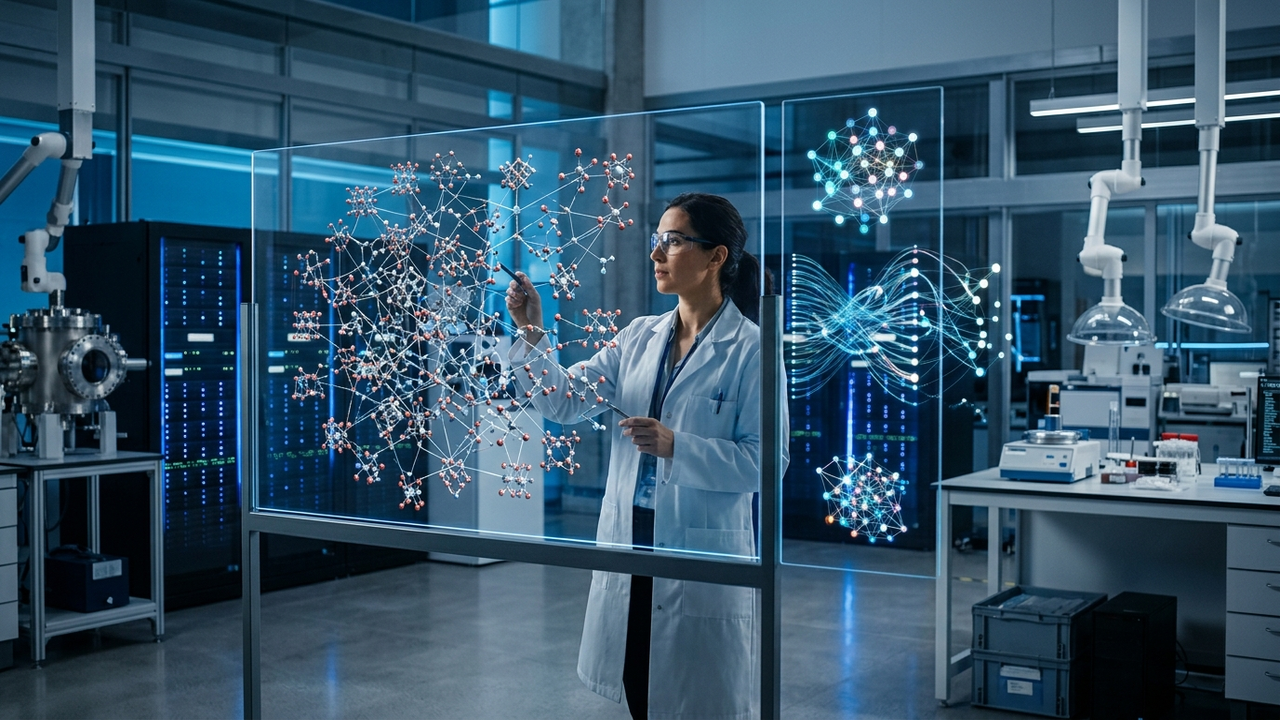
Meta Fundamental AI Research (FAIR) has made a significant contribution to materials science with the release of Open Materials 2024 (OMat24), an extensive inorganic materials dataset, and EquiformerV2, a cutting-edge Graph Neural Network (GNN) model trained on this dataset. OMat24 includes more than 110 million Density Functional Theory (DFT) calculations, establishing it as one of the largest and most comprehensive public datasets available in the field.
Technical / Clinical Details
The OMat24 dataset offers a wealth of information on the structure and properties of diverse inorganic materials. It encompasses DFT calculation results across various compositions, crystal structures, and electronic properties, serving as an indispensable foundation for discovering new materials and optimizing existing ones. The EquiformerV2 model, trained on OMat24, is specifically designed to effectively capture interatomic interactions and material symmetries. This model excels at accurately predicting crucial physical properties such as material stability, band gaps, and formation energies. Its exceptional performance on the Matbench Discovery leaderboard underscores its high predictive power and versatility, surpassing conventional machine learning models.
Background & Context
The application of AI in materials science holds transformative potential for dramatically increasing the speed and efficiency of new material discovery. However, the development of high-performing AI models has historically been hampered by the lack of large-scale, high-quality materials datasets. The release of OMat24 is a pivotal step in bridging this data gap, providing a common foundation for researchers worldwide to accelerate materials exploration through data-driven approaches. Meta AI’s initiative is poised to establish a new standard for AI-assisted materials design and discovery across both academia and industry, fostering a collaborative environment for innovation.
Strategic Significance & Outlook
The public availability of OMat24 and EquiformerV2 is expected to profoundly impact materials informatics research. Researchers and engineers can leverage this dataset and model to more efficiently design and discover innovative materials across a wide array of fields, including catalysts, batteries, semiconductors, and superconductors. High-performance GNN models like EquiformerV2 are anticipated to play a central role in bridging the gap between theoretical calculations and experimental validation, thereby shortening material development cycles. Looking ahead, these tools are envisioned to integrate with autonomous materials synthesis and characterization systems, laying the groundwork for achieving true ‘materials acceleration’ and driving the next wave of technological advancements.
Source: #
Get our weekly technology intelligence — free
Receive an infographic that lets you judge at a glance whether each field’s analysis report is worth reading.
Subscribe Free — Weekly Tech Intelligence
By subscribing, you’ll receive Troy-Technical’s weekly technology intelligence newsletter.
- Your email and selected fields are used only to deliver the newsletter.
- We never share your information with third parties.
- You can unsubscribe anytime via the link in each email.
See our Privacy Policy for details.
Takes about a minute · Unsubscribe anytime




Comments