Key Findings
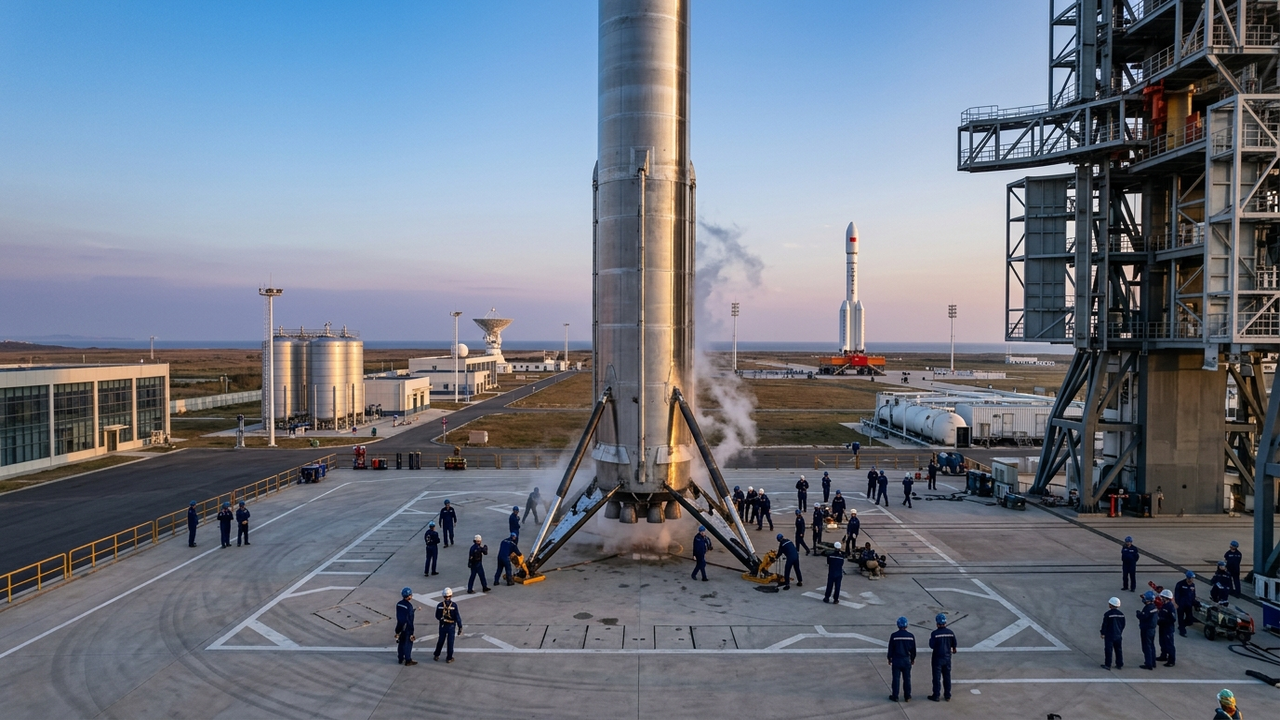
LandSpace, a leading Chinese private aerospace company, successfully completed the land-based recovery of the first stage of its Zhuque-3 reusable rocket on August 19, 2026. This achievement marks a pivotal moment for China’s commercial space sector, representing the first controlled landing of an orbital-class rocket booster on land using deployable landing legs. The Zhuque-3, which utilizes a liquid oxygen-methane propulsion system, stands out for its primary structure constructed from stainless steel, a material chosen for its high thermal resistance and manufacturing ease, drawing parallels to SpaceX’s Starship development.
Technical / Clinical Details
The Zhuque-3’s first stage performed a precise retropropulsive maneuver followed by a soft vertical landing at a designated ground site. The choice of stainless steel for the rocket’s main structure is a key technical differentiator. This material offers superior thermal resistance, crucial for surviving the extreme re-entry environments, and is highly amenable to welding, which reduces manufacturing complexity and cost. The methane propellant is not only efficient but also aligns with future in-situ resource utilization (ISRU) strategies for missions to the Moon and Mars, where methane could be produced from local resources. This dual advantage of cost-effective manufacturing and propellant scalability positions Zhuque-3 as a promising platform for high-frequency launches.
Background & Context
The global space industry is intensely focused on reusable rocket technology as a primary means to drastically lower launch costs and increase mission cadence. While SpaceX has pioneered this domain with its Falcon 9 and Starship, China has been rapidly advancing its own capabilities through both state-owned enterprises and private entities like LandSpace. The successful land recovery of Zhuque-3’s booster is a significant step in China’s drive to establish its independent reusable launch vehicle ecosystem and narrow the technological gap with international competitors. This capability is particularly vital for China’s ambitious plans to deploy massive low-Earth orbit (LEO) satellite constellations for global communication and observation, requiring frequent and economical access to space.
Strategic Significance & Outlook
The success of LandSpace’s Zhuque-3 land recovery operation is poised to dramatically enhance the competitiveness of China’s space industry, especially within its burgeoning private sector. The company is now expected to accelerate testing towards full orbital flight and routine reusability. This technology promises to enable low-cost satellite launch services, thereby stimulating space applications across various sectors, including telecommunications, Earth observation, and scientific research. Furthermore, the combination of a stainless steel structure and methane propulsion offers substantial advantages in manufacturing innovation and operational cost reduction, which will be crucial for future deep-space transportation missions to lunar and Martian destinations. This strategic technological advancement underscores China’s commitment to solidifying its status as a leading space power.
Source: https://aerospaceglobalnews.com/news/china-reusable-rocket-zhuque-3/
Get our weekly technology intelligence — free
Receive an infographic that lets you judge at a glance whether each field’s analysis report is worth reading.
Subscribe Free — Weekly Tech Intelligence
By subscribing, you’ll receive Troy-Technical’s weekly technology intelligence newsletter.
- Your email and selected fields are used only to deliver the newsletter.
- We never share your information with third parties.
- You can unsubscribe anytime via the link in each email.
See our Privacy Policy for details.
Takes about a minute · Unsubscribe anytime






Comments