Key Findings
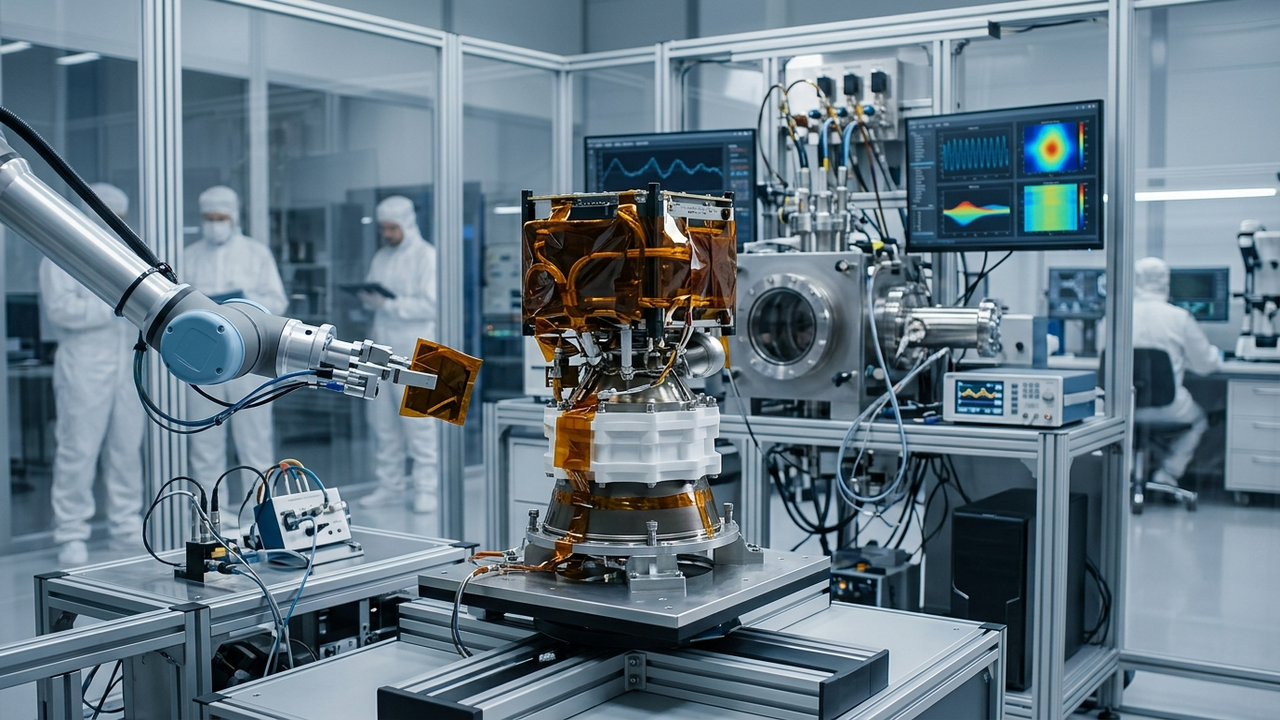
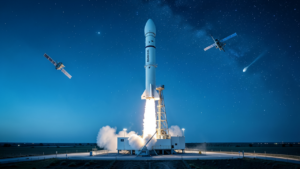
Goodfellow is intensifying its supply of high-performance specialty materials, Macor® and Kapton®, specifically tailored to meet the stringent requirements of the space technology sector. These materials are pivotal for ensuring stability and reliability in extreme space environments, serving a wide array of applications including satellite propulsion systems, observation instruments, and spacecraft structural components. Macor®’s exceptional thermal properties and machinability, coupled with Kapton®’s robust radiation resistance, are critical for the success of advanced space missions.
Technical / Clinical Details
Macor® is an advanced machinable glass ceramic that can withstand continuous operating temperatures up to 1000°C and peak temperatures up to 1500°C. Its non-porous nature ensures excellent performance in vacuum environments, and its ease of precision machining allows for the fabrication of complex geometries, making it ideal for electrical insulators, spacers, and high-temperature sensor housings. Kapton® (polyimide film), on the other hand, maintains stable mechanical and electrical properties across an extreme temperature range of -269°C to 400°C. Critically, it exhibits superior resistance to the harsh radiation and high-vacuum conditions prevalent in space, making it an indispensable material for wire insulation, flexible heaters, and multi-layer insulation (MLI) blankets. These characteristics are fundamental to extending the lifespan and enhancing the reliability of spacecraft.
Background & Context
The burgeoning space industry, driven by the proliferation of small satellite constellations, deep-space exploration endeavors, and an increase in human spaceflight missions, places ever-greater demands on material performance. Space is an exceptionally hostile environment characterized by extreme thermal cycling, hard vacuum, intense cosmic radiation, and micrometeoroid impacts, necessitating materials with unique properties far beyond those required for terrestrial applications. Macor® and Kapton® address these critical challenges, serving as strategic materials that enable the development of next-generation space systems. Their properties—specifically thermal stability, radiation hardness, lightweight characteristics, and dimensional stability—are paramount for material selection in space-bound hardware.
Strategic Significance & Outlook
The consistent supply and technical support for specialized materials like Macor® and Kapton® are indispensable for the sustained growth and innovation within the space industry. These materials are enabling technologies for the development of advanced propulsion systems, more sophisticated space telescopes, robust equipment for lunar bases and Martian exploration, and emerging in-space manufacturing capabilities. Through its material contributions, Goodfellow facilitates pushing the boundaries of space exploration, contributing to the realization of safer and more efficient space missions. Future research and development are anticipated to further optimize these material properties, broadening their applicability to an even wider range of demanding space applications.
Source: https://www.goodfellow.com/usa/sectors/space-technology
Get our weekly technology intelligence — free
Receive an infographic that lets you judge at a glance whether each field’s analysis report is worth reading.
Subscribe Free — Weekly Tech Intelligence
By subscribing, you’ll receive Troy-Technical’s weekly technology intelligence newsletter.
- Your email and selected fields are used only to deliver the newsletter.
- We never share your information with third parties.
- You can unsubscribe anytime via the link in each email.
See our Privacy Policy for details.
Takes about a minute · Unsubscribe anytime


Comments