Key Findings
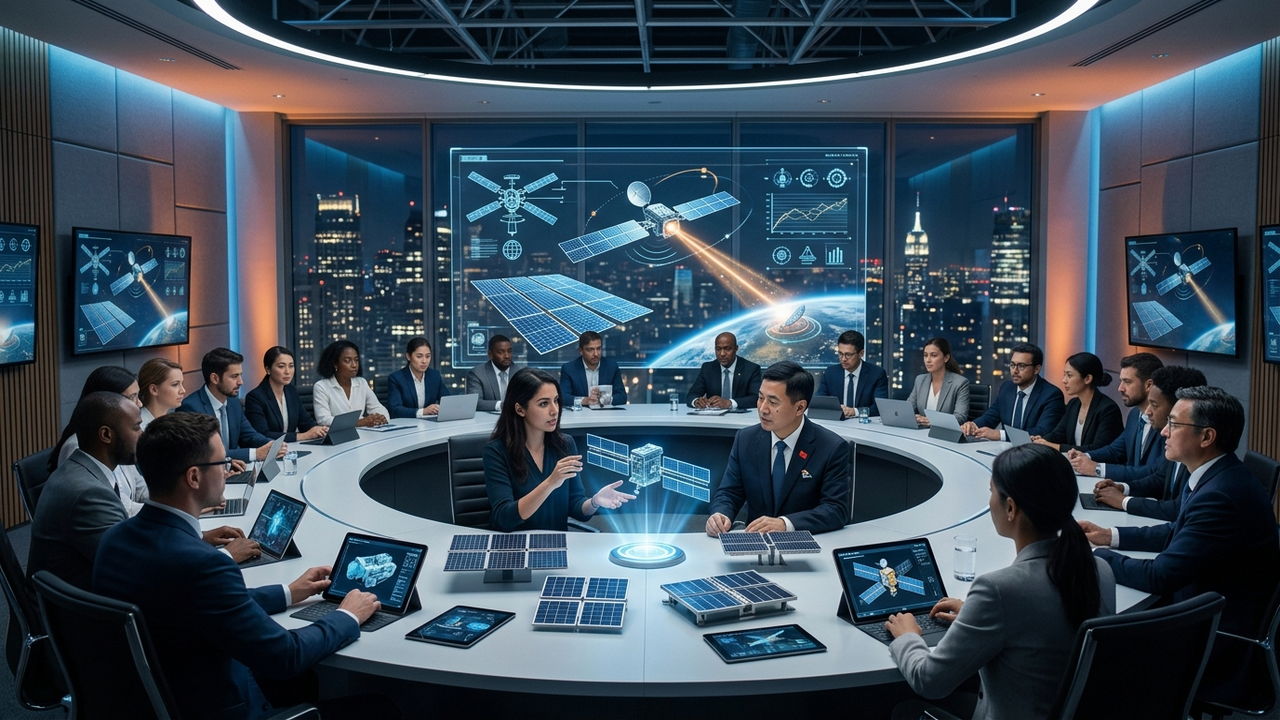
An expert committee has been officially launched to accelerate the standardization of Space Solar Power Satellite (SSPS) technology. This working group notably includes technical representatives from Shanghai Oriental Space Computing Technology Co., a prominent Chinese industrial platform company specializing in space computing. The initiative aims to propel the practical implementation and technological innovation of SSPS under a framework of international cooperation. Standardization is deemed essential for enhancing the efficiency of space solar cells, optimizing module structures, streamlining system integration, and ensuring long-term reliability of SSPS systems.
Technical and Standardization Details
Space Solar Power Satellite (SSPS) is a visionary concept involving large solar arrays positioned in Earth orbit to generate electricity, which is then beamed wirelessly (via microwaves or lasers) to Earth. This technology holds immense promise as a stable source of clean energy, unaffected by terrestrial weather patterns or diurnal cycles. The standardization efforts of this new committee will focus on the following key areas:
- Space Solar Cells: Standardizing specifications and test methods for solar cells that achieve both high conversion efficiency and radiation hardness.
- PV Module Structures: Developing design guidelines for module structures optimized for lightweightness, deployability, durability, and thermal management.
- Space Energy System Integration: Establishing interface standards for power generation, transmission, and power management within spacecraft systems.
- In-Orbit Performance Testing: Standardizing methods for evaluating and verifying performance under actual space environmental conditions.
- Long-Term Reliability Assessment: Defining criteria for ensuring the reliability of the entire system to withstand decades of operation.
The participation of companies like Shanghai Oriental Space Computing Technology Co. from China is crucial for facilitating diverse technical perspectives and building a collaborative framework aimed at future international standard adoption. This company, with its significant presence in space-based data centers and computing, is expected to contribute to optimizing energy supply systems through synergy with SSPS.
Background and Industry Context
Addressing global energy challenges and climate change is an urgent international priority, driving the demand for clean energy sources. Space Solar Power has been researched for decades as a potential solution, but formidable development costs, technical hurdles (e.g., lightweighting, power transmission efficiency, in-orbit assembly), and difficulties in achieving international consensus have hindered its practical implementation. This new standardization initiative is a critical step towards overcoming these barriers and establishing SSPS as a viable energy solution. China, in particular, has been actively investing in SSPS technology, with ambitions for large-scale deployment by 2030, intensifying both international competition and cooperation. Standardization is indispensable for ensuring interoperability among technologies and components from different nations, enabling the efficient construction of large-scale SSPS systems.
Strategic Significance and Outlook
The establishment of the SSPS standardization expert committee will significantly advance the commercialization and practical deployment of space solar power technology. By establishing standards, development costs will be reduced, technical risks mitigated, and supply chains streamlined, making SSPS development more accessible to a broader range of companies and nations. In the long term, SSPS could become one of Earth’s primary power sources, envisioning a future where space functions as an ‘energy factory.’ This not only supports terrestrial sustainability but also holds the potential to play a crucial role as a power source for future deep space missions, such as lunar bases and Mars exploration, making it a highly attractive frontier for materials scientists, energy engineers, and space system developers.
Source: #
Get our weekly technology intelligence — free
Receive an infographic that lets you judge at a glance whether each field’s analysis report is worth reading.
Subscribe Free — Weekly Tech Intelligence
By subscribing, you’ll receive Troy-Technical’s weekly technology intelligence newsletter.
- Your email and selected fields are used only to deliver the newsletter.
- We never share your information with third parties.
- You can unsubscribe anytime via the link in each email.
See our Privacy Policy for details.
Takes about a minute · Unsubscribe anytime





Comments